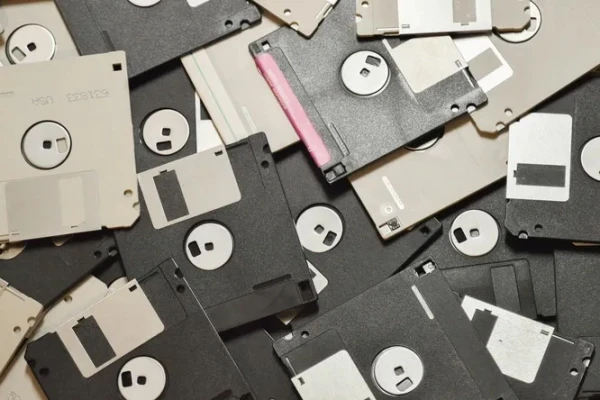
The Cambridge University Library has encountered a unique problem after receiving the archive of Stephen Hawking, which includes dozens of old floppy disks. Once widely used for data storage, these media are now becoming increasingly vulnerable, and the information recorded on them risks being lost. The project to recover data from these floppy disks not only offers a chance to preserve the materials of the renowned scientist but also raises concerns about the preservation of the entire digital history, which could be lost due to the aging of technologies.
As highlighted by analysts at NewsTrackerToday, the aging of technology and its rapid obsolescence represent a systemic threat to digital archiving. Experts working with such media face not only the problem of physical data degradation but also the loss of knowledge about the software that was once used to record it. “Our current dependence on outdated technologies and the recent disappearance of certain formats could spell disaster for the preservation of information, which could become inaccessible within a decade,” notes Sophie Leclerc, a technology sector analyst. “This isn’t just an archival problem; it’s a systemic vulnerability we need to address at the industry level.”
The process of recovering data from outdated media, such as floppy disks, requires not only old equipment but also specific knowledge about how these disks were formatted. It also requires working with non-standard equipment, which, as Leclerc points out, “shows just how much we depend on old technologies that are gradually disappearing and how crucial each step in their recovery is. Many devices that could aid in recovering data from floppy disks have long since been phased out and are becoming increasingly difficult to access.”
Some of Stephen Hawking’s disks, in addition to his scientific papers, even contain games, adding extra value for researchers interested in understanding not only his scientific but also personal life. Recovering such data takes much more effort than simply extracting text. This illustrates how important it is to preserve data that might initially seem less significant but later becomes valuable for future research and historical memory.
However, the issue of aging data storage devices goes far beyond one scientist or one project. Archivists around the world are facing similar difficulties in trying to recover information from media such as 8-inch or 5.25-inch floppy disks. The need for old equipment and specialized drives that were once standard makes the recovery process increasingly complex and costly. As an analyst from NewsTrackerToday points out, “With each passing year, the data recorded on these media becomes less accessible, meaning we are losing vital parts of our digital history.”
It is crucial to understand that if we do not continue working on solving the preservation of this data, we risk entering a digital “dark age.” Just as lost knowledge from antiquity has left gaps in our understanding of history, the loss of data from more recent times could deprive us of valuable insights into scientific achievements and personal histories. As one expert from NewsTrackerToday stated, “We are on the brink of an era of digital information loss. If we don’t take action now, we risk a situation where much of our digital heritage will be inaccessible to future generations.”
The process of recovering such data is not just a technical task, but a key step in preserving cultural and scientific heritage. The foundations for future solutions need to be laid today, or tomorrow we will face a situation where current achievements are out of reach. The question is not how we will store data tomorrow, but how to preserve it today so that it will be accessible in the future. As experts from News Tracker Today assert, “Archiving technologies must evolve to ensure the long-term preservation of data and prevent the loss of historical information that will be inaccessible to future generations.”