The U.S. electric-vehicle market has entered a moment of truth. With the federal tax credit of up to 7,500 dollars abruptly expiring, demand has been stripped of its support system, and October delivered a sobering signal for automakers who had grown accustomed to momentum. Here at NewsTrackerToday, we see this not as a collapse but as the start of a new phase in the EV cycle – one in which electrification shifts from subsidized ambition to genuine competition for consumer trust and wallets.
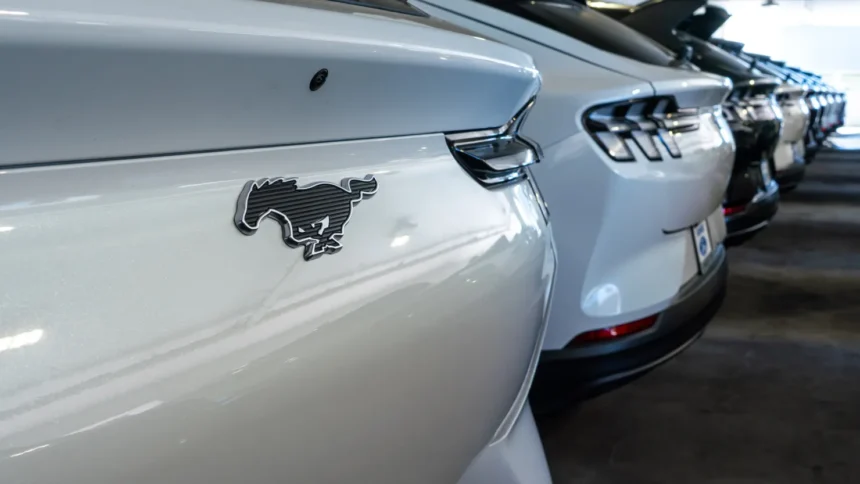
Ford, which recently held the third-largest EV share in the country, reported a 25 percent year-over-year drop in fully electric sales. Mustang Mach-E deliveries fell 12 percent, and the F-150 Lightning slid 17 percent. Korean manufacturers suffered even steeper declines: Hyundai and Kia saw flagship BEV volumes drop by 52 to 71 percent, and sales of the Ioniq 5 and the newer three-row Ioniq 9 plunged as much as 80 percent from September. Toyota, meanwhile, sold just 18 units of its single BEV model – down from more than 1,400 a year earlier.
Taken alone, these figures look alarming. But context matters. The third quarter marked a historic surge, with more than 438,000 EVs sold in the U.S. – a 41 percent jump quarter-to-quarter and a nearly 30 percent increase from a year ago. Buyers rushed to secure incentives before they disappeared, effectively pulling future demand forward. Now, without the credit, the market is recalibrating back to organic levels. As NewsTrackerToday chief economist Ethan Cole emphasizes, “Many will confuse correction with reversal. EVs have exited a stimulus environment and are now facing their first true market-driven test.”
Alongside the decline in BEV momentum came a notable shift in buyer behavior: hybrids are resurging. Hyundai reported a 41 percent year-over-year spike in hybrid sales, which helped keep overall electrified deliveries positive. American consumers are signaling that innovation matters – but so does arithmetic. Without consistent charging infrastructure and with rising interest rates pushing up monthly payments, hybrids are becoming the pragmatic midpoint between sustainability and convenience.
NewsTrackerToday technology analyst Sophie Leclerc calls this period a stress-test for the entire energy-transition narrative: “Money, technology and policy are no longer perfectly aligned. The EV market is maturing, and companies that scaled on subsidies must now prove value on real-world economics.” In her view, the winners of this phase will not be those with the loudest mission statements, but those who can demonstrate total-cost-of-ownership advantages clearly and convincingly.
What we are witnessing is not the end of the EV story, but a sobering reset. Automakers must now measure success not by quarterly headlines but by their ability to maintain demand without government scaffolding, offer compelling financing, defend residual values and build reliable charging ecosystems. We believe the coming quarters will separate firms capable of operating in a truly competitive environment from those that relied too heavily on policy tailwinds.
The EV era in America has not stalled – it has shed excess speed. What begins now is a more disciplined, pragmatic and consumer-driven phase of growth. The companies that prove electric ownership is economically rational and operationally simple – not merely aspirational – will define the future. As we at News Tracker Today note, everyone else will be forced to chase them, no longer in a race for incentives, but in a race for the market itself.