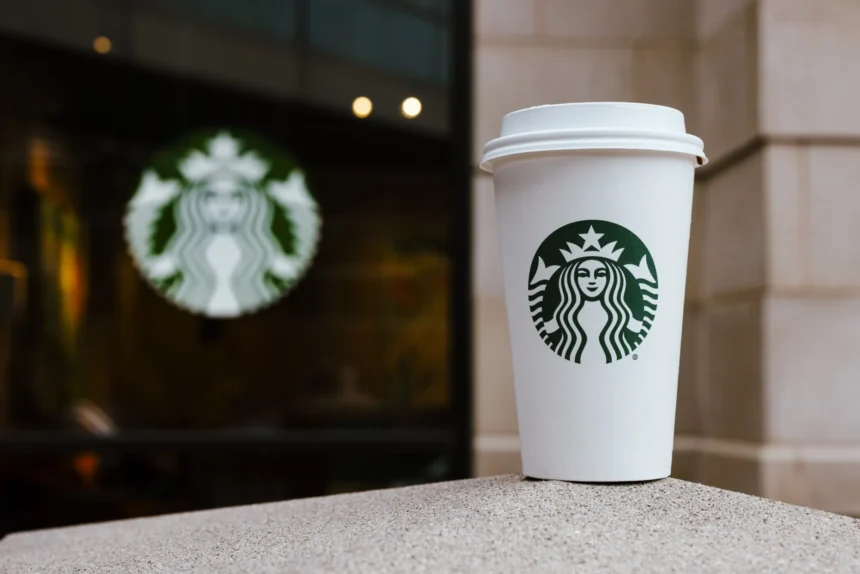
Starbucks is attempting to reset the narrative around its business after several uneven years, presenting its latest strategy as a turning point rather than a cosmetic refresh. Speaking at an investor event in New York, executives argued that customer traffic is stabilizing and operational discipline is beginning to show results – a claim that NewsTrackerToday notes arrives amid continued investor skepticism.
The turnaround effort, launched after Brian Niccol took over as chief executive, has focused on restoring the in-store experience following years of heavy emphasis on mobile ordering and margin efficiency. Management framed recent changes as foundational rather than promotional, prioritizing faster drink preparation, higher staffing levels and more consistent service execution across stores. According to NewsTrackerToday, the company is effectively betting that operational reliability will rebuild demand more sustainably than aggressive price increases or short-term menu innovation.
Early indicators suggest partial progress. Starbucks reported positive comparable-store sales growth and a return to higher transaction volumes for the first time in roughly two years. However, profitability remains under pressure as labor investments and store upgrades weigh on margins. Ethan Cole, a macroeconomic and central-bank analyst, views this as a calculated trade-off, noting that near-term margin compression is common in service-led recoveries but only justified if repeat traffic proves durable.
Management’s medium-term targets reflect cautious optimism. Starbucks expects low-single-digit comparable sales growth globally and revenue expansion of at least 5% by fiscal 2028, alongside gradual earnings recovery. NewsTrackerToday highlights that these projections assume continued improvements in throughput – a critical metric for a high-volume beverage model where minutes per order directly translate into labor costs and customer satisfaction.
Several initiatives are designed to support that thesis. A redesigned tiered loyalty program aims to rebalance incentives without eroding value perception. New Energy Refreshers target customers seeking higher caffeine intake beyond traditional coffee occasions, while upgraded espresso machines are expected to increase consistency and reduce preparation times. Sophie Leclerc, a technology-sector analyst focused on consumer platforms, notes that Starbucks’ advantage lies less in product novelty and more in its ability to integrate operational upgrades at scale.
Despite management confidence, market reaction remains cautious. Shares declined following the presentation, reflecting concerns about consumer spending trends, volatile coffee input prices and the risk that service improvements may not fully offset higher operating costs. News Tracker Today observes that investors are likely to demand clearer evidence that traffic gains can translate into margin expansion before re-rating the stock.
From an analytical perspective, Starbucks’ strategy is coherent but execution-dependent. The recovery hinges on maintaining faster service times while preserving perceived value in a price-sensitive environment. NewsTrackerToday’s view is that sustained improvements in transaction growth, labor productivity and loyalty engagement – taken together – will determine whether the company’s turnaround narrative gains lasting credibility.