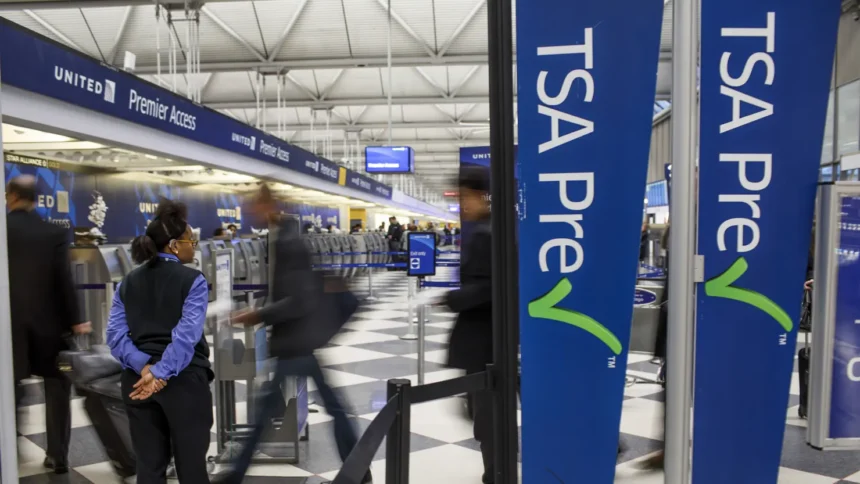
The rapid reversal over TSA PreCheck during the latest partial U.S. government shutdown exposed how quickly political gridlock can destabilize critical travel infrastructure. Officials first indicated they would suspend expedited screening programs, then confirmed within hours that PreCheck would continue operating. That sequence reinforced a structural vulnerability that NewsTrackerToday has repeatedly examined in its aviation infrastructure analysis: modern airport systems depend on predictability as much as on staffing and security protocols.
TSA PreCheck serves roughly 20 million enrolled travelers and significantly reduces congestion in standard screening lanes. A full suspension would have extended wait times, reduced checkpoint throughput and increased the likelihood of cascading delays. During peak travel cycles, even small disruptions at security checkpoints ripple quickly through airline schedules.
The shutdown magnifies those risks. Thousands of Department of Homeland Security employees, including TSA officers, continue working without pay. Prolonged funding gaps historically increase absenteeism and strain staffing models. Ethan Cole, chief economic analyst specializing in macroeconomics and central banking, argues that “transport security operates as an economic stabilizer – once staffing weakens, delays spread into hospitality, logistics and regional commerce.” NewsTrackerToday has highlighted this staffing sensitivity in previous shutdown coverage, warning that operational resilience erodes quickly when personnel uncertainty rises.
Confusion around Global Entry added another layer of instability. Although officials removed references to a PreCheck suspension from updated statements, the initial announcement unsettled airlines and travelers. Passenger confidence in expedited screening programs depends on reliability. If participants begin to question continuity, enrollment and renewal rates may decline over time.
Industry groups reacted forcefully. They warned that abrupt policy shifts during record travel volumes risk unnecessary financial damage. Past shutdowns cost the travel sector billions of dollars and disrupted millions of passenger journeys. Liam Anderson, financial markets expert, notes that “capital markets reward predictability in transportation networks; volatility increases cost projections and dampens booking confidence.” Airlines already faced pressure from winter storm disruptions, which forced thousands of cancellations across the Northeast.
Weather stress layered onto administrative uncertainty creates nonlinear risk. Airports operate on tight capacity margins, and overlapping shocks expose bottlenecks quickly. This pattern aligns with broader systemic vulnerabilities identified in NewsTrackerToday’s ongoing reporting on U.S. transport resilience, where political events and environmental disruptions often intersect.
Lawmakers now face renewed pressure to shield essential aviation security services from partisan budget battles. Automatic funding mechanisms for critical infrastructure during shutdowns could reduce brinkmanship and protect operational continuity. The PreCheck episode illustrates that even short-lived ambiguity can weaken trust and impose economic costs. As News Tracker Today emphasizes, safeguarding aviation stability requires structural reform, not reactive clarification after markets and passengers already absorb the shock.