Silicon Valley’s political capital is mobilizing again. A wealthy technology entrepreneur has stepped forward to challenge Representative Ro Khanna in California’s 17th congressional district, setting up what could become one of the most expensive primary contests of the 2026 cycle. As NewsTrackerToday assesses, this race is less about a single seat and more about a broader ideological clash between innovation capital and redistributive policy.
Khanna has elevated his national profile in recent years, particularly through his support of an aggressive wealth tax targeting billionaires. The proposal, introduced alongside Senator Bernie Sanders, would impose a recurring levy on ultra-high-net-worth individuals and aims to generate trillions in revenue over a decade. Ethan Cole, chief economic analyst specializing in macroeconomics and fiscal policy, argues that “the political debate will center on whether voters view the tax as fiscal justice or as a structural threat to capital formation and state competitiveness.”
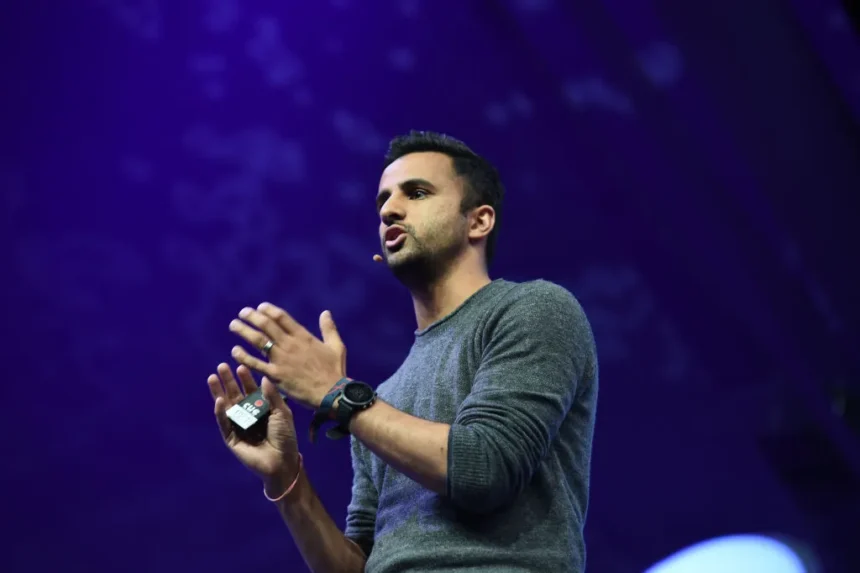
The challenger, a 40-year-old tech founder with Wharton and consulting credentials, represents a different narrative: a private-sector operator positioning himself as a pragmatic alternative to ideological policymaking. His background in venture-backed startups and financial technology places him squarely within the ecosystem that once helped propel Khanna’s own rise. NewsTrackerToday notes the strategic irony – a candidate who benefited from Silicon Valley’s financial backing now faces a potential opponent supported by a similar donor class.
California’s 17th district encompasses much of Silicon Valley, a region defined by high household incomes, dense innovation networks, and increasing sensitivity to taxation and regulatory risk. Isabella Moretti, an analyst focused on corporate strategy and capital allocation, explains that “political spending from technology investors increasingly functions as a defensive instrument. Donors interpret policy shifts – particularly wealth taxes – as signals that could reshape long-term valuation assumptions.”
Critics previously accused Khanna of aligning too closely with tech interests when he first ran in 2014 with backing from prominent industry leaders. A decade later, the same accusation could resurface – but directed at his challenger. According to NewsTrackerToday, the defining question will not be who receives tech funding, but whether voters interpret that support as influence or as evidence of economic competence.
The timing amplifies stakes. Khanna remains widely discussed as a potential national figure beyond Congress, and a heavily financed challenge could either strengthen his profile or expose vulnerabilities. Meanwhile, the challenger must demonstrate grassroots credibility rather than appearing solely as a vehicle for wealthy donors reacting to tax policy.
In strategic terms, three variables will determine the trajectory of the race: early fundraising velocity, message discipline, and voter coalition breadth. If the campaign crystallizes into a referendum on wealth taxation, turnout patterns among affluent and middle-income voters may shift meaningfully. If it reframes into a broader economic-competitiveness argument, the district’s pro-innovation identity could prove decisive.
Ultimately, this contest may serve as a microcosm of a national tension: whether policy aimed at redistributing concentrated wealth gains political durability in innovation-heavy districts. As News Tracker Today continues to monitor the 2026 landscape, the California 17th race stands out as an early test of how capital, ideology, and electoral strategy intersect in the next political cycle.