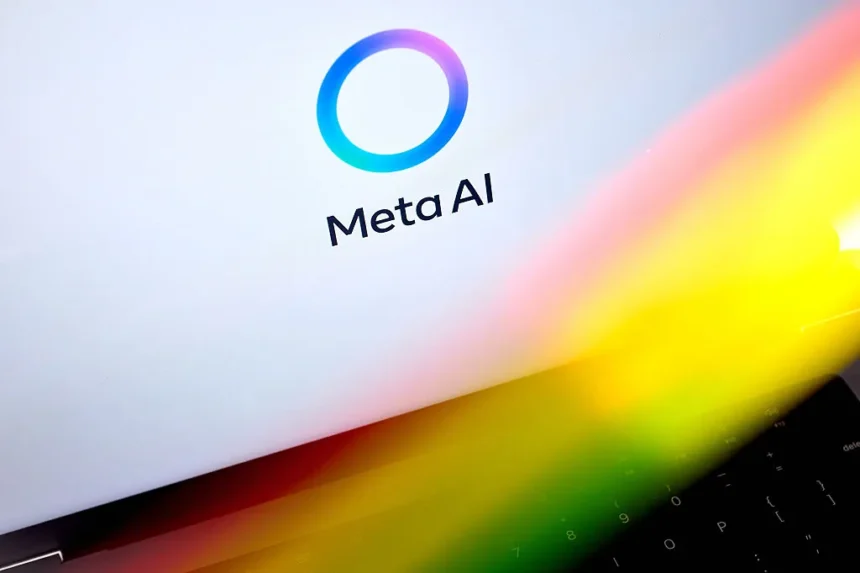
Meta has introduced its new AI model Muse Spark, positioning it as the first tangible shift in a broader strategic reset, a move that NewsTrackerToday frames as a high-stakes attempt to close the widening gap with leading systems from OpenAI and Anthropic. The release signals a more aggressive push by the company to redefine its role in the rapidly evolving AI hierarchy.
The model marks the debut product from Meta Superintelligence Labs, a division created after internal dissatisfaction with the pace of progress around the Llama ecosystem. The restructuring included the recruitment of Alexandr Wang and a multibillion-dollar investment into Scale AI, securing both infrastructure and data pipelines. This combination reflects a pivot toward tighter control over training quality and deployment speed, areas where competitors have already established strong advantages.
Muse Spark introduces a multi-agent architecture designed to process complex queries through parallel reasoning. Sophie Leclerc, a technology sector specialist, notes that this approach mirrors a broader industry transition toward distributed inference systems, where multiple agents collaborate to simulate deeper reasoning without significantly increasing latency. In coverage by NewsTrackerToday, this design is viewed as a direct response to the growing demand for models capable of handling layered, real-world problem solving rather than simple prompt-response tasks.
At the same time, Meta is experimenting with accessibility. While rivals often place advanced reasoning models behind subscription tiers, Muse Spark currently remains widely available, raising questions about monetization strategy. Isabella Moretti, an expert in corporate strategy and M&A, highlights that such a move could serve as a user acquisition play, prioritizing scale and engagement before introducing premium layers. As highlighted across NewsTrackerToday analysis, this approach mirrors earlier platform strategies where ecosystem dominance preceded revenue optimization.
However, the integration of Muse Spark with existing Meta accounts introduces a complex privacy dimension. The requirement to log in via Facebook or Instagram creates potential pathways for personalization based on user data, even if the company avoids explicit confirmation. This aligns with Meta’s long-standing advantage in leveraging large-scale behavioral datasets, but also amplifies regulatory and user trust risks, particularly as AI systems expand into sensitive areas such as health-related queries.
The model’s strength in visual STEM reasoning and its ability to support interactive tasks suggest a broader ambition: transitioning from conversational AI toward action-oriented systems. By enabling features such as troubleshooting devices or generating interactive content, Meta is attempting to reposition AI as a utility layer embedded in everyday workflows rather than a standalone assistant.
The scale of investment, talent acquisition from competitors, and architectural changes all point to a narrow window for execution. News Tracker Today emphasizes that Meta’s current trajectory reflects a decisive moment where incremental progress is no longer sufficient. The company now faces a binary outcome: either establish itself as a credible leader in applied AI systems or risk remaining structurally behind in one of the most competitive technology races of the decade.