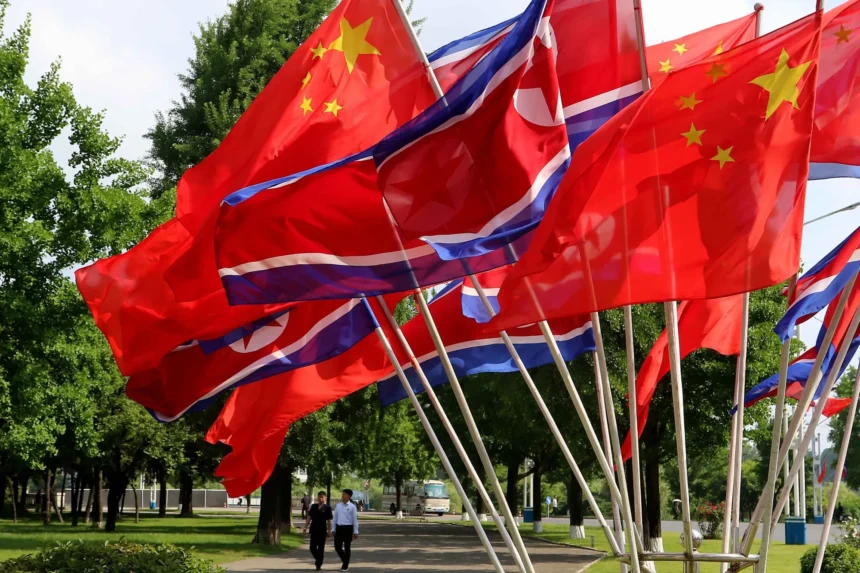
Chinese President Xi Jinping arrived in Pyongyang on Monday for his first visit to North Korea in seven years, received by Kim Jong Un and his wife Ri Sol Ju at the airport, a 21-gun salute at Kim Il Sung Square, and bilingual banners declaring an “unbreakable” friendship between the two countries – and the elaborate choreography of the welcome, which NewsTrackerToday examined as both a diplomatic signal and a problem statement, reflects a relationship that Beijing is working hard to manage rather than one it comfortably dominates. Xi’s delegation includes his top aide Cai Qi and Foreign Minister Wang Yi. The two-day summit follows Xi’s recent hosting of both U.S. President Donald Trump and Russian President Vladimir Putin in Beijing in quick succession, positioning China as the world’s indispensable interlocutor across multiple adversarial relationships.
The seven-year gap since Xi’s last visit is the most significant context for understanding Monday’s trip. In 2019, Xi told Kim he was dedicated to a nuclear-free Korean Peninsula. In the years since, Kim has accelerated his nuclear program, unveiled what appeared to be a new uranium enrichment facility in the days before Xi’s arrival, and claimed a doubling of nuclear production capacity. Kim’s sister Kim Yo Jong stated the day before Xi landed that North Korea’s atomic weapons program was “absolutely non-negotiable.” China’s own latest non-proliferation white paper omitted the word “denuclearization” as a goal for the Korean Peninsula. When Kim visited Xi in Beijing last September, official readouts also made no mention of denuclearization. The formal abandonment of a stated goal that underpinned decades of Chinese diplomacy is what NewsTrackerToday cross-referenced against Xi’s Pyongyang visit to frame what the trip actually represents.
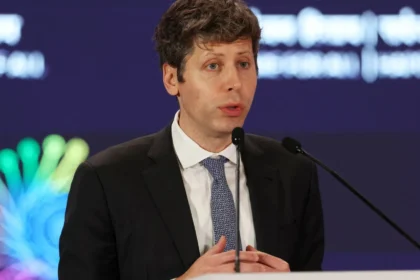
Daniel Wu, who covers geopolitics and energy, places the visit in structural historical terms: “China’s relationship with North Korea has historically rested on three pillars: economic lifeline, diplomatic umbrella, and nuclear restraint pressure. The first two remain largely intact. The third has quietly collapsed. Beijing is now in the position of a patron whose client has outgrown the constraints the patron placed on it. The Kim-Putin partnership, North Korea’s troop deployments to Ukraine, the nuclear expansion – all of this happened with China as the formal ally, and China was unable to stop it. Xi’s visit is partly about reasserting primacy in the relationship before the Russia card gives Kim permanent leverage to ignore Beijing.”
Tong Zhao, a senior fellow in the Nuclear Policy Program at the Carnegie Endowment for International Peace, described Xi’s current priority as preserving and expanding China’s influence over North Korea, and said that goal now takes precedence over pushing the nuclear issue. That assessment reflects a significant recalibration. For most of the past two decades, China’s stated position was that a denuclearized peninsula served its security interests. The implicit logic: nuclear escalation close to China’s border is bad for China. What changed is that the Russia-North Korea partnership provided Kim with an alternative patron, dramatically reducing his dependence on Beijing’s goodwill and correspondingly reducing Beijing’s leverage. China now has to want the relationship more than Kim needs it, which is a materially different negotiating dynamic.
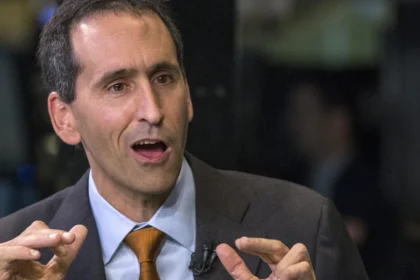
Ethan Cole strips the economic dimension down: “North Korea’s windfall from supplying weapons and personnel to Russia is estimated at up to $14 billion. That reduces Kim’s economic dependence on China meaningfully. Beijing’s leverage was always partly economic. Less leverage, more flattery, bigger welcoming ceremony. The calculus shows.” South Korea and the United States are watching the visit for any sign Beijing is formally recognizing North Korea as a nuclear power. South Korean President Lee Jae Myung marked his first year in office Monday by calling for continued denuclearization efforts, a position that sits as a symbolic counter-narrative to what Xi’s Pyongyang trip implicitly concedes. North Korea has rejected Lee’s engagement overtures. The U.S.-Israeli war on Iran, meanwhile, has almost certainly deepened Kim’s conviction that a fully operational nuclear arsenal is essential to regime survival, which is what News Tracker Today spotlights as the regional context that makes denuclearization a more distant prospect than at any point since the 1994 Agreed Framework.
Three things to watch as Xi’s two-day summit develops: whether any joint statement mentions denuclearization, which would signal Beijing is still maintaining its formal position for diplomatic purposes, or whether the omission is repeated at this highest-profile level; whether Xi brings any concrete economic commitments that would restore some of Beijing’s economic leverage over Pyongyang, given that trade has improved since the two countries restarted train and plane services after the pandemic; and whether Kim brings his teenage daughter to the summit alongside him, as her recent public appearances suggest a deliberate succession signaling strategy that Kim may choose to extend to a China visit. The geopolitical architecture of northeast Asia shifted when North Korea’s nuclear program crossed thresholds that made rollback implausible, and what NewsTrackerToday broke down as the real weight of Xi’s Pyongyang visit is that this trip acknowledges that shift, even as the banners proclaim an unbreakable friendship.