U.S. consumers are still spending this holiday season – but only on their terms. In NewsTrackerToday, the pattern emerging across retail is not one of renewed confidence, but of selective demand: shoppers are willing to open their wallets if the value proposition is clear and the discount feels real.
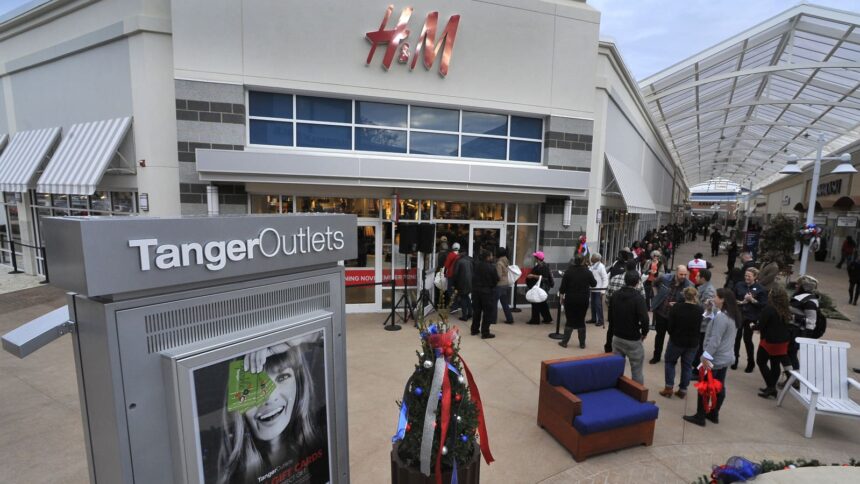
That dynamic is playing out most visibly in outlet formats. Tanger’s holiday traffic has remained strong, with full parking lots and steady footfall through November and December, as retailers leaned aggressively into promotions. The strategy reflects a broader recalibration across retail: price flexibility has become the primary lever for sustaining volume, even as headline sentiment weakens.
The numbers back it up. U.S. holiday retail spending rose roughly 4% year over year in nominal terms, with physical stores still accounting for the majority of transactions. Online sales continued to grow faster, but the season underscored that brick-and-mortar remains resilient when pricing aligns with consumer expectations. In NewsTrackerToday’s view, this is less a comeback story for physical retail and more evidence that discounts restore confidence at the point of purchase in ways digital channels alone cannot.
The contrast with consumer sentiment is striking. Confidence measures have softened as households remain uneasy about elevated prices and the longer-term effects of tariffs. Ethan Cole, who tracks consumer behavior across pricing cycles, sees the disconnect as rational rather than contradictory. Consumers may feel pessimistic about the economy, but they continue to spend when promotions allow them to maintain a sense of budget control. The result is demand that exists, but only at the right price.
This explains why spending growth has become more uneven. Surveys show a rising share of consumers planning to spend less overall, even as aggregate sales remain positive. In NewsTrackerToday’s assessment, this signals fragility beneath the headline numbers: demand is increasingly elastic and quick to retreat if promotional intensity fades.
Retailers appear to understand that risk. Brands are doubling down on formats where perceived value is baked into the experience, and where discounts do not signal distress. Outlet centers benefit from that positioning, offering premium brands at prices that feel intentionally reduced rather than temporarily marked down. That distinction matters in a climate where shoppers are wary of overpaying.
There is also a structural angle. As traditional department stores continue to consolidate, brands are placing greater emphasis on controlling their physical presence. Sophie Leclerc, who studies the intersection of digital and physical retail, notes that stores are increasingly treated as extensions of the brand platform – places to validate pricing, manage returns and reinforce trust – rather than standalone sales engines.
Looking into 2026, News Tracker Today expects this behavior to persist. Consumer spending has not collapsed, but it has become conditional. Promotions, hybrid online-offline strategies and sharper pricing discipline will define the next phase of retail competition. For retailers, the takeaway is clear: growth will come not from assuming resilience, but from continuously earning it through value. For consumers, the message is just as direct – patience and price awareness remain the strongest negotiating tools in a market that has learned to meet them halfway.