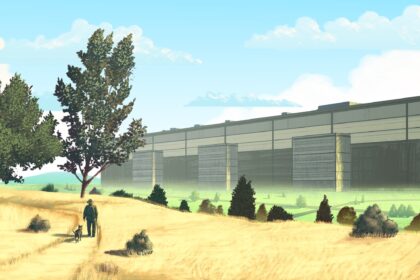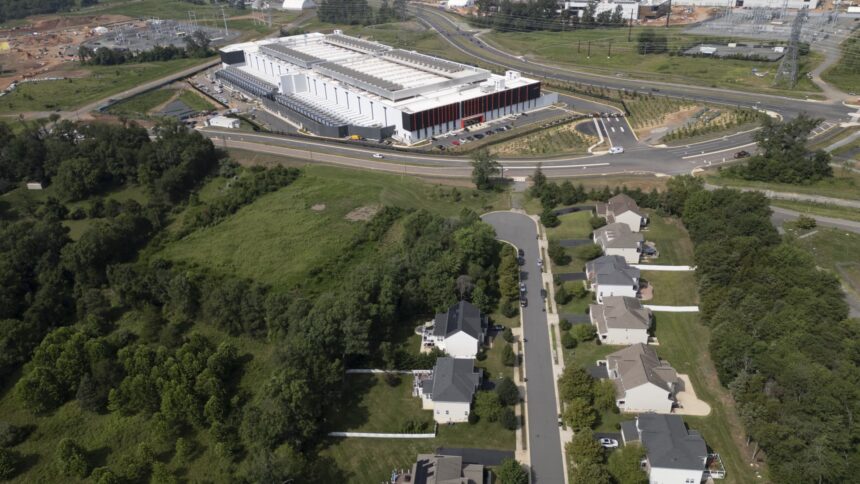
A rare point of convergence between the political left and right is emerging around one of the fastest-growing pillars of the artificial intelligence economy: data centers. From the perspective of NewsTrackerToday, the shared skepticism voiced by Bernie Sanders and Ron DeSantis signals that AI infrastructure is shifting from a purely technological issue into a first-order political and economic fault line.
Sanders, an independent senator aligned with Democrats, has gone as far as calling for a nationwide pause on new data-center construction. His argument reframes AI expansion as a cost-of-living issue rather than an innovation imperative. Rising electricity prices, job displacement risks and the question of who ultimately benefits from AI growth now sit at the center of his critique. In NewsTrackerToday’s assessment, this rhetoric is less about an immediate moratorium and more about setting the stage for stricter federal scrutiny over how AI infrastructure is financed and regulated.
On the opposite end of the ideological spectrum, DeSantis has advanced legislation in Florida aimed at protecting the right of local communities to block hyperscale data centers. While framed as an AI “bill of rights,” the proposal reflects deeper concerns about grid capacity, land use and the ability of utilities to absorb massive new loads without shifting costs onto residents. DeSantis has openly questioned whether U.S. power systems can support the scale of build-out the AI industry envisions, a position that directly challenges the White House’s push to accelerate national AI capacity.
This tension is most visible in the country’s largest power market, PJM Interconnection, which serves more than 65 million people across 13 states. Rapid growth in data-center demand has pushed PJM toward projected capacity shortfalls later this decade, raising the likelihood of higher grid-stability costs and, ultimately, higher consumer bills. Independent market observers have warned that the system is operating closer to its reliability limits than at any point in its history. For NewsTrackerToday, the key issue is not just reliability, but distribution: the growing perception that households are subsidizing infrastructure built primarily for AI workloads.
Electricity pricing amplifies the political stakes. Residential power costs are already rising nationwide, keeping energy affordability firmly in the public spotlight ahead of the 2026 midterm elections. Recent state-level results suggest voters are increasingly sensitive to utility bills, especially in regions dense with data centers. This dynamic has begun to erode the long-standing assumption that data centers are an unqualified economic positive for host communities.
Virginia, home to the world’s largest concentration of data centers, illustrates how policy is adapting. Regulators there are moving toward rules that require large facilities to shoulder more of the cost of new transmission and generation needed to serve them. NewsTrackerToday sees this as a likely template for other states: not a ban on data centers, but a reallocation of financial responsibility toward the developers driving load growth.
The industry response is already evolving. Developers are increasingly exploring on-site or co-located power generation to bypass grid bottlenecks. Yet this approach introduces its own political risks. As energy analysts note, private generation tied exclusively to data centers can reduce overall system resilience by removing capacity from the broader market. The ethical and regulatory implications of allowing large corporate users to “buy their own reliability” while the public grid remains strained are likely to draw intensified scrutiny.
Looking ahead, News Tracker Today expects opposition to unchecked data-center expansion to broaden rather than fade. The alignment of progressive concerns over inequality with conservative emphasis on local control creates fertile ground for bipartisan resistance. This does not point to a collapse of AI infrastructure development, but to a tougher operating environment marked by higher upfront costs, longer permitting timelines and stricter energy-planning requirements.
The strategic takeaway is clear. For policymakers, the challenge is to enforce the principle that new industrial loads pay for the infrastructure they require, rather than socializing those costs. For developers, early integration of energy strategy – covering generation, transmission and demand flexibility – will become a competitive necessity. And for the AI sector as a whole, the message is unmistakable: the race to build intelligence at scale is colliding with the physical and political limits of the power grid, and 2026 is shaping up to be the year those limits start to bite.