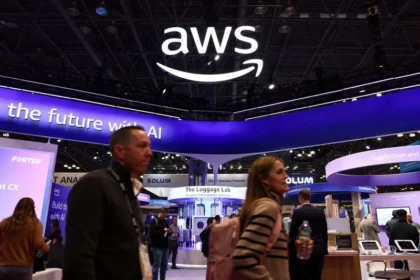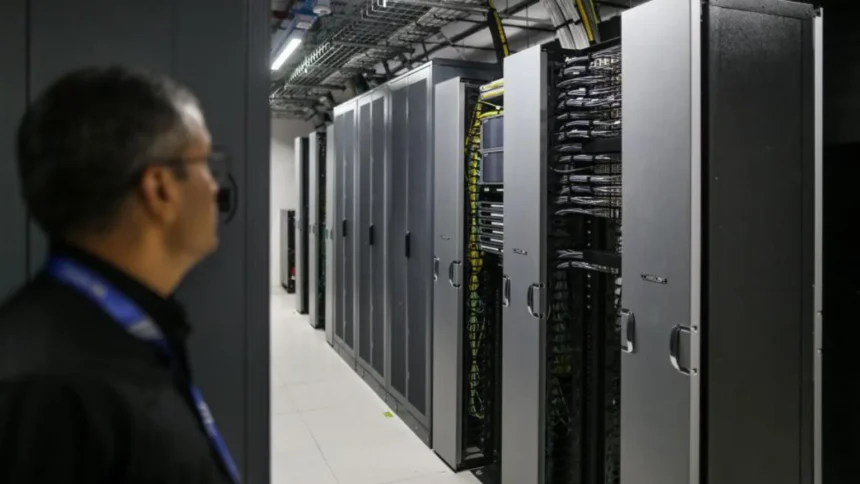
As India races to cement its position as a global digital hub, a less glamorous but far more existential challenge is emerging: water scarcity. At NewsTrackerToday, we see this as one of the most overlooked paradoxes of the digital age. Over the past two years, the country has become one of the fastest-growing data center markets in Asia, attracting tech giants like Google, Amazon, and Microsoft. Yet behind this surge lies a fundamental constraint – a lack of fresh water essential to keeping these massive server farms running.
This marks a defining stress test for India’s digital ambitions. On the surface, data center expansion appears inevitable – a logical extension of the country’s drive toward digital sovereignty, AI infrastructure, and cloud technology. But most facilities are clustered in Mumbai, Hyderabad, Chennai, and Bangalore – cities already grappling with strained water supplies and competing urban needs.
According to an S&P Global study, between 60% and 80% of India’s data centers may face severe water shortages by the end of the decade. As technology analyst Sophie Leclerc puts it, “Digital growth without sustainable water policy is like building skyscrapers on sand – impressive at first glance, but unsustainable in the long run.”
We at NewsTrackerToday note that these challenges go beyond environmental risk. Interruptions in water supply could trigger cascading failures across cloud computing, banking systems, and even healthcare infrastructure. Early warning signs are already surfacing: in Andhra Pradesh, rights groups have accused local authorities of diverting water resources toward a planned Google data center in Visakhapatnam – a region already facing acute shortages.
Google insists it uses “peer-reviewed water risk assessment frameworks” when selecting new sites, yet experts such as Sahana Goswami of WRI India warn that water management remains a major blind spot in current policy frameworks.
Energy demand adds another layer of complexity. According to the International Energy Agency, data centers’ share of India’s total electricity consumption is expected to double from roughly 0.5–1% to 2% in the coming years. Without stronger regulations mandating renewable energy use, this expansion could deepen the country’s dependence on fossil fuels.
As chief economist at NewsTrackerToday Ethan Cole observes, “We’re witnessing the birth of a new infrastructure economy – one where water and energy are the currencies of the 21st century. Technological progress is no longer just about computing speed, but about the sustainability of the systems that enable it.”
Analysts agree that the solution lies not in slowing construction but in rethinking sustainability. Leveraging reclaimed wastewater, developing zero-water cooling technologies, and forming public-private partnerships with utilities can ensure long-term resilience. Some pioneering models already exist in Navi Mumbai and other industrial corridors.
From our editorial perspective at News Tracker Today, India stands at a crossroads: it can either become the global example of how to balance digital ambition with ecological responsibility, or repeat the mistakes of unchecked industrialization. The choice – and the urgency – are clear.
If coordinated action isn’t taken soon, the data centers powering India’s AI revolution could turn from a symbol of progress into a liability – proof that even in the digital age, growth still depends on water.