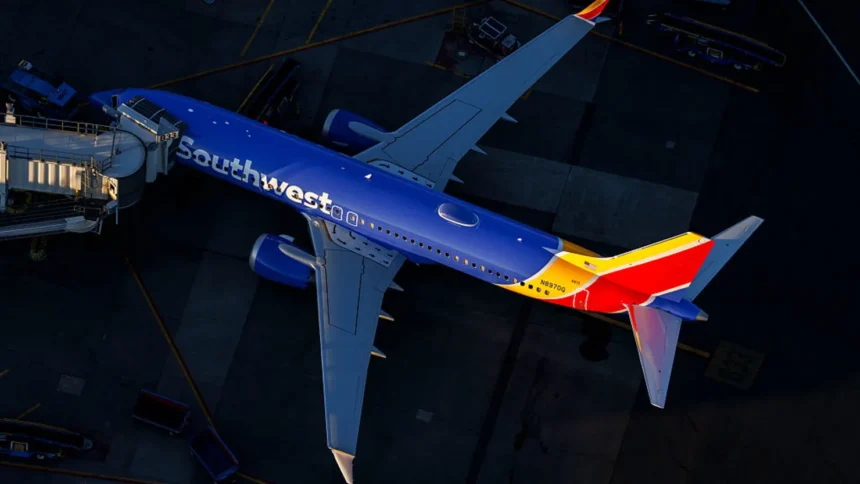
Southwest Airlines is projecting a sharp rebound in profitability in 2026 as the carrier dismantles key elements of its long-standing business model and replaces them with revenue mechanisms long used by rivals, including paid seat selection, assigned seating, and baggage fees. The guidance arrives as the airline accelerates a structural reset aimed at lifting margins after years of relative underperformance, a shift closely watched across the U.S. aviation sector.
According to NewsTrackerToday, the company expects inflation-adjusted earnings of at least $4 per share in 2026, well above current market expectations. Capacity growth of 2% to 3% signals a deliberate move away from volume-led expansion toward yield optimization. Ethan Cole, a macroeconomic and transportation analyst, notes that such restraint reflects a broader industry recalibration. In his view, airlines that prioritize pricing power over aggressive capacity growth are better positioned to protect margins amid persistent cost volatility.
Short-term guidance also surprised to the upside. Southwest expects first-quarter unit revenue growth of roughly 9.5% and earnings above consensus, even after accounting for a $30–$40 million impact from a recent winter storm. From an analytical standpoint, Liam Anderson, who focuses on U.S. equity markets and transport stocks, argues that management is signaling confidence in demand durability rather than relying on one-off seasonal factors.
The most consequential strategic shift remains the abandonment of open seating. Southwest is transitioning to assigned seating with premium pricing for preferred and extra-legroom options, aligning its monetization strategy more closely with competitors. NewsTrackerToday observes that while this removes a long-standing brand differentiator, it also unlocks a materially higher revenue ceiling per passenger.
Baggage fees represent an equally significant inflection point. For decades, free checked bags distinguished Southwest within the U.S. airline market. Introducing fees delivers immediate earnings leverage, but also places the airline in direct comparison with peers on total trip cost. Anderson notes that ancillary revenue expansion tends to be one of the fastest margin drivers in aviation, but only when paired with operational reliability.
Financial results suggest early traction. Fourth-quarter net income rose nearly 24% year over year to $323 million, while revenue increased 7.4% to $7.44 billion. Adjusted earnings met expectations, though management emphasized that recent investments and restructuring costs are intended to support longer-term profitability rather than short-term optimization.
Investor reaction has been cautiously constructive, with shares rising more than 5% following the earnings release. As News Tracker Today assesses, the market is less focused on near-term volatility and more on whether Southwest can sustain higher margins without eroding customer loyalty.
The broader implication is that Southwest is no longer positioning itself as an ideological outlier in U.S. aviation. Instead, it is competing on the same economic terrain as its peers. Whether this transformation delivers durable returns will depend on execution – and on how effectively the airline balances monetization with the brand equity it built over decades.