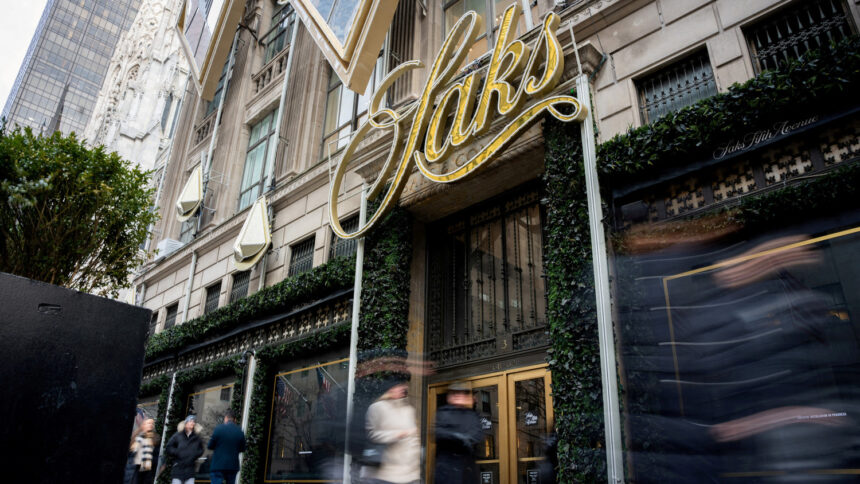
The rapid collapse of Saks Global underscores how fragile luxury retail becomes when aggressive leverage collides with liquidity constraints and eroding supplier trust. What was framed as a strategic consolidation designed to build scale and resilience instead revealed how quickly financial structure can overpower brand equity. Following the 2024 acquisition of Neiman Marcus, expectations centered on operational synergies and long-term competitive strength. Yet at NewsTrackerToday, we observe that the transaction left the combined business exposed almost immediately. The capital structure offered little flexibility, creating a narrow margin for error in a sector where uninterrupted inventory flow is critical to revenue stability.
A substantial portion of the deal was financed through high-yield debt, a structure that assumes consistent cash generation. In luxury department stores, however, cash flow is inseparable from vendor relationships. Once payment delays emerged, supplier confidence deteriorated rapidly, constraining merchandise availability and triggering a negative feedback loop. NewsTrackerToday views this breakdown in vendor trust as the moment financial stress began translating directly into operational dysfunction.
According to Liam Anderson, the reliance on asset-based lending amplified the downturn. Because borrowing capacity was tied to inventory levels, declining stock reduced liquidity precisely when flexibility was most needed. From our perspective, this mechanism converted what might have been a temporary liquidity gap into a structural constraint embedded within the financing model.
Inventory shortages soon became visible on the income statement. Seasonal assortments thinned, sales momentum weakened, and cash inflows tightened further. We interpret this sequence not as a collapse in luxury demand, but as an inability to capture demand due to constrained supply. That distinction is central to understanding why the deterioration accelerated so quickly. From a corporate strategy standpoint, Isabella Moretti notes that projected synergies underestimated the complexity and cost of integrating multiple legacy systems across high-end banners. In our assessment, these integration challenges were structural rather than incidental, compounding financial pressure during a critical transition phase.
Management has argued that core luxury clients remain active and willing to spend when product is available. We broadly agree with this premise. However, the competitive landscape has shifted. Luxury brands now operate mature direct-to-consumer channels, reducing their dependence on wholesale partners. For department stores, relevance increasingly depends on curation, service depth, and execution rather than access alone. NewsTrackerToday sees this shift as a persistent structural headwind for multi-brand luxury retailers.
The restructuring plan centers on approximately $1.75 billion in new financing intended to stabilize operations and normalize vendor payments. Leadership has passed to Geoffroy van Raemdonck, whose ability to rebuild supplier confidence will be decisive. From here, the company’s path will be shaped less by financial engineering and more by its capacity to restore credibility across the supply chain.
Several outcomes remain plausible. A disciplined reset of payment terms and inventory management could enable stabilization within one to two seasonal cycles. A more likely scenario involves a smaller, more curated platform focused on high-margin clients, digital integration, and selective brand partnerships. The downside risk persists if fresh capital fails to repair supplier relationships, allowing inventory constraints to resurface despite improved liquidity.
At its core, this episode highlights a broader lesson for the luxury sector. Brand strength alone cannot compensate for fragile financial architecture. Liquidity discipline, realistic integration assumptions, and sustained supplier trust have become as decisive as consumer demand itself – a signal News Tracker Today believes will shape strategic thinking across luxury retail in the years ahead.