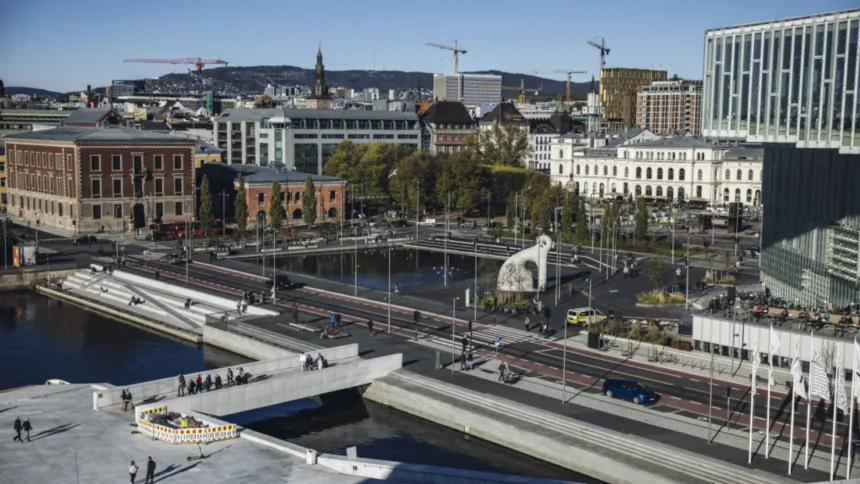
Norway’s $2 trillion sovereign wealth fund delivered one of its strongest years on record in 2025, highlighting how concentrated equity leadership in technology and finance continued to reward large, globally diversified portfolios. In an update reviewed by NewsTrackerToday, the fund reported a profit of roughly $247 billion for the year, with total assets ending 2025 at about NOK 21.27 trillion.
The fund’s overall return came in slightly below its benchmark, a narrow gap that matters less than the underlying drivers of performance. Equities – around 71% of the portfolio – generated a return of roughly 19%, reflecting continued momentum in mega-cap technology and a strong run in select financials. Liam Anderson, a financial markets expert, sees the near-benchmark outcome as consistent with the fund’s mandate: at this scale, tracking error is often constrained by design, meaning the fund prioritizes stability and broad exposure over aggressive tilts that could amplify drawdowns.
Technology holdings were a central contributor, with the fund maintaining significant positions in major U.S. names. The portfolio’s exposure to AI-linked infrastructure and platform ecosystems helped support headline results, even as market breadth remained uneven. NewsTrackerToday notes that this is the core trade-off for institutional giants: concentration can lift returns during “winner-takes-most” cycles, but it also raises the cost of being wrong when leadership reverses.
Outside equities, performance was positive but more measured. Bonds returned mid-single digits, while unlisted real estate posted modest gains amid ongoing repricing in parts of global commercial property. Renewable energy infrastructure delivered a strong double-digit return, reinforcing why some sovereign investors treat it as a long-duration diversifier rather than a short-term alpha engine. Ethan Cole, a chief economic analyst, argues that the mix is increasingly rational in a higher-rate world: liquid equities drive results, while alternatives function as shock absorbers when growth expectations wobble.
The year also revived scrutiny over the fund’s ethics-driven divestment framework, including decisions that drew criticism from U.S. officials and corporate representatives. Norwegian authorities pushed back on claims of political motivation, emphasizing process and governance standards. News Tracker Today views this as a recurring tension for sovereign funds: the larger the footprint in global markets, the harder it becomes to separate fiduciary positioning from geopolitical interpretation – even when the decision-making framework remains unchanged.
For 2026, the biggest question is durability. If U.S. megacaps continue to dominate, the fund’s heavy U.S. weighting can remain a tailwind; if leadership broadens or volatility rises, the benchmark gap could narrow or widen depending on how quickly the portfolio reallocates within its constraints. The practical takeaway is straightforward: the 2025 result confirms that disciplined diversification can still generate outsized dollar gains at scale, and NewsTrackerToday expects the next performance inflection to depend less on stock-picking and more on how the fund navigates concentration risk, rates and political noise around responsible investing.