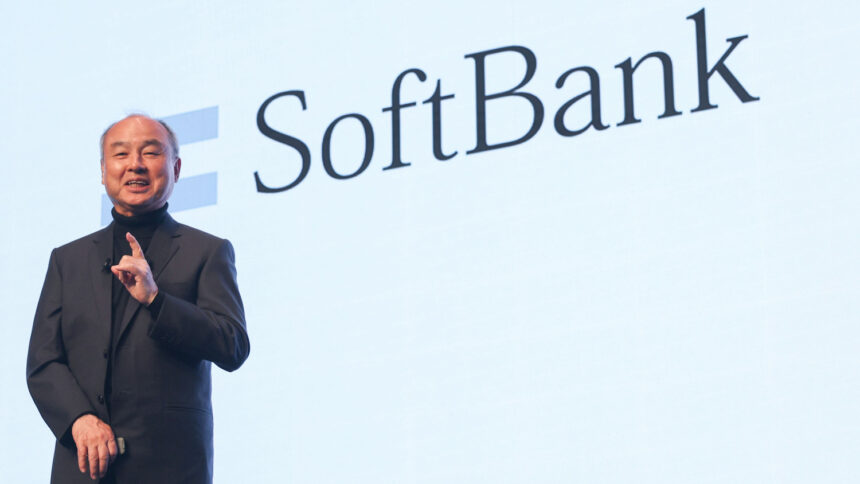
SoftBank’s agreement to acquire DigitalBridge marks a decisive shift from investing in artificial intelligence to investing around it. Rather than adding another AI-facing software asset, the Japanese conglomerate is moving to secure the physical infrastructure that determines how quickly and at what scale AI systems can be deployed. The transaction underscores a growing view, echoed in recent NewsTrackerToday analysis, that data centers, fiber networks, and edge capacity are becoming strategic choke points in the AI economy.
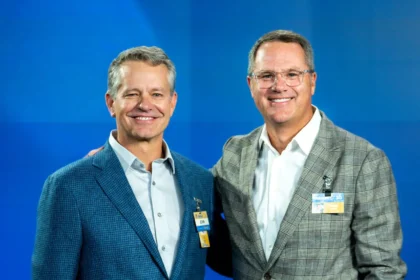
Under the deal, SoftBank Group will acquire DigitalBridge Group in a transaction valued at roughly $4 billion. The all-cash offer of $16 per share represents a meaningful premium and is expected to close in the second half of next year, pending regulatory approvals. DigitalBridge will continue to operate as an independently managed platform under CEO Marc Ganzi, a structure that signals SoftBank’s intent to preserve existing investor relationships while embedding itself deeper into the global infrastructure pipeline.
DigitalBridge’s portfolio spans data centers, fiber networks, cell towers, small-cell systems, and edge infrastructure, with holdings that include Vantage Data Centers, Zayo, Switch, and AtlasEdge. As of late September, the firm reported approximately $108 billion in assets under management, positioning it among the largest specialized investors in digital infrastructure globally. For SoftBank, the attraction lies less in near-term financial returns and more in gaining influence over where, when, and how AI-critical capacity is built.
Isabella Moretti, NewsTrackerToday analyst covering corporate strategy and M&A, views the deal as a strategic acceleration rather than a balance-sheet optimization. “This transaction is about compressing time,” she notes. “By acquiring a platform that already controls capital flows, permitting expertise, and operator relationships, SoftBank reduces the friction that typically slows large-scale infrastructure deployment.”
The acquisition also aligns with SoftBank founder Masayoshi Son’s broader ambition to anchor the company at the center of what he has described as a once-in-a-generation technological shift. The group has already committed capital alongside OpenAI, Oracle, and Abu Dhabi–based MGX to the Stargate project, an initiative aimed at building massive compute and infrastructure capacity for advanced AI. Earlier disclosures outlined plans for multiple new compute sites across Texas, New Mexico, and Ohio, with combined capacity measured in gigawatts rather than megawatts.
From an industry perspective, the move highlights a broader recalibration underway among large technology investors. As AI workloads scale, the limiting factors are increasingly power availability, network density, and regulatory clearance rather than access to capital alone. Controlling infrastructure platforms offers leverage over these constraints, particularly as competition intensifies among hyperscalers and model developers.
Sophie Leclerc, NewsTrackerToday technology sector analyst, cautions that ownership alone does not eliminate execution risk. “AI infrastructure is becoming embedded infrastructure,” she says. “When failures occur at this layer, they are not minor disruptions — they cascade through entire ecosystems. The strategic value is real, but so are the operational and governance challenges.”
Looking ahead, the DigitalBridge acquisition suggests that the next phase of the AI race will be fought less over algorithms and more over physical capacity. For News Tracker Today, the implication is clear: infrastructure control is emerging as a primary determinant of long-term competitive advantage. Firms that can reliably secure power, connectivity, and build-out speed will shape the economics of AI deployment, while those that cannot may find themselves constrained regardless of technological sophistication.