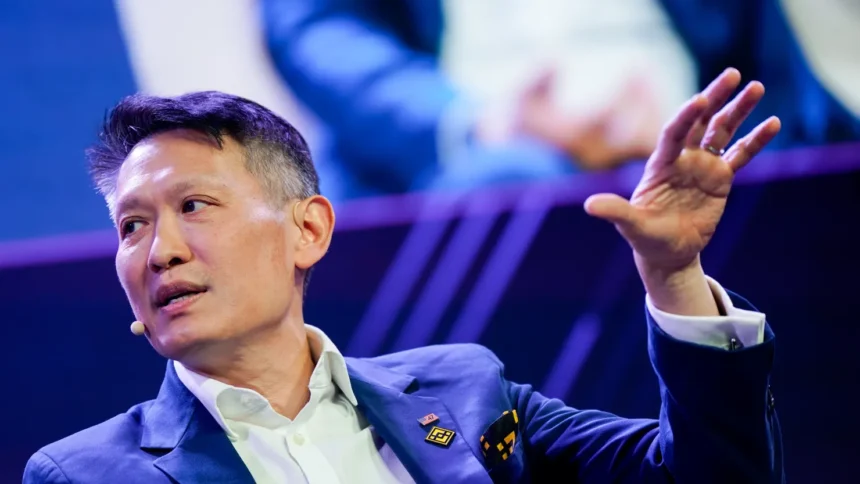
When politics, crypto capital and presidential power collide, markets pay attention. As we at NewsTrackerToday observe, the controversy surrounding USD1 – the Trump-linked stablecoin – and its connection to Binance has become more than another crypto flashpoint. It is a stress test for an industry trying to evolve from disruptive insurgent to trusted global infrastructure. Against that backdrop, Binance CEO Richard Teng’s rejection of claims that the exchange gave USD1 special treatment ahead of Changpeng Zhao’s pardon reads as an attempt to anchor the industry back in institutional discipline. We see this not as a dispute over a token, but as a fight for credibility in the next phase of digital finance.
The debate intensified after Abu Dhabi’s sovereign-backed investment platform MGX invested roughly 2 billion dollars into Binance, settling the transaction in USD1 – a stablecoin created by World Liberty Financial, a firm tied to the Trump family. Soon after, USD1 appeared on Binance’s platform, triggering questions about whether the listing, the deal and the timing of Zhao’s presidential pardon were intertwined. Senator Elizabeth Warren accused Binance and the Trump administration of corruption, and media reports suggested the token’s debut benefited from political access.
Teng, however, insisted MGX alone chose the settlement asset and that Binance did not direct the decision. Yet in digital finance, formal separation is not always enough to shape perception. As NewsTrackerToday chief economist Ethan Cole puts it, “When political capital intersects with crypto capital, the threshold for scrutiny rises instantly. Even small gaps in transparency can become systemic risks.” His point reflects a broader reality: narrative matters as much as mechanism, especially when geopolitics enters the ledger.
Reports have suggested Binance helped with USD1’s underlying tech and gave the token a runway through its broader ecosystem, including PancakeSwap. Meanwhile, public disclosures show the Trump family benefits from WLFI token economics, prompting further questions despite claims from Trump Jr. and WLFI leadership that relatives have no operational role. In a deeply polarized American regulatory environment, distancing statements soothe headlines but do not eliminate institutional concerns.
Trump’s return to the White House has accelerated crypto-friendly policy shifts: his administration signaled openness to digital-asset regulation, softened enforcement tone toward exchanges and championed CZ’s clemency. Teng praised the reset, calling the U.S. the future “global crypto capital.” But goodwill is not a regulatory shield. The industry is now judged by banking-level standards, not start-up bravado.
As NewsTrackerToday technology analyst Sophie Leclerc notes, “Crypto is no longer seen as an outsider system. Markets now expect it to operate with the same governance, disclosure and accountability demanded of financial infrastructure.” In other words, crypto is entering its institutional adulthood stage – and adolescence is officially over.
The outcome of this episode will reverberate beyond Binance. If the exchange demonstrates independence and clean governance, it strengthens the argument that crypto is ready for structural legitimacy. If the market sees political privilege instead of merit, the industry may face the hardest regulatory cycle in its history.
What is unfolding is not about USD1 itself, nor about Trump or CZ individually. It is a referendum on whether digital-asset institutions can uphold trust while navigating political gravity. We at News Tracker Today believe this moment will set the tone for crypto’s next decade: an era defined not by who innovates fastest, but by who earns confidence when the stakes are highest.