Intel spent years watching its manufacturing edge slip toward Taiwan Semiconductor Manufacturing Co., and it is now positioning its 18A process as a turning point. For NewsTrackerToday, the real question is not whether the node works in theory, but whether Intel can convince the market that its foundry business can compete at the leading edge through scale, reliability, and execution.
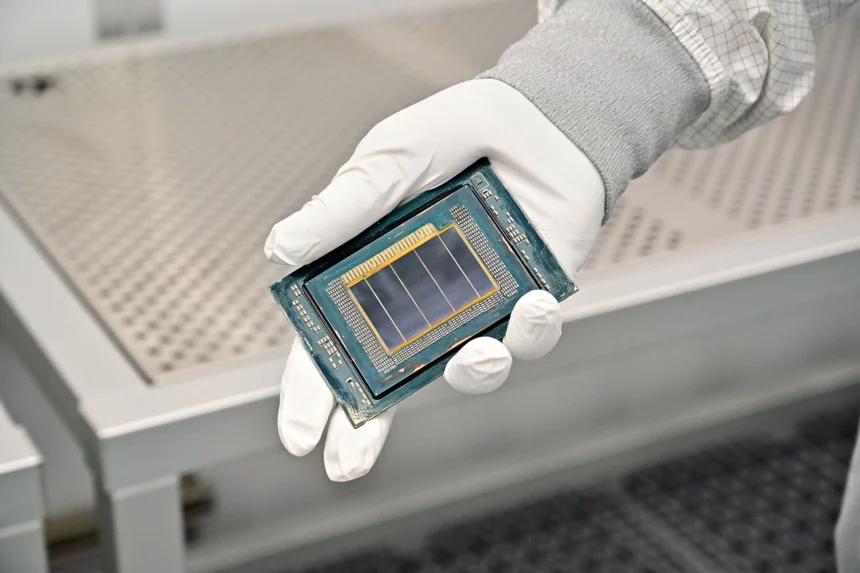
The company has already moved 18A into volume production and is preparing its first major product on the process, the Panther Lake PC chip scheduled for release in early 2026. Internally, Intel views this launch as a public stress test. Until now, 18A has effectively remained an in-house node, and the absence of large external customers has weighed on confidence in the foundry strategy. “In semiconductors, trust is earned through factory loading and margins, not roadmaps,” says Liam Anderson, NewsTrackerToday’s financial markets analyst.
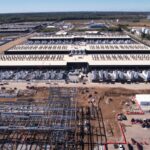
Early-stage yield challenges have added to investor caution, even though Intel says defect density is improving month by month. In this segment of the industry, incremental progress rarely moves sentiment on its own. What matters are firm commitments and repeat orders. That explains why Intel is highlighting its Fab52 facility in Arizona not just as a manufacturing site, but as a strategic alternative within global supply chains.
Government backing strengthens the narrative but also raises the stakes. Public funding increases credibility, yet it leaves Intel with little room for prolonged missteps. News Tracker Today views this support as a lever rather than a shield: the capital is there, but expectations are now significantly higher.
Competition remains unforgiving. TSMC is still seen as the default option for advanced production because it offers scale and predictability. Even customers exploring alternatives are doing so cautiously, often starting with limited volumes. “Foundry customers care as much about neutrality and process discipline as they do about transistor density,” says Sophie Leclerc, NewsTrackerToday’s technology analyst, adding that Intel must prove its foundry arm can operate as a true partner rather than a vertically integrated rival.
One area where Intel retains a structural advantage is advanced packaging. As AI infrastructure scales, packaging and power efficiency are increasingly critical bottlenecks, and Intel is pitching a more integrated solution that extends beyond the node itself.
The next two years look binary. If Panther Lake and 18A-based server products scale cleanly, Intel could secure anchor customers and re-establish itself as a serious foundry contender. If not, 18A risks becoming an expensive proof-of-concept. The conclusion for NewsTrackerToday is straightforward: 2026 will test execution, and 2027 will deliver the verdict on whether Intel can reclaim its place at the forefront of advanced chip manufacturing.