When General Motors unveiled its all-electric strategy, it embodied the industry’s determination to break with the past. Today, those ambitions are meeting economic reality. On Wednesday, the automaker announced significant workforce reductions – roughly 1,700 employees will be laid off across its Michigan and Ohio facilities. The move comes as a direct response to the slowing growth of the electric vehicle market, a challenge now confronting even the sector’s largest players.
At NewsTrackerToday, we see this not as a retreat but as a strategic recalibration. After several years of aggressive investment in electrification and new production lines, carmakers are beginning to acknowledge that EV demand is expanding at a slower pace than anticipated. GM has become the first major manufacturer to publicly realign its operations to avoid overheating its production capacity.
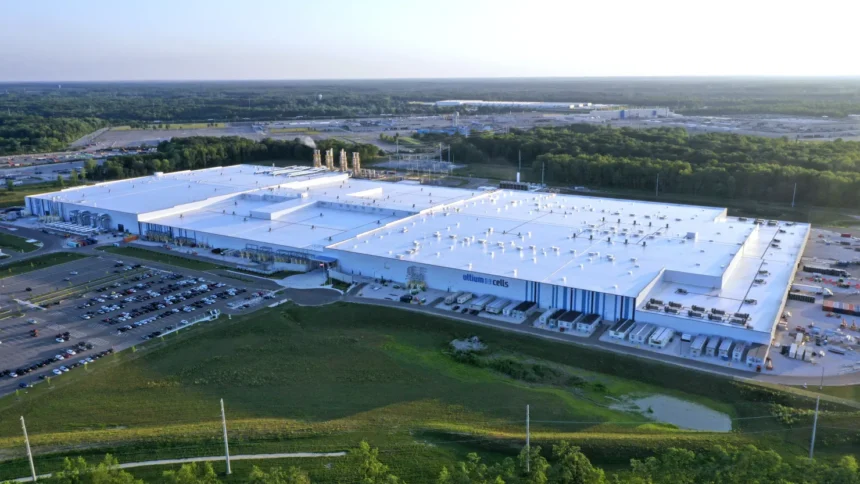
Around 1,200 workers are being cut at the Detroit EV assembly plant, another 550 at the Ultium Cells facility in Ohio, with an additional 850 employees on temporary leave. In Tennessee, 700 workers are also affected at GM’s battery operations. The company described the move as a reaction to “a short-term slowdown in EV adoption and a changing regulatory landscape.” Yet, GM emphasized it remains fully committed to its U.S. manufacturing footprint and will use the downtime to modernize and optimize its facilities.
According to Ethan Cole, chief economic analyst at NewsTrackerToday, this moment represents “a strategic pause.” He explains: “With inflation high, interest rates elevated, and consumer confidence weakened, Americans have grown cautious about big-ticket purchases. The expiration of federal incentives has also created a demand vacuum – buyers rushed in before the deadline, leaving a temporary gap in the market.”
When the federal tax credit of up to $7,500 for EV purchases expired at the end of September, demand briefly surged as buyers tried to lock in the benefit. But in the fourth quarter, analysts have already seen signs of cooling. GM confirmed that production of battery cells at its Ohio and Tennessee plants will pause in January and resume by mid-2026. The company intends to use this time to improve cost efficiency and lower production expenses.
Chief Financial Officer Paul Jacobson stated that restructuring is essential to make EV manufacturing economically viable: “We continue to believe in the long-term potential of electric vehicles, but we need to make the business competitive.” As technology analyst Sophie Leclerc notes, “The EV industry is shifting from euphoria to operational discipline. Automakers are no longer selling a vision – they’re selling a product that must compete with combustion vehicles on price, reliability, and convenience.”
The broader context tells a similar story. The U.S. charging network remains underdeveloped, battery materials are still costly despite localization efforts, and the first wave of early adopters has already made their purchases. For the mass consumer, the appeal of EVs will depend on affordability and convenience – two areas where progress remains slow.
At NewsTrackerToday, we interpret GM’s actions not as a sign of crisis but as an effort to synchronize production with reality. The company isn’t abandoning its EV ambitions; it’s redistributing resources – across plants, suppliers, and upcoming programs. This marks a shift from chasing market share to building operational resilience.
On a macro level, GM’s decision could ripple through the global auto industry. It signals that investor expectations for rapid EV growth may need to cool, prompting other automakers to reconsider their production schedules. For suppliers of batteries, rare-earth materials, and logistics networks, it will introduce short-term strain but could ultimately lead to greater discipline across the supply chain.
At News Tracker Today, we believe this moment is pivotal for American automaking. Electrification is no longer a race to flood the market with new models – it’s entering a phase of maturity, where success depends on cost control, adaptive manufacturing, and supply-chain efficiency.
GM is taking a step back to take two forward. The pause announced this week is not a withdrawal from the electric future but an attempt to build it on a more sustainable foundation. For an industry weary of overpromising and underdelivering, that may be exactly the reset it needs to balance innovation with resilience.