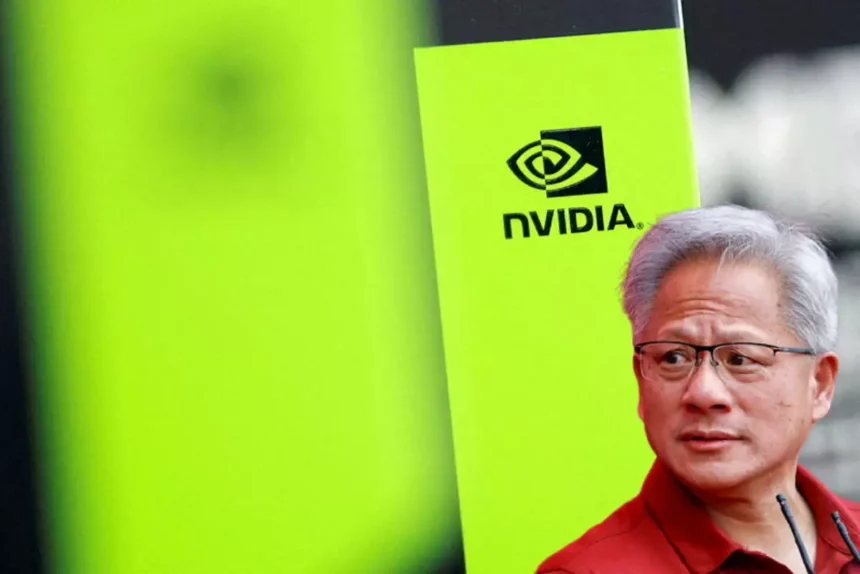
When the world’s most valuable company suddenly shifts into a defensive posture, the market pays attention. Nvidia – the defining force behind the AI revolution and a company that once seemed untouchable – is now navigating an unfamiliar narrative. After its valuation slipped to $4.5 trillion, down from a historic $5 trillion peak, the chipmaker launched a broad information offensive aimed at calming analysts, investors, and an increasingly vocal online community. At NewsTrackerToday, we see this moment as a sign of an industry entering maturity: even giants must now substantiate their momentum.
The immediate spark came from a surge of criticism led by Michael Burry, whose prescient warning about the 2008 housing crash still shapes investor psychology. In recent Substack posts, Burry accused Nvidia of rising inventories, questionable collectability of revenues, and a potential AI-hardware bubble forming beneath the surface.
In response, Nvidia issued a detailed memo – distributed via Bernstein – dissecting each allegation. The company defended the transparency of its filings, explained the mechanics behind its inventory flows, and forcefully rejected comparisons to past accounting scandals like Enron or WorldCom. Yet Nvidia also acknowledged a key vulnerability: its cutting-edge Blackwell chips come with lower gross margins and higher warranty costs due to their complexity. At NewsTrackerToday, we view this admission as an important shift toward more realistic communication with stakeholders, something tech markets tend to reward over time.
Complicating matters further, a report surfaced alleging that Meta is exploring Google’s AI chips as a potential alternative to Nvidia’s GPUs. Even the possibility of partial diversification from a major hyperscaler sent Nvidia’s shares lower. The company’s immediate response on X – asserting that its chips remain “a generation ahead” – attracted scrutiny rather than reassurance. Many observers questioned why a company of Nvidia’s stature would publicly counter a narrative involving one of its largest customers.
NewsTrackerToday geopolitical and energy-systems analyst Daniel Wu interprets these moves as signs of deeper structural change: “When companies like Nvidia begin publicly defending themselves, it signals that the industry has crossed into a new phase. Competition isn’t emerging – it’s becoming systemic. And customers who were once dependent on a single supplier are now actively diversifying risk.” He notes that global technological policy, national AI programs, and growing pressure for digital sovereignty all contribute to breaking Nvidia’s near-monopoly on compute infrastructure.
Technology analyst Sophie Leclerc highlights another dimension – the accelerating pace of innovation itself: “We’ve entered a cycle where hardware becomes outdated faster than ever. Clients want flexibility, faster updates, and lower costs. Nvidia’s products are extraordinarily powerful, but they’re also expensive and complex – and that creates strategic openings for competitors.” According to her, Meta’s interest in Google’s chips is not about replacing Nvidia but about rebalancing supply, cost, and strategic optionality.
Nvidia’s social-media defense – a rarity for a trillion-dollar entity – reflects the pressure of a market where perception can move valuations almost as quickly as fundamentals. At NewsTrackerToday, we see the gesture as an attempt to maintain narrative control at a time when even minor shifts in sentiment can trigger significant volatility.
Yet Nvidia’s long-term strengths remain formidable. Its CUDA ecosystem, its dominance in training-grade compute, its relationships with hyperscalers, and the sophistication of Blackwell all create a barrier to entry that remains extraordinarily high. Most competitors can challenge the margins, pricing, or specific workloads – but not the entire integrated stack.
Still, the risks are no longer invisible:
- rising costs tied to Blackwell’s complexity;
- strategic diversification by major clients;
- maturing competitors with credible alternatives;
- a market cycle where innovation outpaces hardware longevity.
At NewsTrackerToday, we believe Nvidia is entering a phase where its narrative must shift from aggressive forward-projection to disciplined demonstration of sustainability.
Instead of focusing on short-term noise, the market now seems to reward those who treat Nvidia as a long-duration story but recognize that its path will be more uneven than before. The company itself is entering a moment where quieter, disciplined execution may prove far more persuasive than rapid-fire public rebuttals. And across the tech landscape, the shift toward a more diversified hardware ecosystem is becoming increasingly evident: what was once viewed as a natural concentration of supply is now being treated as a vulnerability that companies are eager to reduce.
Nvidia’s dominance remains enormous, but the market is finally testing it – not through crisis, but through maturity. At News Tracker Today, we see this shift as a natural evolution of an industry where leadership no longer rests solely on breakthroughs, but on resilience. The next chapter will be defined not by how fast Nvidia can innovate, but by how convincingly it can prove that its model can endure when the spotlight becomes tougher, sharper and more demanding.