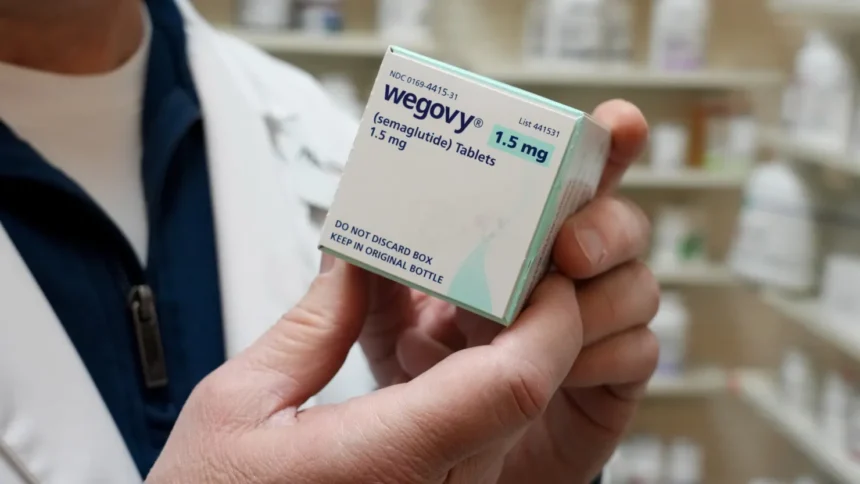
Shares of Novo Nordisk jumped more than 8% after early prescription data suggested a stronger-than-feared start for the company’s newly launched oral GLP-1 treatment for obesity in the United States. The reaction reflects investor sensitivity to any signal that oral therapy could meaningfully expand the highly competitive weight-loss market. The drug, an oral version of Wegovy, officially launched on January 5 following regulatory clearance in late December. Initial prescription counts remain limited in scope, but at NewsTrackerToday, we view the early figures as sufficient to dispel concerns of weak physician uptake at launch. That distinction matters in a market where sentiment often shifts on preliminary data points.
Analysts have cautioned against overinterpreting the first week. Ethan Cole, macroeconomics and healthcare demand analyst, notes that early prescription trends often capture novelty rather than sustainable demand. In his view, the key variable will be whether prescription growth accelerates over the next several weeks, rather than plateauing after the initial burst of attention. Preliminary tracking suggests several thousand prescriptions were written during the first full week, depending on the data source. Importantly, some datasets may not yet capture volumes generated through Novo Nordisk’s direct-to-consumer pharmacy or affiliated telehealth partners. NewsTrackerToday considers this channel mix critical, as direct access has become a major driver of scale in the GLP-1 category by reducing friction for patients and prescribers.
Comparisons with rival launches remain instructive but imperfect. Injectable Zepbound from Eli Lilly began with a slower initial prescription base before accelerating sharply in subsequent weeks. From our perspective, the relevant question is not whether the oral Wegovy outperforms injections immediately, but whether it can replicate – or exceed – the acceleration phase seen in prior GLP-1 rollouts.
From a competitive standpoint, oral delivery offers Novo Nordisk a temporary advantage. However, the company’s tablet is a peptide-based therapy that requires strict dosing conditions, including fasting before and after administration. Isabella Moretti, corporate strategy and pharmaceutical competition analyst, argues that such behavioral constraints could weigh on long-term adherence, particularly when compared with upcoming oral alternatives based on small-molecule chemistry. That concern is especially relevant given expectations that Eli Lilly’s oral candidate, orforglipron, may reach the market in the coming quarters. If approved, it could remove key compliance barriers associated with peptide tablets. At NewsTrackerToday, we see this looming competition as a reminder that Novo’s current lead in oral therapy is likely a window rather than a permanent moat.
Still, the strategic importance of an oral GLP-1 should not be understated. Many patients remain reluctant to use injections, and oral options could unlock incremental demand beyond the existing addressable market. News Tracker Today believes this expansion effect is central to the long-term growth thesis for obesity treatments, even if individual products face adherence challenges.
Looking ahead, investors will be watching three indicators closely: prescription momentum over a four-week horizon, the contribution of direct-to-consumer channels, and early signals of patient persistence. Volatility around weekly data releases is likely to remain high, as the market attempts to price a category that is still evolving.
For NewsTrackerToday, the broader takeaway is that Novo Nordisk’s oral Wegovy launch has cleared its first psychological hurdle. The early data suggest interest is real, but the decisive test will be whether convenience, access, and adherence align before competing oral therapies arrive to reset expectations across the sector.