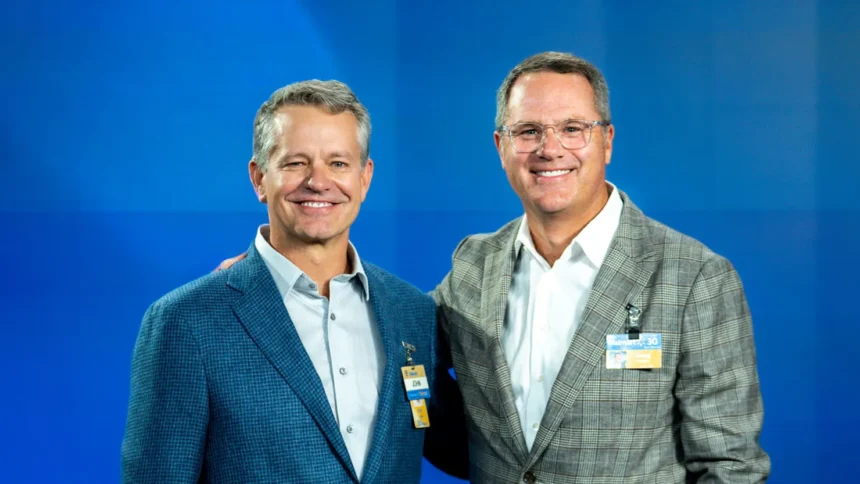
As the U.S. retail sector enters a new leadership cycle, the divergence between Walmart and Target is becoming more structural than cyclical. According to NewsTrackerToday, the upcoming earnings reports are less about holiday sales performance and more about long-term positioning under newly appointed CEOs.
Walmart’s leadership transition occurred against a backdrop of momentum. The company has significantly expanded its digital ecosystem, integrated AI-driven efficiencies and strengthened high-margin segments such as advertising and marketplace services. Meanwhile, Target is attempting to stabilize traffic declines, operational inconsistencies and brand repositioning challenges. Liam Anderson, financial markets specialist, notes that Walmart’s valuation premium reflects more than sales growth. “Investors are pricing in operating leverage from automation, fulfillment optimization and digital monetization. The market views Walmart increasingly as a technology-enabled retailer rather than a traditional discount chain,” he explains.
Walmart’s e-commerce profitability milestone and its integration of AI shopping tools through partnerships with major AI platforms signal continued investment in customer acquisition and retention. NewsTrackerToday highlights that this hybrid scale – physical footprint combined with data-driven personalization – remains Walmart’s core competitive moat. Target’s path is more complex. Michael Fiddelke inherits a business that has experienced flat revenue trends and declining store traffic. Operational concerns, including in-store execution and inventory visibility, have weighed on performance. The company has initiated leadership reshuffles, workforce reallocation and merchandising adjustments aimed at restoring differentiation.
Isabella Moretti, corporate strategy and M&A analyst, argues that Target’s challenge is narrative clarity. “Target does not need to replicate Walmart or Amazon. However, it must define a sharper identity around design-led value and operational consistency. Without clear differentiation, margin pressure becomes persistent,” she says. News Tracker Today observes that macro conditions remain moderately supportive, with consumer spending holding but becoming increasingly selective. Inflationary pressures and tariff dynamics continue to influence discretionary purchasing behavior, favoring retailers with pricing flexibility and scale advantages.
Walmart’s exposure to grocery and essentials provides defensive resilience. Target’s higher reliance on discretionary categories increases volatility but also offers upside if consumer sentiment improves. The key variable for both companies remains execution under new leadership – particularly in digital integration, labor optimization and inventory discipline.
Looking ahead, Walmart appears positioned to extend share gains in 2026, while Target faces a multi-quarter transformation phase. According to NewsTrackerToday, investors will focus less on headline earnings and more on forward guidance credibility and capital allocation discipline. The strategic divergence between the two retailers underscores a broader industry theme: scale combined with technological integration is increasingly determining retail leadership. Whether Target can recalibrate its model quickly enough to narrow the performance gap will shape competitive dynamics well beyond the current earnings cycle.