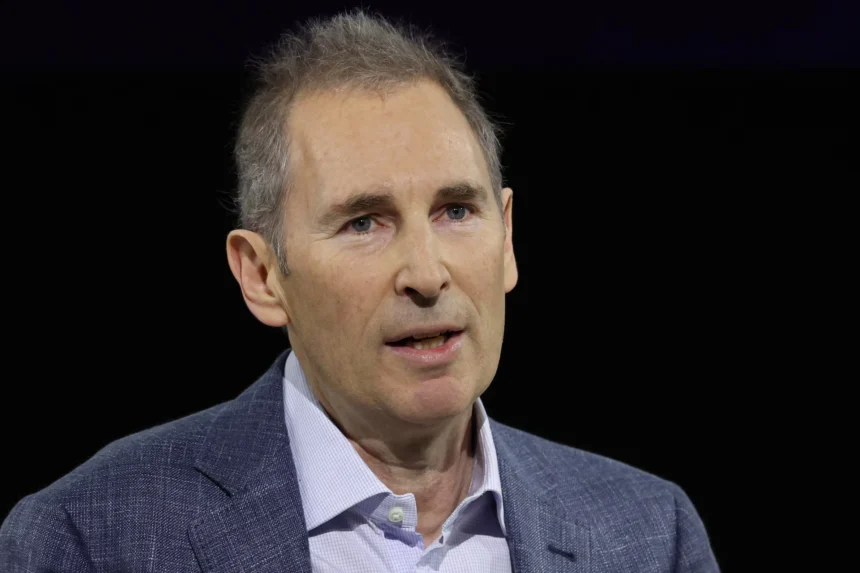
Rising trade costs are beginning to surface in places consumers notice most: prices, product quality, and choice. In recent weeks, signs of that shift have become harder to ignore, a dynamic increasingly tracked by NewsTrackerToday as tariff-related pressures move from balance sheets into checkout carts. Amazon CEO Andy Jassy said that sweeping tariffs introduced under Donald Trump are now filtering into prices across certain product categories, as sellers reassess how much of the additional cost they can absorb. Speaking at the World Economic Forum in Davos, Jassy noted that many third-party sellers had front-loaded inventory ahead of the tariffs, but those buffers largely ran out last fall.
As a result, Amazon is seeing diverging seller strategies. Some merchants are passing higher costs directly to consumers through price increases, others are accepting lower margins to preserve demand, while a growing number are opting for hybrid approaches that blend modest price hikes with reduced promotions or altered product configurations. According to Jassy, the cumulative effect is becoming increasingly visible.
That assessment marks a shift from Amazon’s tone last year, when management emphasized that prices had not risen meaningfully months after the tariffs were announced. The difference now, analysts say, reflects economics rather than messaging. Retail operates on operating margins measured in low single digits, leaving little room to offset a sustained rise in import costs. From a market perspective, Liam Anderson, a financial markets analyst focused on consumer and retail economics, argues that Amazon’s comments signal the end of a transitional phase. “Once pre-tariff inventory is depleted, the math becomes unavoidable,” he says. “At that point, prices, assortment, or service levels have to adjust – and usually all three do.”
Consumer behavior is already shifting. Amazon reports that shoppers remain broadly resilient, but patterns are changing: more customers are trading down to lower-priced alternatives, actively seeking deals, or delaying purchases of higher-ticket discretionary items. That reallocation of demand is likely to favor private-label goods and value brands, while mid-range discretionary products face growing pressure – a trend NewsTrackerToday has highlighted across multiple retail segments.
The broader implications extend beyond Amazon’s marketplace. Sophie Leclerc, a technology sector analyst specializing in platform economics and supply chains, notes that e-commerce platforms often serve as early indicators for the wider retail economy. “When price pressure shows up at Amazon, it typically reflects stress already embedded across global supply chains,” she says. “What follows is a gradual reshaping of product mix and sourcing strategies.”
Looking ahead, price adjustments are unlikely to appear as sudden spikes. Instead, consumers should expect incremental increases, thinner assortments, and more aggressive use of bundles, subscriptions, and promotions to mask higher underlying costs. For sellers, the challenge will be maintaining competitiveness while reworking sourcing and logistics to lower landed costs. As tariff effects continue to ripple through retail, News Tracker Today will be watching how platforms like Amazon balance price discipline, seller sustainability, and consumer demand – a test that may define the next phase of global e-commerce under prolonged trade friction.