The structure of major media deals is increasingly shaped by speed and certainty rather than headline valuations. That dynamic is becoming clearer as streaming giants look to lock in strategic assets before rival bids and regulatory pressure complicate execution – a trend closely followed by NewsTrackerToday amid intensifying consolidation across the entertainment sector.
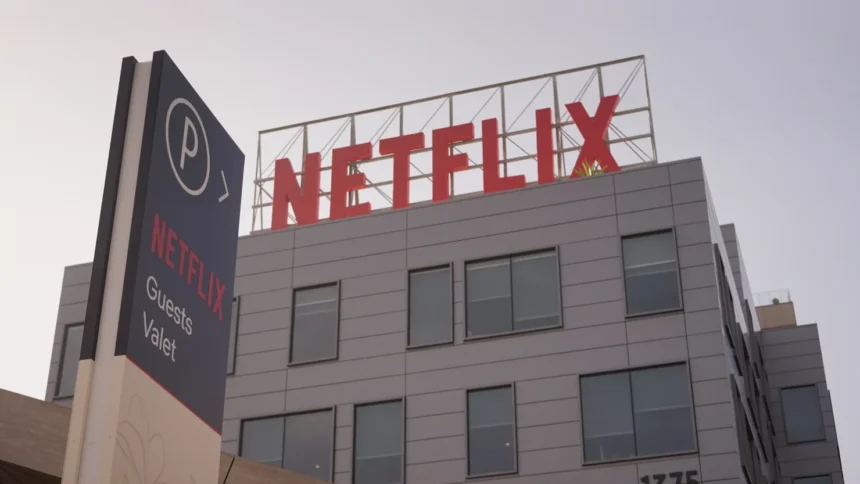
Netflix has revised its proposal for Warner Bros. Discovery, shifting to an all-cash offer of $27.75 per share for WBD’s streaming and studio assets, including HBO Max and the Warner Bros. film and television operations. The move replaces the earlier cash-and-stock structure agreed in December and signals a deliberate effort to simplify shareholder approval while reducing exposure to market volatility.
From a strategic standpoint, the revised terms prioritize transaction certainty. All-cash offers tend to resonate with shareholders during contested processes, particularly when alternative bids introduce legal, financing, or governance risks. In this case, the change also shortens the decision window, potentially moving the shareholder vote into late winter rather than mid-year – a timing shift that NewsTrackerToday has noted as increasingly decisive in competitive M&A situations.
The adjustment comes as Paramount Skydance continues to apply pressure through a hostile approach aimed at acquiring all of Warner Bros. Discovery, including its cable networks. While rival bids may promise broader asset coverage, they also raise execution risk. WBD’s board has unanimously reaffirmed its support for the Netflix transaction, citing financial clarity and deal stability as key factors. According to Isabella Moretti, an analyst specializing in corporate strategy and mergers and acquisitions, the revised offer reflects a classic de-risking maneuver. “When transactions become contested, boards tend to favor structures that minimize uncertainty,” she explains. “Cash removes valuation debates and keeps the focus on outcomes rather than future assumptions.”
A central element of the deal remains the planned separation of WBD’s linear cable networks into a new publicly traded entity, Discovery Global. This spin-off is expected to occur six to nine months ahead of the transaction’s close, allowing Netflix to acquire growth-oriented streaming and studio assets while leaving slower-moving linear businesses outside the combined structure. That selective acquisition strategy aligns with patterns NewsTrackerToday has observed across recent media restructurings.
Regulatory scrutiny remains a critical variable. A combined Netflix and Warner studio-streaming platform would face close examination around content concentration, distribution leverage, and creator access. Netflix is expected to argue that competition remains robust across short-form video, user-generated platforms, gaming ecosystems, and global broadcasters, though regulators may still push for behavioral commitments. From an industry perspective, Sophie Leclerc, a technology sector analyst focused on platform competition, sees the logic extending beyond content libraries. “This is about securing long-term supply and intellectual property control,” she notes. “Streaming platforms are increasingly behaving like infrastructure operators, prioritizing ownership over licensing.”
Looking ahead, the deal’s trajectory will hinge on two near-term signals: whether shareholder approval accelerates under the revised terms, and how regulators frame potential remedies. For investors, the key is not just price, but the probability of closing under compressed timelines. For creators and consumers, the longer-term implications will center on bargaining power and pricing discipline as vertical integration deepens.
As the process unfolds, News Tracker Today will be watching whether structural certainty proves more decisive than competing valuations – a test that could shape the next phase of global media consolidation.