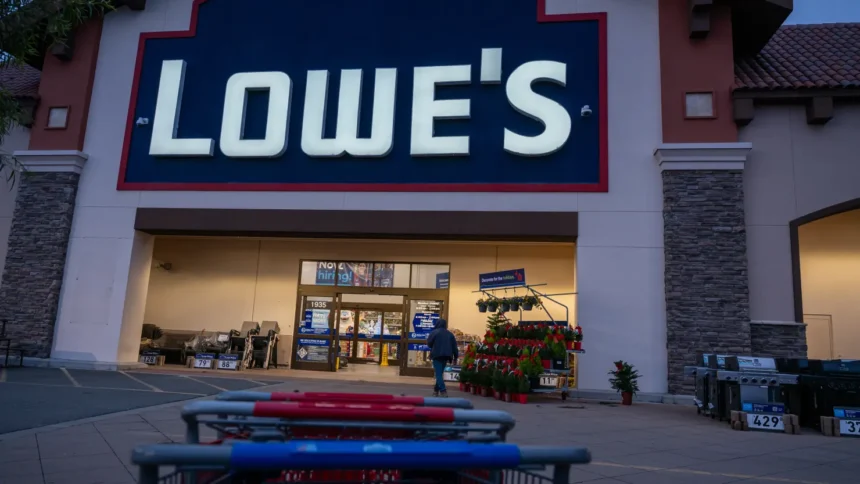
Lowe’s delivered a quarterly earnings beat even as the U.S. housing market remains stuck in a prolonged slowdown. The company exceeded Wall Street expectations on both revenue and earnings, while comparable sales rose 1.3% year over year. Yet the broader industry backdrop still lacks a clear catalyst. As NewsTrackerToday emphasizes in its housing-cycle analysis, home improvement demand closely tracks housing turnover – and turnover remains subdued.
CEO Marvin Ellison described what many economists now call the “lock-in effect.” Homeowners hesitate to sell because they want to preserve historically low mortgage rates secured in prior years. That dynamic suppresses the renovation multiplier typically triggered by home listings. Liam Anderson, financial markets expert, notes that “when mobility slows, discretionary renovation shifts toward maintenance spending rather than full-scale remodeling.” The result is stability without acceleration.
Lowe’s reaffirmed a cautious full-year outlook, projecting total sales between $92 billion and $94 billion and comparable sales ranging from flat to modest growth. The company expects adjusted earnings per share between $12.25 and $12.75, below broader analyst expectations. That conservative stance reflects ongoing macro uncertainty, including housing stagnation and evolving tariff policies. As NewsTrackerToday has previously analyzed, retail management teams increasingly guide conservatively when policy volatility clouds cost forecasting.
The professional contractor segment continues to outperform do-it-yourself spending. Sales gains in categories such as building materials, water heaters and installation services indicate relative resilience among trade professionals. Ethan Cole, chief economic analyst specializing in macroeconomics and central banking, explains that “professional demand often correlates with commercial and contractual obligations, making it less sentiment-driven than household discretionary upgrades.” Lowe’s acquisitions of Foundation Building Materials and Artisan Design Group further deepen its exposure to this steadier revenue stream.
Digital initiatives and expanded installation services also support Lowe’s competitive positioning. By integrating omnichannel fulfillment, flexible delivery and enhanced home services, the company attempts to differentiate beyond product assortment. As News Tracker Today underscores in its retail transformation coverage, operational execution increasingly defines market share in mature sectors.
Tariff uncertainty adds another variable. Approximately 40% of Lowe’s merchandise relies on imports, though management has diversified sourcing in recent years. Potential changes in global trade policy could pressure margins if cost increases accelerate. Investors reacted cautiously despite the earnings beat, reflecting concern that macro headwinds may outweigh incremental operational gains.
Looking ahead, the key inflection point for the sector will likely depend on housing mobility or increased use of home equity lines of credit. If mortgage rates stabilize and homeowners tap accumulated equity for renovations, deferred demand could re-emerge. Until then, Lowe’s operates in a “stable but constrained” environment – a phase where disciplined execution matters more than cyclical tailwinds. As NewsTrackerToday continues to evaluate, the home improvement sector now hinges less on consumer enthusiasm and more on structural housing economics.