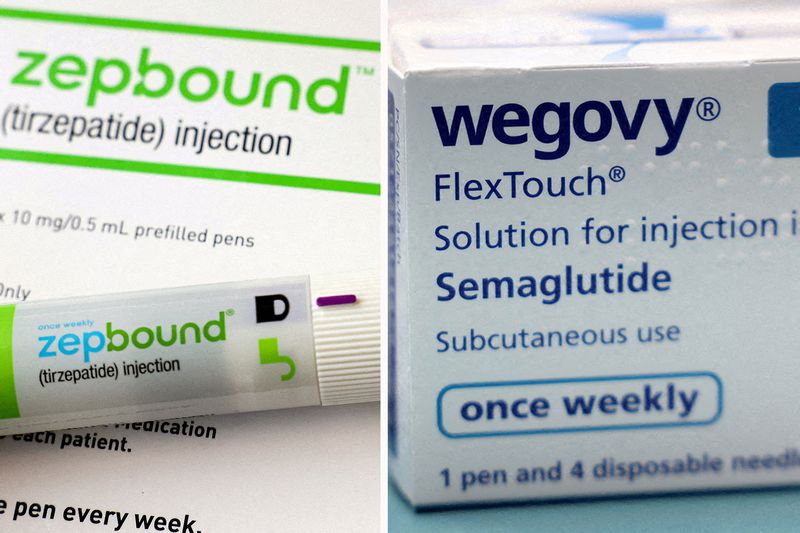
For years, Wall Street treated the global obesity-drug boom as a straight-line story toward a $150 billion market. That assumption is now being actively reconsidered as U.S. pricing for GLP-1 therapies declines and competitive pressure intensifies. The central question, as outlined in NewsTrackerToday, is no longer whether demand exists, but whether lower prices can translate into sustainable volume growth without eroding long-term profitability.
Recent pricing adjustments by the market’s leading players have reshaped expectations around peak sales and timing. While headline numbers once implied a rapid climb toward $150 billion or even $200 billion by the early 2030s, revised projections increasingly cluster closer to $100 billion, with higher targets pushed several years further out. From the NewsTrackerToday perspective, this repricing reflects a structural shift: GLP-1 drugs are being treated less like scarce breakthrough therapies and more like long-duration chronic treatments subject to economic discipline.
Price compression, however, is not inherently negative. Lower monthly costs expand access, particularly in cash-pay and direct-to-consumer channels, but they also raise the bar for execution. Liam Anderson, a financial markets expert, notes that once pricing resets, investor focus inevitably moves to unit economics – patient retention, refill consistency, manufacturing scale, and the true cost of customer acquisition. Without visible improvement in these metrics, aggressive volume assumptions become fragile.
Competition is another defining factor. Beyond the dominant injectable products, the pipeline of oral therapies and combination treatments is expanding, promising greater convenience and potentially longer treatment adherence. At the same time, these innovations invite faster switching and intensify margin pressure. Isabella Moretti, an analyst specializing in corporate strategy and M&A, argues that success in this phase will depend less on single products and more on platform strength – supply reliability, lifecycle management, and the ability to defend pricing through differentiation rather than scarcity.
For Novo Nordisk and Eli Lilly, the challenge over the next two years is not demand generation but balance. Volume must rise fast enough to offset lower prices, while competition must be managed without triggering a destructive pricing cycle. In the News Tracker Today assessment, 2026 will be a critical validation year, revealing whether expanded access genuinely broadens the market or merely redistributes existing demand.
The implication for investors is clear. The obesity-drug market remains large and structurally important, but its trajectory is no longer guaranteed. From NewsTrackerToday’s viewpoint, a path beyond $100 billion is achievable, and $150 billion is still possible – but only if pricing discipline, adherence, and innovation move in lockstep rather than in conflict.