The sharp sell-off in Pop Mart shares highlights how quickly market sentiment can shift when a growth story becomes overly dependent on a single product. What was recently seen as a rare global success for a Chinese consumer brand is now being reassessed through a much more critical lens. As we observe at NewsTrackerToday, this is not just a correction after a strong rally, but a broader test of whether Pop Mart can sustain its business beyond the Labubu phenomenon.
On paper, the company’s financial performance remains impressive. Revenue surged significantly in 2025, and profit growth outpaced expectations. However, investors are increasingly focused on the quality and durability of that growth. Signs of slowing momentum in recent quarters, combined with more cautious capital allocation, have raised concerns that the company’s strongest phase may already be behind it.
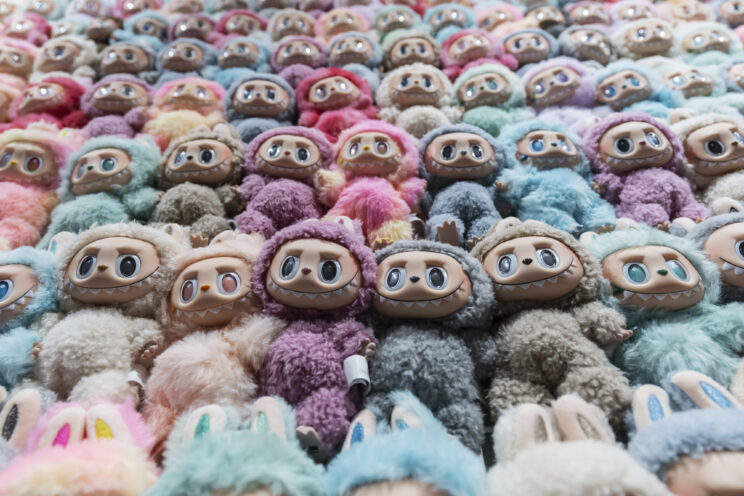
The central issue lies in revenue concentration. The Monsters franchise, driven by Labubu, now accounts for a substantial portion of total sales, up sharply from previous years. While this reflects the strength of the brand, it also introduces a clear concentration risk. Isabella Moretti, analyst specializing in corporate strategy and M&A, would likely describe this as a transition from a premium growth narrative to a risk-adjusted valuation framework, where dependence on a single intellectual property begins to weigh on investor confidence.
Efforts to diversify the product portfolio have yet to convince the market. Other characters and franchises, while contributing to revenue, have not demonstrated the same ability to scale globally or generate comparable margins. From our perspective at NewsTrackerToday, the key question is no longer whether Pop Mart can create a successful character, but whether it can consistently replicate that success across multiple properties.
Operational indicators are also drawing attention. Inventory turnover has slowed, with higher stock levels reflecting both expansion and potential demand uncertainty. While management attributes this to logistics and international growth, the market interprets rising inventories as a possible early signal of softening demand. Liam Anderson, financial markets specialist, would likely frame this as a shift from scarcity-driven pricing power to inventory risk, a transition that can significantly impact margins and brand perception in consumer-driven businesses.
Market behavior reinforces these concerns. Increased short interest and heightened demand for bearish options suggest that a segment of investors is positioning for continued downside rather than a short-term rebound. As NewsTrackerToday points out, the debate is no longer about whether Pop Mart is a strong brand, but about how sustainable its current valuation is if its flagship product loses momentum.
The company is actively responding to these challenges. It is accelerating the rollout of new characters, expanding partnerships with global brands, and investing in international growth. These steps indicate a clear strategic awareness of the risks associated with overreliance on a single franchise. However, the effectiveness of these initiatives will depend on whether they translate into measurable revenue diversification rather than incremental extensions of existing success.
Valuation alone is not enough to restore confidence. Despite trading at significantly lower multiples compared to historical averages, the stock has not attracted sustained buying interest. This suggests that investors are reassessing not just the price, but the underlying growth narrative. Lower multiples may reflect a new baseline rather than a temporary dislocation.
Looking ahead, three factors will be critical. First, whether the company can stabilize its reliance on The Monsters franchise. Second, whether margins can be maintained without increased promotional pressure. Third, whether new intellectual properties can emerge as meaningful contributors to revenue. Without progress on these fronts, the current downturn may evolve into a longer period of valuation normalization.
Pop Mart remains one of the few Chinese consumer brands to achieve global cultural relevance, and that should not be underestimated. However, the market has made it clear that a single breakout success is no longer sufficient to sustain premium valuations. We at News Tracker Today believe the company now faces a defining moment: it must demonstrate that it can build a repeatable intellectual property engine rather than rely on a single blockbuster. Failure to do so could shift the narrative from long-term growth to cyclical peak.