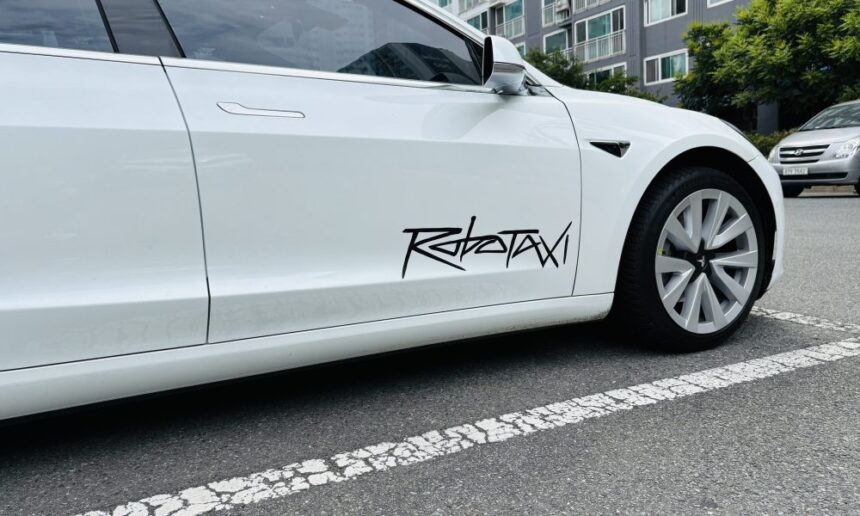
Tesla’s expansion of robotaxi services into Dallas and Houston was intended to strengthen Elon Musk’s claim that the electric-vehicle maker is evolving into a full-scale artificial intelligence and autonomous mobility company. Yet early rider experiences reveal a service still wrestling with operational inconsistencies, and NewsTrackerToday explores how those growing pains could challenge one of the most ambitious valuations in the global stock market.
The company’s autonomous ride-hailing network remains confined to Austin, Dallas, and Houston, despite Musk’s prediction that robotaxis would reach half of the U.S. population by the end of 2025. Investors continue to attach extraordinary strategic value to that vision, with a substantial portion of Tesla’s $1.6 trillion market capitalization reflecting expectations that software and self-driving systems will eventually become more profitable than vehicle manufacturing itself.
Recent tests suggest that commercial deployment is still in an early stage. In Dallas, booking delays, limited vehicle availability, and inefficient routing turned a short urban trip into a nearly two-hour process. Several downtown rides ended far from the intended destination, forcing passengers to complete the journey on foot. In Houston, the service appeared even more constrained, with repeated cancellations after only one successful ride. Operational friction is especially significant because autonomous transportation depends as much on convenience and reliability as it does on technological sophistication. NewsTrackerToday highlights that a robotaxi platform cannot command premium valuation multiples unless customers experience a service that feels faster and more dependable than conventional ride-hailing.
Sophie Leclerc notes that Tesla is pursuing a fundamentally different strategy from competitors such as Alphabet’s Waymo. Rather than relying heavily on high-definition mapping and extensive local preparation, Tesla is attempting to build a generalized self-driving system designed to function across virtually any environment. NewsTrackerToday examines whether that scalable approach may also prolong the period of operational instability.
Austin, where the service has operated for nearly a year, illustrates both progress and remaining constraints. Tesla runs a fleet far smaller than Waymo’s local presence, and wait times can still extend beyond 15 minutes on a regular basis, with periods when no vehicles are available at all. NewsTrackerToday tracks how this imbalance suggests Tesla’s autonomous advantage remains more strategic than operational at the current stage. Liam Anderson argues that Tesla’s valuation assumes today’s beta-stage inefficiencies are temporary and that scale will eventually transform the service into a highly profitable transportation network. If expansion continues at a measured pace, investors may begin questioning how much of Tesla’s premium reflects execution and how much rests on confidence in Elon Musk’s long-term vision.
Tesla has demonstrated that its vehicles can navigate real-world streets without a major pattern of serious incidents, but dependable commercialization remains a more difficult challenge than technological demonstration alone. News Tracker Today underscores that the market is no longer asking whether robotaxis can operate – it is watching whether Musk can turn a promising concept into a seamless business capable of supporting Tesla’s extraordinary market value.