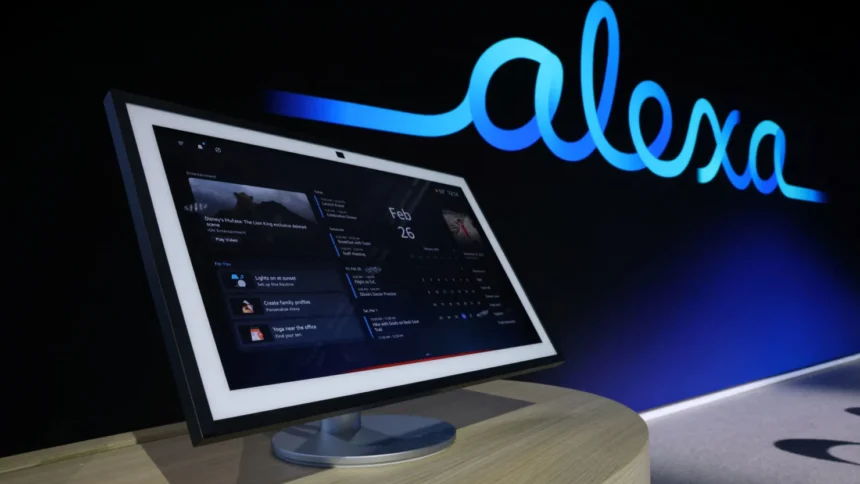
Amazon is overhauling its artificial intelligence shopping strategy, and NewsTrackerToday explores the significance of that pivot as the company retires Rufus and introduces Alexa for Shopping as its central e-commerce assistant. The new tool combines the conversational capabilities of Alexa+ with product recommendations derived from Rufus, allowing users to compare products, track prices, and schedule purchases when items fall to a target level. By embedding the assistant directly into search results, Amazon is turning the traditional search bar into a personalized decision engine.
The launch reflects a broader shift in how consumers may interact with online marketplaces. Instead of scrolling through pages of listings, shoppers can ask detailed questions about product features, inventory status, customer reviews, and delivery times. The assistant can also surface recommendations based on an individual’s shopping history, giving Amazon a structural advantage over rivals that rely primarily on public web data.
OpenAI, Google, and Perplexity AI have all introduced AI-driven shopping tools, but consumer behavior remains difficult to predict. As competition intensifies, NewsTrackerToday turns attention to a central challenge: shopping requires precise information about stock availability, pricing, and fulfillment rather than general conversational fluency. Sophie Leclerc argues that Amazon’s strongest advantage lies in its access to proprietary operational data. In her view, conversational interfaces become materially more useful when they are connected to systems that can verify inventory, estimate delivery windows, and interpret years of customer purchasing patterns.
The strategic impact extends beyond convenience. Amazon derives a substantial share of its profits from sponsored product listings, and Alexa for Shopping introduces a new channel through which advertising can be personalized and expanded. In this context, NewsTrackerToday spotlights how the redesign could reshape the economics of product visibility and alter the way third-party sellers compete for attention within the marketplace. Isabella Moretti sees the retirement of Rufus as evidence that Amazon no longer treats artificial intelligence as an isolated experiment. Instead, the company is consolidating multiple initiatives into a unified interface intended to become the primary gateway for product discovery and purchasing decisions.
If Alexa for Shopping gains traction, Amazon may shift e-commerce toward a conversational model rather than a keyword-based one. Even if adoption unfolds gradually, the company strengthens its ability to defend its marketplace from external AI agents. At a deeper level, News Tracker Today identifies this transition as Amazon’s attempt to make artificial intelligence the core operating layer of the next generation of online retail.