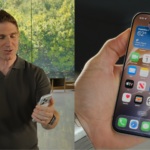
Apple’s 2026 Worldwide Developers Conference keynote on Monday looked different in a way that most viewers noticed immediately but may not have consciously framed: many of the Apple Intelligence demonstrations featured a person standing, phone in hand, pressing buttons or issuing voice commands in real time while a second camera captured the device’s response. The demonstrations were pre-taped rather than live onstage, but they looked far more like functioning software on actual hardware than the polished produced videos that Apple showed at its 2024 developer conference, when the company unveiled Apple Intelligence and a smarter Siri. Those 2024 features were later described by Apple itself as taking longer to deliver than expected, resulted in a federal lawsuit alleging false advertising, and settled for $250 million in May 2026. The demo style on Monday, which NewsTrackerToday opened with as the most analytically significant presentational choice at the keynote, is a direct response to all of that.
The 2024 Apple Intelligence presentation included highly produced video sequences showing Siri performing sophisticated tasks, prioritizing notifications, and interacting with personal context in ways that turned out to be substantially ahead of what the actual software could do on an actual device. By March 2025, Apple acknowledged that rolling out the features as shown would take longer than anticipated. The false advertising lawsuit that followed alleged Apple had misled consumers with its WWDC 2024 presentations. The $250 million settlement, agreed in May 2026 without an admission of wrongdoing, resolved the case. Monday’s keynote clearly took the lesson seriously.
Sophie Leclerc, who covers the technology sector, frames the demo design as a product communication choice with specific implications: “The shift to live-on-device demonstrations, even pre-taped, is an acknowledgment that the credibility problem Apple has had with AI is not just a delivery gap. It is a perception problem built by a specific communication style. Showing someone standing with a phone, pressing a button, and getting a response in real time does something produced videos never could: it anchors the viewer in physical reality. The iPhone is a real object, the hands are real hands, the response is happening on actual hardware. That grounds the claim in a way that is extremely hard to fake without someone noticing.” The choice not to require new hardware is what NewsTrackerToday documented as the second significant departure: the overhauled Siri AI will run on iPhone 15 Pro and Pro Max and all iPhone 16 models under iOS 27, meaning users who bought iPhones expecting 2024’s promised features get them without a new purchase.
Isabella Moretti examines the commercial logic: “Apple agreed to pay $250 million to settle a false advertising case involving features it showed at a developer conference. The most cost-effective way to avoid a $250 million sequel is to only show things that actually work on real hardware. That’s not a cynical read. It’s the same logic that makes warranty clauses conservative: you price for the realistic outcome, not the aspirational one. The demo style choice is risk management as much as it is product communication. And the backwards compatibility decision adds a separate commercial dimension: features available on a two-year-old iPhone reduce the iPhone 17 upgrade pressure, but they serve users who were explicitly told those features were coming and never got them.”
Monday’s keynote also addressed fixes to last year’s Liquid Glass design, improvements to the search function for emails and photos, and changes to the Playground image generation feature. The overall tone was, as one characterization put it, that of a spouse completing long-delayed household tasks: efficient, apologetic in tone without saying sorry, and notably lacking in surprise announcements. The overhaul of Siri, which Apple described as its biggest AI launch to date and backed with a Google Gemini partnership for real-time web queries, carried the weight of two years of missed expectations. That the final product now demonstrably works on actual devices, and can surface information from a user’s inbox or text history in real time, is what News Tracker Today traced as the specific technical shift that separates Monday’s presentation from its predecessors.
Siri AI will be available in beta later this year. The production release timeline and the stability of the Gemini integration at scale are the remaining execution questions. But the shift that Monday’s keynote registered is not contingent on those answers. Apple spent two years absorbing the reputational cost of promising AI features that did not arrive as shown. It settled a federal lawsuit over that gap. And it returned to a public developer stage with a demonstrably different approach: products shown on real hardware, by people with real hands, doing real things. The demo format itself signals a changed relationship between Apple’s announcements and its obligations to the people watching them.