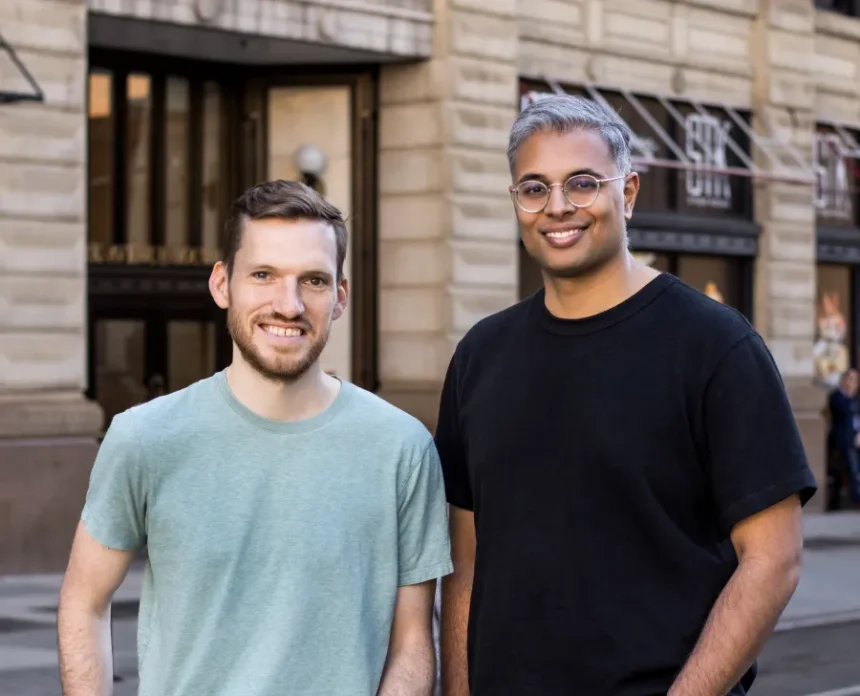
Niteshift raised a $7 million seed round led by Greylock’s Jerry Chen, and the company’s founders – Sajid Mehmood and Conor Branagan, both early engineers at Datadog who helped take it from startup to multi-billion valuation – are betting on a thesis that NewsTrackerToday takes the longer view on precisely because it is not new but is probably right. The argument: companies building on top of AI model providers like OpenAI and Anthropic face the same structural risk that e-commerce companies once faced when building on Amazon. Amazon competed with its own marketplace tenants. OpenAI and Anthropic are now moving into vertical software markets in legal, healthcare, and finance, competing directly with the startups they power. Mehmood calls this the SaaSocalypse. Niteshift’s answer is to build the orchestration layer that sits above the models, routing between Claude Code, Codex, open-source alternatives, and others based on project requirements, while charging enterprises per minute of infrastructure use rather than per token of model output.
The angel list Niteshift assembled is genuinely signal-dense. Reid Hoffman. Datadog co-founders Olivier Pomel and Alexis Lê-Quôc. Ankur Goyal of Braintrust. Misha Laskin of Reflection AI. For a $7 million seed round, that roster reflects both the founders’ network depth and the credibility of the underlying idea among people who have built enterprise software businesses from the inside. Greylock’s Chen articulated the commercial logic directly: as frontier labs move up the stack, there is an opportunity to offer customers an alternate path, unbundling agents from the infrastructure they run on. Niteshift is building the platform that enables this for coding agents, letting customers invest deeply in their developer tooling without locking themselves into a single model or agent vendor.
Sophie Leclerc, who covers the technology sector, names the caveat clearly before naming the opportunity: “The model-agnostic infrastructure argument is compelling, and I think the Datadog parallel Mehmood uses is structurally apt. But the honest framing has to include the fact that Cursor, Cognition, Amazon Bedrock, and OpenRouter all have enormous head starts in adjacent positions, and Niteshift is entering at seed stage. The differentiation has to be the per-minute pricing model and the depth of enterprise orchestration capability, not just the model independence claim, which is a claim most of these tools make to varying degrees. The question I keep returning to is whether the orchestration layer produces enough observable productivity improvement to justify a separate infrastructure spend on top of whatever token costs enterprises are already paying.” That question, rather than the funding announcement, is where Niteshift’s case actually lives, and it is what the early customer pipeline – not yet publicly disclosed – will need to answer. The founding team’s depth is what NewsTrackerToday stays with as the actual differentiator here: both founders scaled Datadog through the exact enterprise complexity they now promise to manage for AI-generated code.
Isabella Moretti reads the commercial architecture: “$7 million seed at a time when competitive rounds in AI coding are going to $1 billion at a $26 billion valuation. Cognition’s raise in May is the benchmark. Niteshift is either entering the category very early with a genuinely different product architecture, or it is entering very late with a genuinely smaller market than the headline names are playing for. The per-minute infrastructure pricing is the structural bet. If enterprises decide that AI coding infrastructure should be billed like cloud compute rather than like SaaS licenses, Niteshift has a built-in advantage. If the model makers successfully bundle their own orchestration and the market stays token-denominated, the infrastructure play shrinks considerably. The tension between those two scenarios – and whether Niteshift’s pricing model survives in either – is the one NewsTrackerToday makes the case for watching above all other metrics in this raise.”
The Datadog analogy Mehmood reaches for is instructive in one specific way that his framing understates. Datadog did not win by being model-agnostic in the abstract sense. It won by building the monitoring infrastructure that worked across AWS, Azure, and GCP at a moment when every engineering team was running multi-cloud deployments. The cloud providers wanted customers to use their native monitoring tools. Datadog offered better tooling, neutral positioning, and a billing model tied to usage. Niteshift’s version of that bet assumes that enterprises will generate enough AI-coded software across enough different models that the orchestration layer becomes essential infrastructure rather than optional middleware. The customer who codes exclusively in Claude Code has no reason to buy Niteshift. The customer whose engineering teams use five different models in five different workflows, and needs to run, test, and verify the output autonomously in real production environments, is the one Niteshift makes the case to. How large that population is right now versus in two years is the number the $7 million will go toward figuring out.
So where does Niteshift sit in six months? It could emerge as a reference customer’s production infrastructure story at a Series A, or it could remain a well-connected seed-stage company still searching for the enterprise use case that makes model independence feel urgent rather than merely sensible. The founders’ backgrounds are as strong a founding signal as the market offers. The thesis is empirically grounded. But the category they are entering has attracted more capital and more established players than almost any other in enterprise software, and the question News Tracker Today lands on is whether model lock-in anxiety, however rational, translates into paying enterprise contracts before the market consolidates around the platforms that are already here.