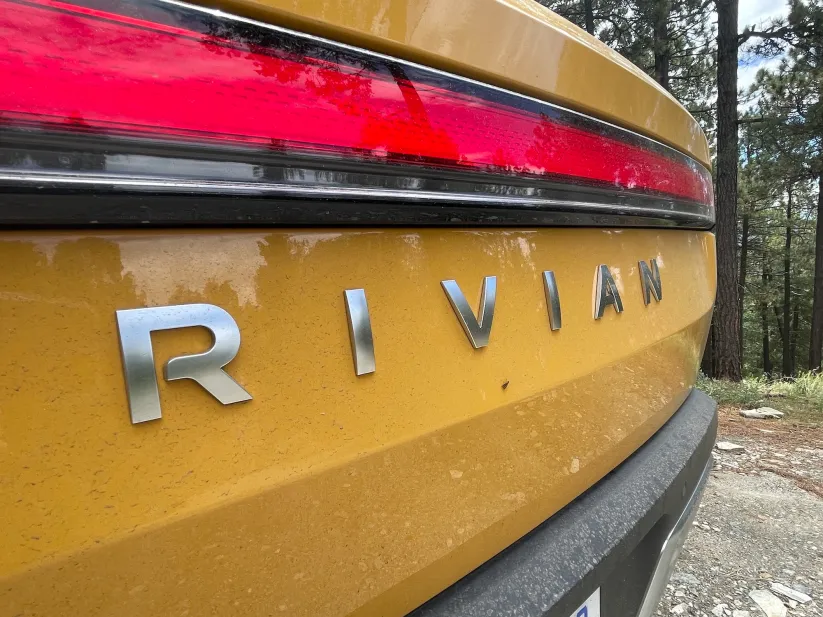
A class-action complaint filed Wednesday in the U.S. District Court for the Central District of California accuses Rivian of running a five-year nationwide marketing campaign falsely representing that its first-generation R1T pickup and R1S SUV would be capable of hands-free, eyes-off driving – a capability technically designated Level 3 autonomy, where the vehicle can steer, accelerate, and brake without any driver input under specific conditions. The complaint alleges that Rivian’s first-generation vehicles were manufactured without the hardware, cameras, sensors, and compute necessary to enable the promised capability, and that no software update, however sophisticated, will ever close that gap. The complaint further alleges that Rivian knew this from the start. Rivian declined to comment. The suit is what NewsTrackerToday watches as the logical outcome of a years-long tension that the company’s own product cadence eventually made visible: when the second-generation R1 vehicles launched in 2024 with an entirely new Rivian Autonomy Platform and hands-free driving capability the first-generation vehicles did not receive, the hardware gap stopped being a roadmap delay and became a documented fact.
The product history is specific. Between 2018 and 2023, Rivian marketed its Driver+ system as a feature that would eventually bring hands-free autonomous highway driving to every vehicle it built. CEO RJ Scaringe spoke about the company’s autonomous driving ambitions at a TechCrunch Disrupt conference in 2022, a statement referenced in the complaint. Last year, Rivian rolled out “Universal Hands-Free” driving via a software update pushed to second-generation R1 vehicles, which use the Rivian Autonomy Platform: 11 cameras, five radar sensors, and a computer 10 times more powerful than the prior system. The feature operates on more than 3.5 million miles of U.S. and Canadian roads. First-generation R1T and R1S owners, who purchased vehicles specifically on the promise of hands-free driving, received none of it. The Autonomy+ roadmap applies only to Gen 2 vehicles.
Sophie Leclerc, who covers the technology sector, reads the product architecture question carefully: “The claim that Gen 1 vehicles lack the physical hardware for Level 3 autonomy is not a software problem that patches can fix. If the sensor count and compute architecture of the first-generation R1 genuinely do not support the capability, then the question becomes one of what Rivian’s engineering team knew and when, which is a different legal question than whether the marketing was aspirational versus fraudulent. The complaint uses the word ‘unquestionably knew,’ which implies the plaintiffs believe this was deliberate misrepresentation rather than failed technological optimism. That distinction will shape how the case develops.” The hardware versus software gap and when Rivian’s engineers determined it was unbridgeable is what NewsTrackerToday places as the factual question the litigation will turn on.
Daniel Wu places the case in a regulatory pattern: “The automotive industry spent a decade making increasingly bold claims about autonomous driving capabilities while the technology developed more slowly than the marketing implied. Tesla, Waymo, and now Rivian all face versions of the same legal challenge: the gap between what was promised to customers and what the technology can actually deliver in deployed vehicles. A California administrative law judge ruled in December 2025 that Tesla’s use of ‘Autopilot’ and ‘Full Self-Driving’ was deceptive because it falsely implied vehicles could operate safely without driver attention. Rivian is now facing the same argument about Driver+. The regulatory and legal environment around ADAS marketing claims is changing, not just in response to individual cases but as a deliberate consumer protection framework.”
Rivian had earlier settled a separate shareholder lawsuit for $250 million after a price increase on the R1 pickup and SUV in 2022 disrupted existing orders. The current class action is brought by Gen 1 vehicle owners, not shareholders. The complaint brings claims of fraud, negligent misrepresentation, and unjust enrichment and seeks a jury trial. The plaintiffs argue that none of them would have purchased a Gen 1 vehicle, or paid what they did, if Rivian had truthfully disclosed that the vehicle would never be capable of true hands-free driving. That argument faces a practical counter: early Rivian buyers paid a premium for a product they also valued for reasons beyond the autonomous driving promise. Separating what portion of the purchase price was specifically attributable to the Driver+ claim is the damages quantification challenge that comes after liability, and the case is what NewsTrackerToday catches the Tesla echo in: a second major EV manufacturer facing legal scrutiny for ADAS marketing that outran the product.
The uncomfortable conclusion this lawsuit surfaces is one that applies beyond Rivian and beyond autonomous driving: consumer product companies operating in categories where the technology timeline is genuinely uncertain face a structural choice between making commitment-level promises to build market demand and making accuracy-level disclosures that limit the addressable buyer pool. Rivian chose the former. Tesla chose the former. The legal consequences are now materializing for both. What News Tracker Today runs the clock on is the question of whether the industry’s response to these cases is substantive change in how ADAS capabilities are marketed, or whether the settlement payments become a cost of doing business that the next generation of autonomous driving promises absorbs and repeats.