San Jose has emerged as an unexpected center of resistance to California’s proposed billionaire wealth tax, highlighting a growing internal split within the Democratic Party over how far the state should go in taxing extreme wealth. From the perspective of NewsTrackerToday, the debate is no longer symbolic. It has become a concrete test of whether California can pursue redistribution without weakening the economic model that underpins its public finances.
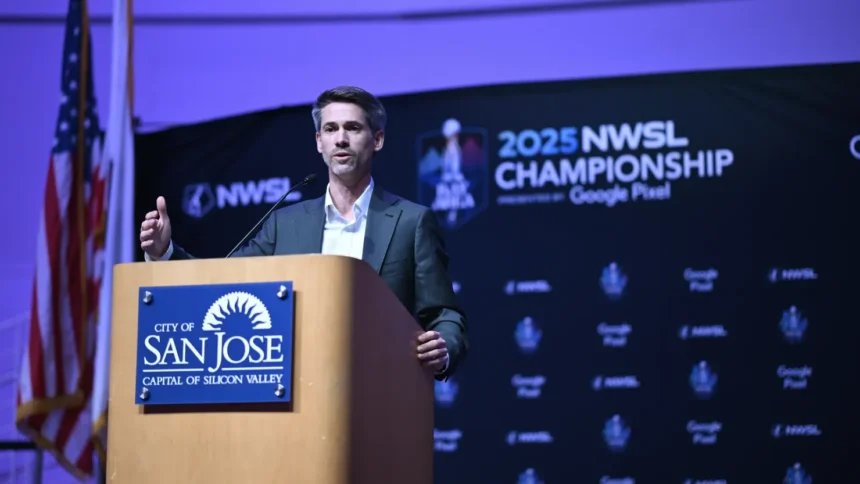
San Jose Mayor Matt Mahan, elected in 2023 to lead the largest city in Silicon Valley, publicly opposed the proposed one-time 5% tax on billionaire wealth. He warned that while the measure targets a small group on paper, its secondary effects would be felt far more broadly. According to Mahan, discouraging investment and entrepreneurship risks shrinking the tax base that ultimately funds infrastructure, healthcare and social programs. NewsTrackerToday views this as a shift away from moral framing toward a systemic economic argument.
The proposal, known as the “Billionaire Tax Act of 2026,” is backed by United Healthcare Workers West and is designed to address an anticipated healthcare budget shortfall. Supporters estimate the tax could raise as much as $100 billion by 2031 from roughly 200 of California’s wealthiest residents. The levy would apply retroactively from January 1, 2026, assuming it qualifies for the ballot and is approved by voters.
Opposition from the technology sector has been swift and unusually unified. Venture capitalists and founders argue that even a one-time tax creates long-term uncertainty, encouraging capital flight and early relocation planning. High-profile investors have openly warned that the mere appearance of repeated wealth-tax initiatives could push California’s most mobile taxpayers to other states. NewsTrackerToday notes that in modern capital markets, expectations often matter as much as enacted policy.
The political pressure is particularly acute for lawmakers representing Silicon Valley. Congressman Ro Khanna, whose district includes major technology hubs, supports a moderated wealth tax while also calling for exemptions for founders whose net worth is tied up in illiquid private equity. This nuance reflects a central tension: addressing inequality without penalizing entrepreneurs whose paper wealth cannot easily be converted into cash.
One of the most controversial aspects of the proposal is its treatment of unrealized gains. Under the current framework, founders could face significant tax bills based on theoretical valuations of private companies. Liam Anderson, financial markets analyst at NewsTrackerToday, considers this a structural risk. “Taxing illiquid, unrealized wealth changes incentives immediately,” he says. “It encourages founders to restructure ownership, exit earlier, or relocate before companies mature.” Broader geographic trends reinforce these concerns. U.S. venture capital activity has become increasingly decentralized, with states like Texas and Florida positioning themselves as tax-friendly alternatives. Public comments from investors predicting a shift in the nation’s tech center of gravity suggest that California’s dominance can no longer be taken for granted.
Mayor Mahan has argued that inequality should instead be addressed at the federal level by closing capital-gains loopholes that allow extreme wealth accumulation without sustained taxation. Isabella Moretti, corporate strategy analyst at NewsTrackerToday, sees this as a pragmatic stance. “State-level wealth taxes face enforcement and mobility limits,” she explains. “Without national coordination, states risk competing against each other for capital – and usually losing.” If proponents collect the roughly 875,000 signatures required, the initiative will head to California voters. News Tracker Today expects the campaign to evolve into a referendum on the state’s economic identity: whether it prioritizes aggressive redistribution or safeguards its role as the world’s leading innovation ecosystem.
Even if the proposal ultimately fails, its political momentum is likely to influence investment behavior and policy discussions for years. The central challenge for California policymakers is clear: addressing inequality without undermining the economic engine that funds public services. As NewsTrackerToday concludes, the billionaire tax debate is less about ideology and more about whether California can balance social equity with competitiveness in an era of highly mobile capital.