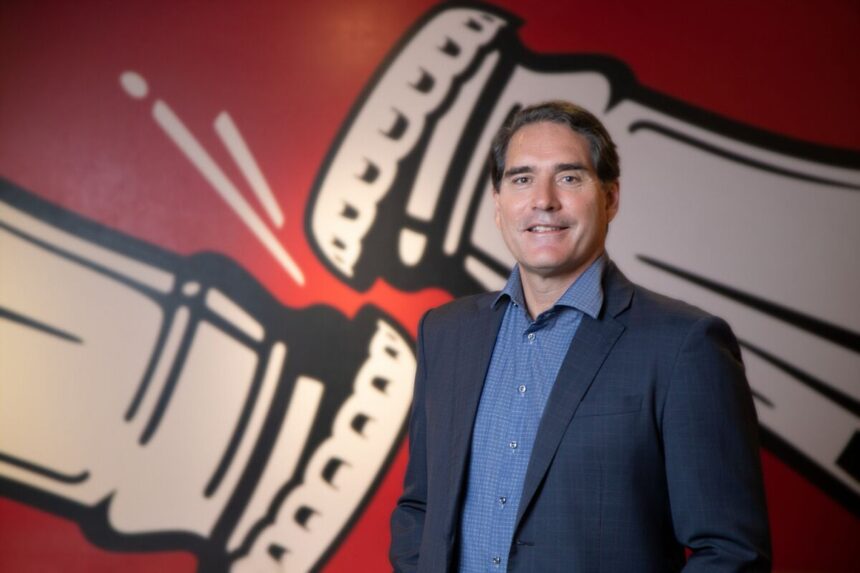
Coca-Cola is preparing for one of its most significant leadership transitions in years, and NewsTrackerToday notes that the timing reflects deeper pressures across the nonalcoholic beverages market. The company announced that Chief Operating Officer Enrique Braun will take over as CEO on March 31, succeeding James Quincey, who will move into the role of executive chairman. For Coca-Cola, which is navigating softening consumer demand and shifting global preferences, the change signals a renewed focus on operational agility and growth strategy.
Quincey, now 60, has led the beverage giant since 2017, steering it through the restructuring of its global bottling network, the turbulence of the COVID-19 pandemic and a strategic pivot toward categories perceived as healthier or more functional. His successor, Braun, is hardly an unknown figure inside the organization. Since joining Coca-Cola in 1996 – the same year as Quincey – he has held a variety of leadership roles across markets. Earlier this year, he stepped into the COO position, giving him direct oversight of global operations.
According to NewsTrackerToday’s internal industry assessment, Braun’s mandate reflects three priorities: identifying new paths for international growth, responding more precisely to consumers whose preferences are shifting away from traditional sodas and accelerating the company’s adoption of new technologies. Isabella Moretti, expert in corporate strategies and M&A, points out that “Coca-Cola’s growth strategy increasingly depends on its ability to diversify without diluting the strength of its core brands. Leadership stability is important, but leadership evolution is becoming essential.”
The backdrop to this transition is no less important. Coca-Cola and its competitors have been grappling with weakened demand for carbonated soft drinks – still the backbone of the company’s global revenue. Retail volumes grew just 1% in the third quarter after a decline earlier in the year, suggesting a fragile consumer environment. Liam Anderson, financial-markets analyst, notes that “low-income consumers shifting away from standard-price beverages is a meaningful signal. Companies that historically relied on volume now have to think creatively about packaging, pricing and premiumization.”
Quincey has acknowledged this challenge openly, explaining that budget-conscious shoppers have cut back, prompting Coca-Cola to introduce smaller and more affordable package formats. Yet premium brands such as Smartwater and Fairlife have outperformed core sodas, indicating that even in a soft demand cycle, customers remain willing to pay more for products they view as higher-value. NewsTrackerToday observes that this bifurcation – weakness at the mass-market level and strength at the top end – has become a defining theme in the beverage sector.
Under Quincey’s leadership, Coca-Cola has also consistently outpaced its longtime rival PepsiCo in several key categories, thanks in part to stronger performance in on-premise channels such as restaurants, entertainment venues and travel hubs. The company has even strengthened its position in the long-standing “cola wars”: Coca-Cola remains the top-selling soft drink in the United States, and Sprite recently surpassed Pepsi to become the country’s third most popular soda.
Despite the leadership news, Coca-Cola’s stock showed little movement in after-hours trading on Wednesday. Year to date, the shares are up nearly 13%, while Pepsi has seen a modest decline. With a market capitalization above $300 billion – roughly $100 billion more than Pepsi – Coca-Cola enters this transition from a position of considerable financial strength.
From the perspective of News Tracker Today, the handoff from Quincey to Braun represents more than a routine executive rotation. It underscores Coca-Cola’s need to evolve its product strategy while maintaining the discipline and scale that have long defined the company. As shifting consumer behavior reshapes the beverage landscape, the next chapter will test whether Coca-Cola can balance innovation with the legacy that made it a global icon.