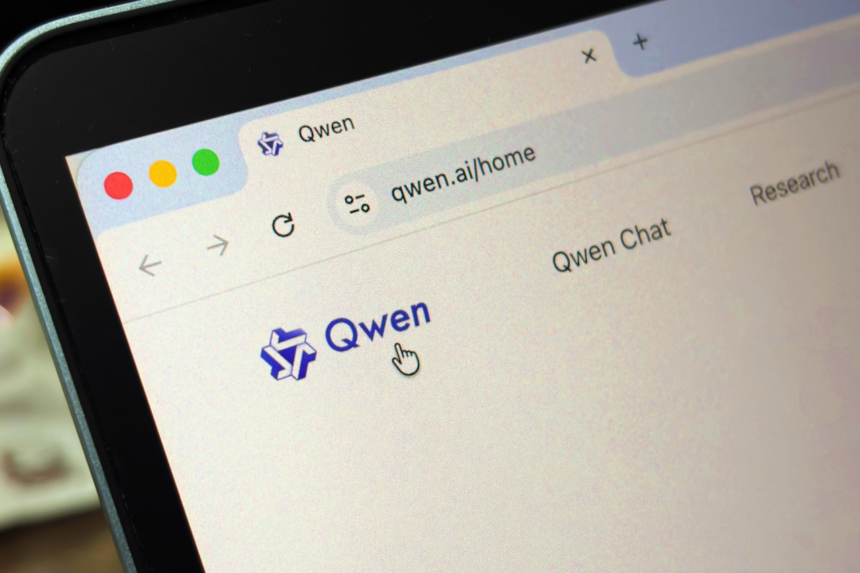
Alibaba’s Qwen artificial intelligence project has lost one of its most visible technical leaders at a critical moment for the company’s AI strategy. Junyang Lin, a senior engineer associated with the Qwen model family, announced that he was leaving the project shortly after Alibaba unveiled its new compact Qwen 3.5 models. NewsTrackerToday notes that the timing of the departure has drawn attention across the AI community because it coincides with an important product release intended to strengthen Alibaba’s position in the global model race.
The Qwen model family has become one of China’s most prominent open-source AI initiatives. Since its introduction in 2023, the project has expanded rapidly, gaining adoption among developers building applications across research, enterprise software, and edge computing. The latest release introduced smaller multimodal models ranging from 0.8 billion to 9 billion parameters, designed for tasks such as lightweight AI agents and on-device deployments. These compact architectures are increasingly important as companies seek to run advanced AI capabilities without relying exclusively on large cloud infrastructure.
Lin’s exit triggered a strong reaction from colleagues and partners who viewed him as a central contributor to the technical direction of the Qwen ecosystem. Several developers publicly described his role as instrumental in connecting Alibaba’s research efforts with the broader global developer community. NewsTrackerToday highlights that talent mobility has become a defining feature of the AI industry, where experienced model engineers frequently move between major laboratories and emerging startups.
Despite the leadership change, Alibaba continues to push forward with its AI roadmap. The company has invested heavily in artificial intelligence infrastructure and positioned Qwen as a flagship platform intended to compete with models from U.S.-based developers. Sophie Leclerc, technology sector analyst, explains that smaller models such as Qwen 3.5 are strategically significant because they enable AI functionality on personal devices, enterprise systems, and edge computing environments where efficiency matters more than maximum model size.
The broader competitive environment has intensified as companies worldwide accelerate AI development. Advances in model architecture and training techniques are rapidly reducing the gap between large proprietary systems and open-weight alternatives. Liam Anderson, financial markets analyst, argues that this dynamic increases pressure on companies to maintain rapid release cycles while retaining key engineering talent. Leadership changes in core model teams therefore attract attention because they can affect development momentum.
The circumstances surrounding Lin’s departure remain unclear, and neither he nor Alibaba has publicly elaborated on the reasons behind the decision. However, News Tracker Today observes that leadership transitions during major product cycles often reflect internal restructuring, new research priorities, or the natural churn that accompanies fast-moving technology sectors.
Looking ahead, the most important indicator for the Qwen ecosystem will be execution consistency. If Alibaba continues releasing updates, expanding developer tools, and maintaining engagement with the open AI community, the project’s trajectory may remain largely unaffected. However, prolonged talent departures or delays in model development could raise concerns about long-term competitiveness.
Ultimately, the situation illustrates the increasingly strategic importance of human capital in artificial intelligence development. Model performance, research breakthroughs, and ecosystem adoption often depend on a relatively small group of highly specialized engineers. As NewsTrackerToday continues to follow the global AI race, leadership movements within major projects like Qwen will remain a closely watched signal of where innovation momentum is shifting.