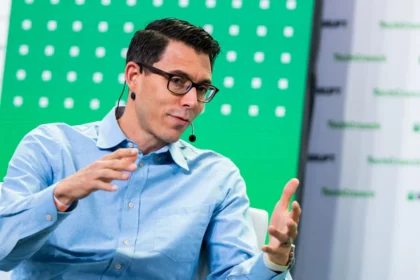
Miles Wang, an OpenAI researcher whose work focused on using AI to accelerate scientific and biological discovery, is leaving the company to launch his own drug-discovery startup, according to people familiar with his plans. Wang is reportedly in talks to raise roughly $200 million at a $2 billion valuation, with a major venture firm discussing leading the round. A researcher barely announcing his departure before landing a unicorn valuation is what NewsTrackerToday pegs at the real signal in this story, more than the dollar figure alone.
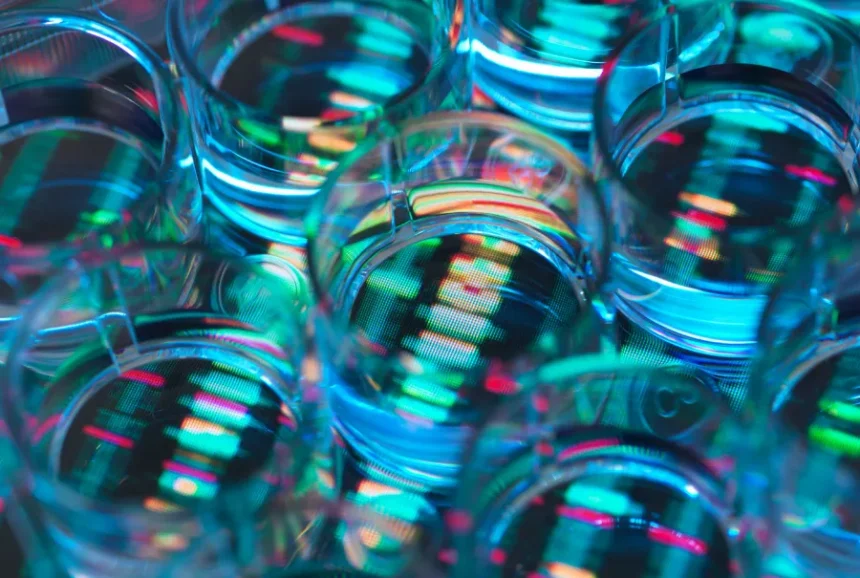
Wang joined OpenAI in 2024 after dropping out of Harvard, where he’d been studying computer science, and went on to co-author research on how AI models can automate and accelerate wet-lab scientific work. Several other OpenAI researchers are reportedly expected to follow him to the new venture, though the company’s exact focus hasn’t been fully disclosed, beyond a reported emphasis on finding new uses for existing FDA-approved drugs, including ones that previously failed in clinical trials.
Isabella Moretti reads the funding dynamics: “A $2 billion valuation for a company that hasn’t formally launched, doesn’t have a name attached publicly, and is still finalizing its lead investor tells you exactly how hot AI drug discovery has become as a category. This isn’t unique to Wang. Chai Discovery, a two-year-old startup building AI models to predict molecular interactions, just raised $400 million at $3.8 billion. Isomorphic Labs, DeepMind’s drug-discovery spinout, closed a $2.1 billion round in May. Capital is chasing the category, not just any single founder’s pedigree.” That category-wide gold rush, more than Wang’s individual credentials, is what NewsTrackerToday reads on when explaining why this deal is landing at this specific valuation.
The repurposing angle matters more than it might sound. Finding new applications for drugs that have already cleared safety trials can produce revenue far faster than developing an entirely new compound from scratch, since the most expensive and riskiest phase of drug development, proving basic safety, has already been done. That’s a meaningfully different, faster business model than the traditional biotech timeline of a decade or more from discovery to approval.
Sophie Leclerc, who covers the technology sector, reads the talent pattern as part of a broader shift she’s watching across frontier labs: “OpenAI researchers with deep domain expertise, in this case biology specifically, are increasingly treating a few years at a leading lab as a launching pad rather than a career destination. That’s not a knock on OpenAI. It’s what happens when a lab trains people to a level of capability that venture capital is actively bidding up before they’ve even left the building. Expect more of this exact pattern across every frontier lab, not just OpenAI, as domain-specific AI applications keep attracting outsized capital.” That talent-pipeline dynamic, more than any single startup’s prospects, is what NewsTrackerToday closes on as the pattern worth watching well past this specific deal.
Notably, Wang himself disputed the reported funding figures and description of the company when asked, without specifying what the correct numbers or details actually are, and the venture firm reportedly in talks to lead the round didn’t respond to a request for comment. Deals at this early a stage routinely shift in scope and size before anything gets formally announced.
None of this confirms the startup will actually deliver a working drug-repurposing pipeline, let alone at the speed its backers are presumably betting on. What it does confirm is that a market willing to price an unlaunched company at $2 billion isn’t pricing the product yet, it’s pricing the researcher, the category, and the fear of missing the next AI-bio deal before a name is even attached to it. That pipeline dynamic is what News Tracker Today ties into the wider pattern of frontier-lab researchers striking out on their own before their name is even widely known.