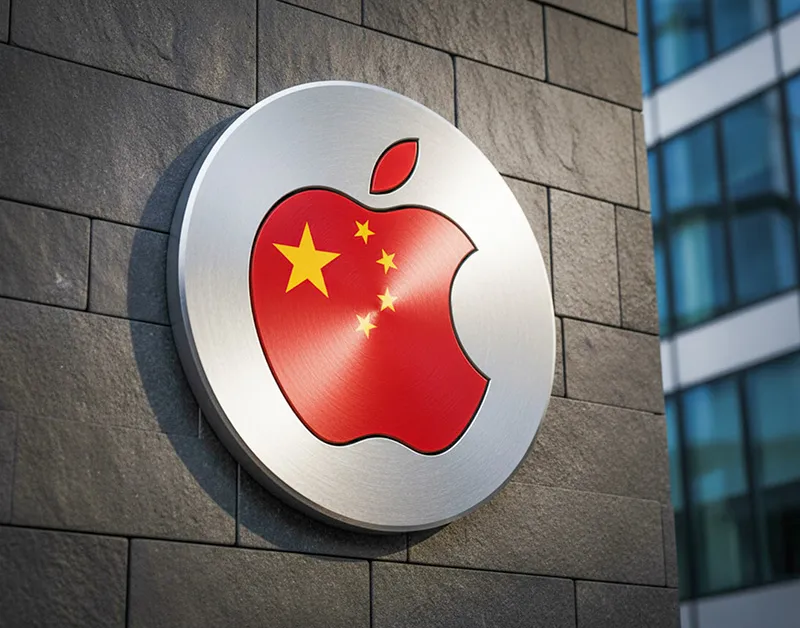
When Chinese users noticed over the weekend that two popular dating apps, Blued and Finka, had vanished from Apple’s iOS App Store, many assumed it was a technical glitch. But soon after, Apple confirmed the removals were intentional – carried out under the direct order of China’s Cyberspace Administration. Officially, the company said it was simply complying with local regulations, clarifying that the directive applied only to the Chinese App Store. In reality, the move underscores a deeper tension between corporate pragmatism and political compliance, a dilemma we at NewsTrackerToday have been closely analyzing as global tech firms navigate the fine line between market access and moral responsibility.
We see this episode as more than a routine moderation issue – it’s another example of how governments are tightening their grip on digital ecosystems, and how global tech giants like Apple must adapt to survive. As tech analyst Sophie Leclerc observes, “Apple has long learned to operate under geopolitical pressure, but every new concession brings it closer to a line where business interests collide with ethical responsibility.”
Blued and Finka were not just dating platforms – they served as digital spaces for China’s LGBTQ+ community, already facing growing suppression. Following the shutdown of the Beijing LGBT Center and the dissolution of several advocacy groups, the disappearance of these apps continues a pattern of “cleaning” the online environment from topics deemed socially undesirable. Although homosexuality was decriminalized in 1997, same-sex marriage remains illegal, and public discussions around gender identity are increasingly restricted.
From a business standpoint, Apple’s move is pragmatic. China remains the company’s largest market outside the United States, generating billions in annual revenue. Yet this pragmatism raises an uncomfortable question: can a brand remain “global” while adhering to rules that curb free expression? Economic analyst Ethan Cole notes, “For Apple, this is not merely a question of market access – it’s about control over technological influence. The company risks becoming a tool of digital policy rather than its architect.” This perspective aligns with our assessment at NewsTrackerToday, where we see Apple’s balancing act in China as a defining test of whether economic dependence can coexist with the principles of digital freedom.
This is not the first time Apple has complied with Chinese censorship directives. In 2024, it removed WhatsApp and Threads from its App Store following similar orders citing “national security.” The company has effectively become part of China’s regulatory apparatus, where decisions are guided not by market logic but by political interests.
The removal of Blued and Finka thus represents more than just another case of app censorship – it’s a warning sign for the global tech industry. In an era when platforms serve as instruments of soft power, corporations increasingly face a difficult choice: defend their values or protect their profits. As we at News Tracker Today emphasize, the future of global technology will depend on companies’ ability to maintain independence while navigating the tightening web of political control.
If Apple continues down the path of strategic compliance, it risks eroding the moral capital it has built over decades. The real question may soon shift from how much it earns in China to how much integrity it’s willing to trade for market access in an age of digital authoritarianism.