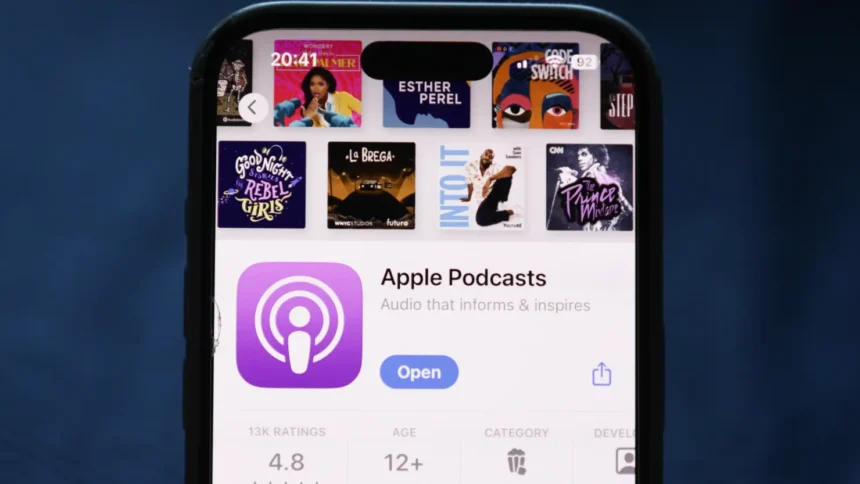
Apple is preparing a structural upgrade to its podcast ecosystem, introducing an integrated video format inside Apple Podcasts this spring. The shift reflects a broader industry reality: podcast consumption is increasingly visual, and platforms that fail to adapt risk losing both creators and advertising share. NewsTrackerToday assesses this move not as a cosmetic feature update, but as a strategic recalibration aimed at protecting long-term services revenue.
Video podcasts have rapidly transitioned from experimental add-ons to primary distribution channels. YouTube commands dominant reach in the segment, while Spotify continues expanding video capabilities and creator monetization tools. By embedding native video playback directly into the same feed as audio, Apple removes historical friction that separated formats. Users will be able to switch seamlessly between listening and watching, download video for offline viewing, and use picture-in-picture functionality – effectively normalizing video as a first-class format within the app.
The introduction of HTTP Live Streaming (HLS) support is particularly consequential. HLS enables adaptive streaming quality and, more importantly, dynamic video ad insertion. Sophie Leclerc, technology sector specialist, argues that monetization architecture – not playback functionality – will determine platform competitiveness. Dynamic insertion allows advertising to scale programmatically while preserving measurement standards expected by major brands. From NewsTrackerToday’s perspective, this infrastructure decision signals Apple’s intent to compete at the revenue layer, not merely at the interface level.
Apple has stated it will not charge creators or hosting providers for video distribution. However, participating advertising networks will face impression-based fees for serving dynamic video ads. Isabella Moretti, corporate strategy and M&A analyst, notes that this approach creates indirect monetization leverage without alienating creators. By charging ad networks rather than podcasters, Apple strengthens platform economics while maintaining a pro-creator narrative – a balance that has become increasingly delicate across digital media ecosystems.
Competitive pressure is intensifying. Spotify has publicly emphasized video payouts and expanded creator tools, while Netflix has begun experimenting with video podcast content as part of its broader engagement strategy. The convergence of streaming, creator economy infrastructure, and advertising technology suggests that podcasting is no longer an audio-centric niche but a hybrid video-driven media category. NewsTrackerToday observes that the platforms able to unify production workflows and monetization analytics will likely capture disproportionate market share.
Apple’s broader Services segment, which already generates tens of billions in quarterly revenue, provides a financial backdrop for this push. Integrating video strengthens user retention, increases ad inventory, and enhances cross-service synergies. The recent acquisition of an AI-focused audio startup further indicates that Apple is investing in intelligent content tooling that may eventually improve discovery, personalization, and production efficiency.
The strategic implication is clear: Apple is working to prevent creator migration toward video-first platforms while expanding advertising economics within its own ecosystem. Execution risk remains. If analytics, discovery algorithms, and ad performance metrics fail to match YouTube’s maturity, creators may continue prioritizing external platforms despite Apple’s technical improvements.
News Tracker Today expects gradual but meaningful redistribution of premium video podcast inventory over the next 12–24 months. For creators, the recommendation is to standardize dual-format production pipelines and benchmark monetization performance across platforms. For advertisers, the expansion of dynamic video inventory inside Apple’s ecosystem may create pricing competition and improved targeting capabilities.
The evolution of podcasting is no longer about audio distribution. It is about infrastructure, monetization architecture, and ecosystem control. Apple’s spring rollout positions the company as a serious contender in the video podcast economy – but sustained competitiveness will depend on measurable advertising performance and creator adoption at scale.