Amazon’s acquisition of Fauna Robotics signals a renewed strategic push into consumer-facing robotics, extending beyond its established strengths in warehouse automation and logistics. While the financial terms remain undisclosed, the move reflects a broader ambition to build a diversified portfolio of embodied AI systems. NewsTrackerToday notes that this type of targeted acquisition often indicates early-stage positioning in a category that has not yet reached commercial maturity.
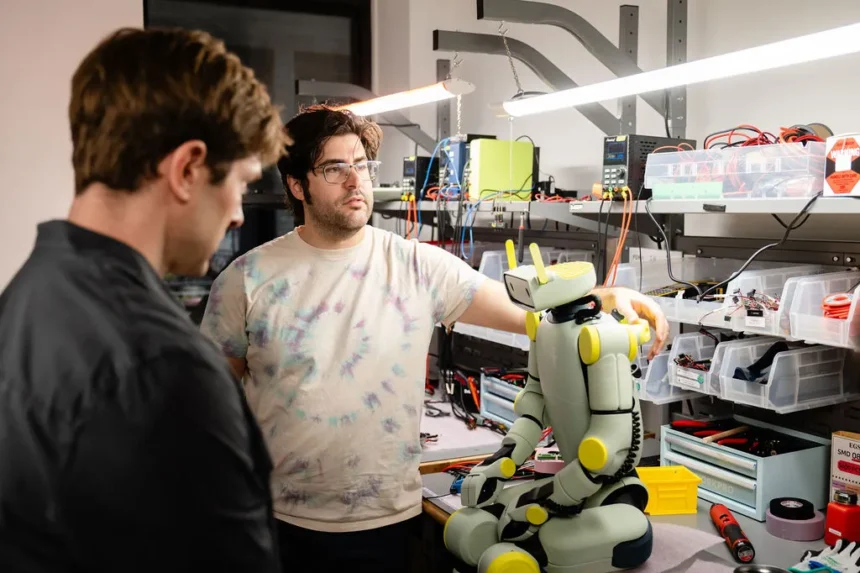
Fauna Robotics, founded by former Meta and Google engineers, represents a distinct approach within the robotics space. Its flagship product, Sprout, is a child-sized humanoid robot designed for interaction rather than industrial performance. This positioning is critical. Instead of competing in crowded segments such as manufacturing automation, Fauna focused on human-centric environments, where safety, usability, and trust are primary adoption drivers. In my view, this makes the acquisition less about current hardware capabilities and more about long-term interface design between humans and machines.
Amazon’s emphasis on “functional, safe, and engaging” robots further reinforces this direction. The company appears to be exploring a new category of consumer devices – one that blends physical presence with AI-driven interaction. NewsTrackerToday highlights that this shift mirrors the evolution of earlier product cycles, where initial experimentation eventually led to mainstream adoption once usability and trust barriers were addressed.
The structure of the deal also matters. By integrating Fauna’s team, including its founders, into its New York operations, Amazon is effectively acquiring both technology and execution capability. Sophie Leclerc, a technology sector analyst, points out that in robotics, engineering velocity and cross-disciplinary integration often outweigh the value of a single product prototype. Retaining the core team increases the probability of translating early concepts into scalable systems.
This acquisition gains additional context when viewed alongside Amazon’s recent purchase of Rivr, a startup focused on last-mile delivery robots. Together, these moves suggest a dual-track strategy: logistics optimization on one side and consumer robotics exploration on the other. Rather than pursuing a single universal robot, Amazon appears to be building a modular ecosystem of specialized systems tailored to different use cases.
However, the company’s previous attempts in this space highlight the challenges ahead. Earlier consumer robotics initiatives did not achieve large-scale adoption, underscoring the difficulty of translating technological novelty into everyday utility. NewsTrackerToday emphasizes that success in this segment depends less on innovation alone and more on the ability to define clear, repeatable use cases that justify the presence of a robot in the home.
There are also structural risks tied to the humanoid robotics category itself. While human-like form factors improve intuitive interaction, they are not always economically or functionally optimal. Many residential environments are not designed for robotic integration, creating friction between technological capability and real-world deployment. Daniel Wu, a geopolitical and infrastructure analyst, notes that widespread adoption may depend on gradual ecosystem adaptation rather than immediate product-market fit.
At the same time, Fauna’s initial positioning reduces some of these risks. By targeting research environments, education, and controlled use cases, the company avoids the pressure of immediate mass-market success. This gives Amazon flexibility to treat the platform as both a development environment and a future product foundation.
From a competitive standpoint, the acquisition aligns with a broader industry shift toward embodied AI, where physical systems are combined with advanced machine intelligence. Major technology players are increasingly investing in this space, but approaches vary significantly. Amazon’s strategy appears more incremental – focused on capability building rather than high-profile product launches. NewsTrackerToday suggests that this measured approach may prove more sustainable in a market still defining its long-term structure.
Looking forward, several paths are possible. Fauna’s technology could evolve into a research platform, be integrated into a new generation of consumer devices, or support the development of service-oriented robots within Amazon’s ecosystem. The timeline for any large-scale rollout remains uncertain, and immediate commercialization is unlikely.
The broader outcome will depend on Amazon’s ability to translate early-stage innovation into practical, scalable applications. News Tracker Today notes that this phase will test whether the company can move beyond experimentation and establish a viable role in the emerging consumer robotics market while balancing technological ambition with real-world usability.