BP has taken its clearest step yet toward financial reset. In NewsTrackerToday, the sale of a controlling stake in Castrol is less about portfolio reshuffling and more about buying balance-sheet breathing room at a moment when strategic patience is running thin.
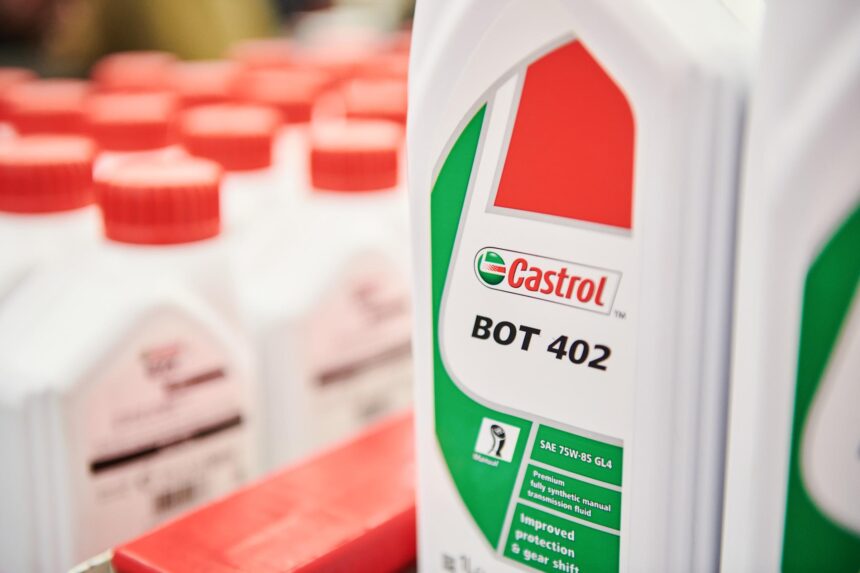
BP agreed to sell 65% of its Castrol lubricants business to U.S. investment firm Stonepeak for roughly $6 billion, including an accelerated payment tied to future dividends. The deal values Castrol at about $10.1 billion including debt, with implied equity value closer to $8 billion after minority interests. While below earlier market expectations, the transaction delivers immediate liquidity that BP has pledged entirely toward debt reduction.
The timing matters. BP is operating under sustained pressure from activist investor Elliott Investment Management and has already walked back its earlier renewables-heavy strategy in favor of refocusing on core oil and gas operations. With net debt exceeding $26 billion at last report, management has committed to an asset-sale program targeting $20 billion by the end of 2027. Castrol brings total announced proceeds to roughly $11 billion, leaving investors watching closely for what comes next.
From a market perspective, the structure signals pragmatism. BP will retain a 35% stake in Castrol through a joint venture, preserving optionality in a business that still generates stable cash flows and has exposure to emerging areas such as liquid cooling technologies for AI data centers. According to Liam Anderson (financial markets), the accelerated dividend component improves near-term leverage metrics but effectively trades future income for present certainty – a choice equity markets tend to reward during periods of strategic transition.
In NewsTrackerToday, this looks like a two-stage exit rather than a fire sale. BP has the right to divest its remaining stake after a two-year lock-up, giving management flexibility to respond to oil price volatility or further activist pressure. That flexibility will be tested as the company continues a full review of its investment portfolio under chairman Albert Manifold, alongside a pending CEO transition scheduled for 2026.
Strategically, the deal underscores a broader recalibration across legacy energy majors. High capital intensity, softer oil prices, and uneven returns from energy transition bets have pushed boards back toward financial discipline. Isabella Moretti (corporate strategy and M&A) notes that selling Castrol removes a familiar but non-core asset while avoiding deeper cuts into upstream projects that underpin BP’s cash generation.
The market reaction has been muted but constructive, reflecting cautious approval rather than enthusiasm. That sets a clear bar. In News Tracker Today, the Castrol sale will be judged not on headline value but on what follows: whether BP accelerates further disposals, reins in shareholder distributions, or attempts to balance both in a lower-for-longer price environment.
Bottom line: this transaction stabilizes BP’s near-term financial narrative, but it does not finish the job. Investors will be looking for momentum – not promises – as BP works to close the gap between its stated deleveraging goals and the reality of its balance sheet.