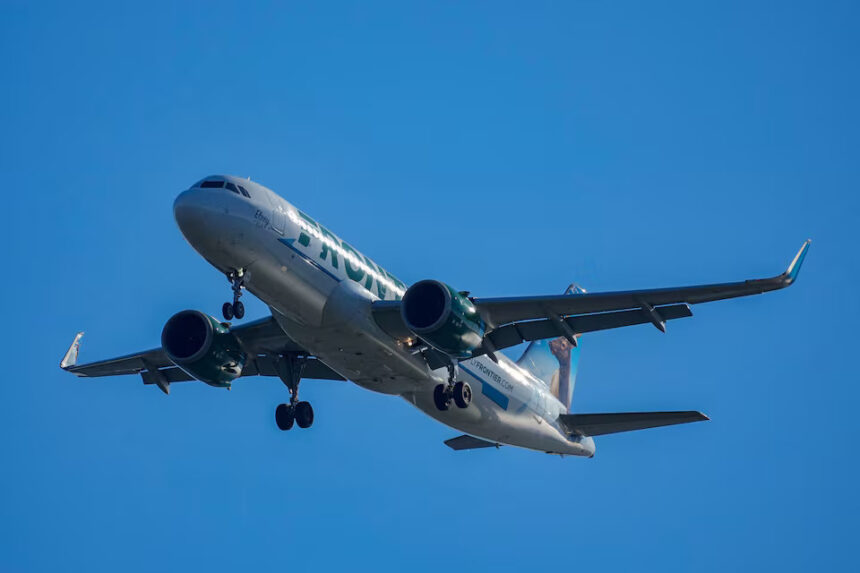
A group of U.S. budget airlines, including Frontier and Avelo, is seeking $2.5 billion in government assistance as soaring jet fuel prices threaten to destabilize the low-cost segment – a development that NewsTrackerToday identifies as a direct economic spillover from escalating geopolitical tensions. The proposed aid structure would include warrants convertible into equity stakes, echoing pandemic-era rescue mechanisms, and signals growing financial stress among carriers with limited pricing power.
Executives from several low-cost airlines recently met with Transportation Secretary Sean Duffy and Federal Aviation Administration chief Bryan Bedford in Washington, underscoring the urgency of the situation. The requested funding reflects projected fuel cost overruns, with airlines estimating significantly higher expenses if jet fuel prices remain above $4 per gallon. For carriers built on thin margins and aggressive pricing strategies, such increases erode profitability at a pace that operational efficiencies alone cannot offset.
The pressure highlights a structural vulnerability in the low-cost airline model – heavy exposure to input costs combined with limited flexibility to pass those costs on to consumers. Daniel Wu, who specializes in geopolitics and energy, notes that the Iran conflict has disrupted global energy flows and contributed to sustained upward pressure on refined fuel products. Airlines, particularly those without extensive hedging strategies, face immediate cost shocks that ripple through their entire operating structure. NewsTrackerToday draws attention to how these dynamics disproportionately affect smaller carriers compared to legacy airlines with more diversified revenue streams.
The situation also revives questions about the role of government intervention in the aviation sector. During the pandemic, U.S. airlines received $54 billion in support, with the Treasury taking warrants as part of the package. However, returns on those warrants proved modest, raising concerns about the long-term effectiveness of such instruments. Liam Anderson, who focuses on financial markets, argues that while equity-linked support can stabilize companies in the short term, it often fails to deliver meaningful upside for taxpayers if underlying business models remain fragile.
Compounding the issue is the broader restructuring already underway within the sector. The Trump administration is reportedly nearing a separate deal to support Spirit Airlines through bankruptcy, potentially involving up to $500 million in financing. NewsTrackerToday notes that simultaneous distress among multiple low-cost carriers suggests systemic strain rather than isolated mismanagement, pointing to a convergence of cost pressures, competitive intensity, and demand volatility.
Airlines in the budget segment rely heavily on high aircraft utilization, ancillary revenue, and price-sensitive customers. This model works efficiently in stable cost environments but becomes vulnerable when external shocks – such as fuel price spikes – compress margins. Unlike full-service carriers, low-cost operators have fewer premium offerings to offset rising expenses, making them more dependent on macroeconomic stability.
The proposed warrants-based aid structure also reflects a balancing act between providing immediate liquidity and limiting direct fiscal exposure. By tying support to potential equity upside, policymakers aim to share in any recovery while avoiding outright subsidies. However, past experience suggests that such mechanisms may not fully compensate for the risks involved, particularly in industries with cyclical earnings and high capital intensity.
As discussions continue in Washington, the outcome will likely shape not only the survival of individual carriers but also the competitive landscape of the U.S. aviation market. Consolidation pressures may intensify if weaker players fail to secure sufficient support, potentially reducing competition in the low-cost segment. News Tracker Today emphasizes that the current crisis extends beyond aviation – it reflects how geopolitical conflicts increasingly transmit economic stress through critical industries. For budget airlines, the challenge is no longer just operational efficiency, but resilience in an environment where external shocks can rapidly redefine the economics of flight.