Sion Power’s strategic shift from electric vehicles to defense and aerospace applications reflects a broader realignment within the battery industry, where commercialization speed is increasingly prioritized over long-term theoretical potential. As NewsTrackerToday notes, the center of gravity in advanced energy storage is gradually moving away from automotive timelines toward sectors where demand is immediate and performance requirements justify faster adoption.
At the core of this transition is a structural mismatch between innovation cycles and market readiness. While lithium-metal batteries have long been viewed as a breakthrough for electric vehicles, their large-scale deployment has been delayed by strict safety, durability, and lifecycle requirements. Pamela Fletcher’s decision to prioritize defense applications suggests a more pragmatic route to market. Daniel Wu, an expert in geopolitics and energy, points out that defense systems operate under fundamentally different constraints – fewer charge cycles and shorter operational lifetimes – making them more suitable for early-stage battery technologies.
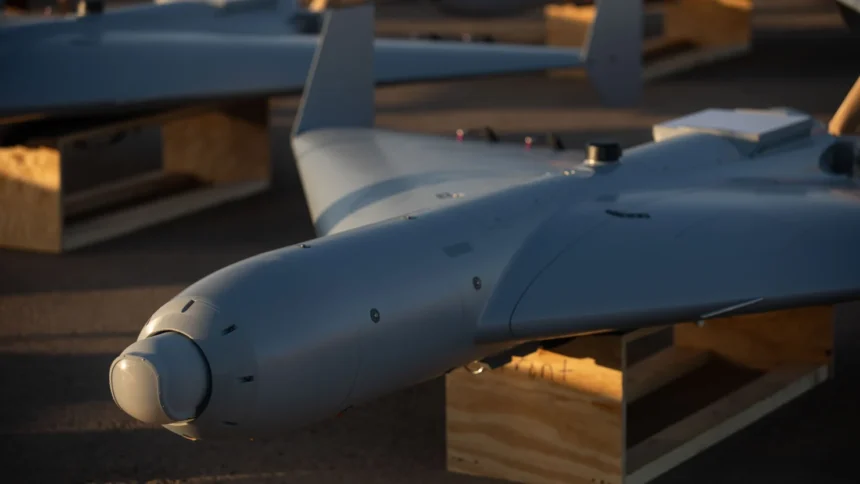
Sion Power’s Licerion HE cells, with energy density exceeding 500 Wh/kg, position the company at the upper end of current battery performance. Compared to conventional lithium-ion systems, which typically deliver 300–350 Wh/kg, this represents a significant leap. In practical terms, this enables longer flight times, reduced system weight, and increased payload capacity for drones and autonomous platforms. NewsTrackerToday emphasizes that in military and surveillance applications, such gains are not incremental – they directly influence operational effectiveness.
The company’s focus on lithium-metal chemistry also reflects a calculated technological choice. Unlike solid-state batteries, which remain further from commercialization, lithium-metal offers a nearer-term pathway to higher energy density. However, challenges related to stability and safety remain unresolved at scale. From a technical standpoint, this creates a dual dynamic: strong performance potential alongside persistent engineering risk.
Geopolitical factors are accelerating demand. The increasing reliance on unmanned systems in modern conflicts – from Eastern Europe to the Middle East – has elevated drones from auxiliary tools to core operational assets. This shift has transformed energy storage into a critical enabler of military capability. Daniel Wu notes that battery performance now directly impacts range, endurance, and mission flexibility, making high-density solutions strategically important. Sion Power’s decision to supply through established defense contractors rather than directly engaging with government procurement systems reflects an efficient market entry strategy. This approach reduces regulatory friction and allows the company to integrate into existing supply chains. It also aligns with broader industry practices, where specialized component manufacturers operate within layered contractor ecosystems.
At the same time, developments in the electric vehicle market provide additional context. Slower-than-expected EV adoption, combined with policy shifts and reduced incentives, has led to excess capacity and delayed returns on battery innovation. Many companies are now exploring adjacent markets, including stationary storage and aerospace. NewsTrackerToday highlights that Sion Power’s repositioning is not an isolated move, but part of a wider trend toward application diversification.
Despite the near-term pivot, the long-term relevance of EV applications remains intact. Sion Power continues to develop solutions for automotive use, indicating that the current strategy is more about sequencing than abandonment. The company is effectively prioritizing markets where its technology can generate earlier validation and revenue. Financial backing further supports this trajectory. With over $200 million raised and participation from major industry players, Sion Power has secured the resources needed to advance commercialization. However, Liam Anderson, a financial markets expert, notes that capital alone is not sufficient. The next phase will depend on the company’s ability to demonstrate scalable production, consistent performance, and supply chain reliability.
Looking ahead, the competitive landscape is likely to intensify. High-energy battery technologies are becoming increasingly relevant across multiple sectors, including defense, aerospace, and data infrastructure. This convergence suggests that companies capable of adapting their technologies across use cases will gain a structural advantage. The direction of the market will be shaped by how quickly new battery chemistries can transition from laboratory success to operational deployment. News Tracker Today underscores that the defining factor will not be innovation in isolation, but the ability to align technological capabilities with real-world demand and execution at scale.