Delta Air Lines is entering 2026 with a clear internal hierarchy: premium travelers are driving growth, while the core economy segment remains under pressure. NewsTrackerToday views this not as a temporary imbalance, but as a structural shift in airline economics that has been forming since the post-pandemic recovery began.
The carrier guided to adjusted earnings per share of $6.50 to $7.50 for the full year and $0.50 to $0.90 for the first quarter, paired with an expected 7% revenue increase early in the year. While the outlook sits close to market expectations, the tone was notably cautious. Management emphasized uncertainty tied to geopolitics, trade policy and consumer confidence rather than signaling an aggressive expansion cycle.
The revenue mix tells the deeper story. In the most recent quarter, premium-cabin ticket sales rose year over year, while main-cabin revenue declined. For the first time in a single quarter, premium revenue narrowly surpassed standard economy. According to NewsTrackerToday, this reflects widening demand segmentation: higher-income travelers continue to prioritize comfort, flexibility and time savings, while price-sensitive customers remain constrained by broader cost-of-living pressures.
Liam Anderson, financial markets analyst, notes that Delta’s strategy is increasingly focused on yield protection rather than volume growth. In his assessment, premium cabins now function as earnings stabilizers during periods of macro volatility, allowing Delta to absorb softness elsewhere without sacrificing margins. The key risk, he argues, is whether premium demand remains resilient as competitors expand similar offerings.
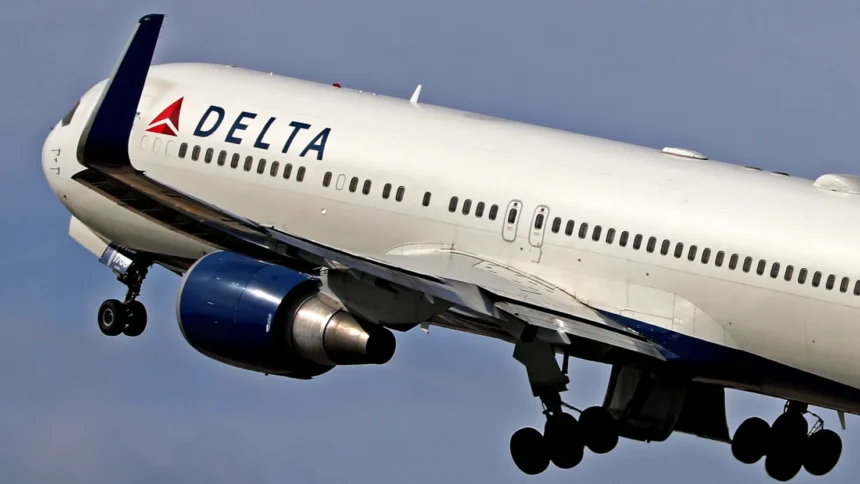
Delta’s fleet decision reinforces that long-term view. The airline confirmed plans to purchase 30 Boeing 787-10 Dreamliners, with deliveries beginning in 2031, and options for 30 additional aircraft. NewsTrackerToday interprets this as a strategic move to secure scarce widebody capacity well into the next decade. Long-haul aircraft slots have become critical assets as global travel demand outpaces manufacturer delivery capability.
Daniel Wu, geopolitical and energy analyst, cautions that premium-heavy international exposure also raises sensitivity to geopolitical shocks. In his view, airlines like Delta must now balance high-margin route expansion with operational flexibility, as disruptions no longer need to be global to materially affect profitability.
Operationally, Delta continues to position premium growth as intentional rather than incidental. Management indicated that nearly all incremental capacity additions will be concentrated in premium seating, signaling confidence that demand in that segment can absorb higher pricing even amid economic uncertainty.
From a broader perspective, News Tracker Today sees Delta’s guidance as a recalibration rather than a retreat. The airline is prioritizing durability over headline growth, aligning capital spending, fleet strategy and pricing around customers least likely to cut discretionary travel. The message for the industry is clear. Airlines are no longer competing primarily on seat volume or route breadth. In the current cycle, control over premium demand – and the ability to monetize it consistently – is becoming the decisive factor in financial performance.