The market for Pokémon cards has evolved far beyond childhood nostalgia, increasingly positioning itself as part of the alternative asset landscape. Yet the reality is more nuanced than the headlines suggest. While select high-end cards have delivered exceptional returns, the broader market remains narrow, volatile, and heavily dependent on scarcity and sentiment. From the standpoint of NewsTrackerToday, this trend reflects how collectibles can transform into investment narratives – but only within a highly concentrated segment.
Performance comparisons with traditional markets often drive the hype. Certain Pokémon card indices have shown periods of growth that outperform long-term benchmarks like the S&P 500. However, these comparisons are structurally imperfect. The collectibles market operates with lower liquidity, shorter data histories, and extreme concentration of value in top-tier assets. In analytical terms, the outperformance is real in specific windows, but not representative of the market as a whole. As highlighted in NewsTrackerToday, this distinction is critical when evaluating collectibles as an asset class.
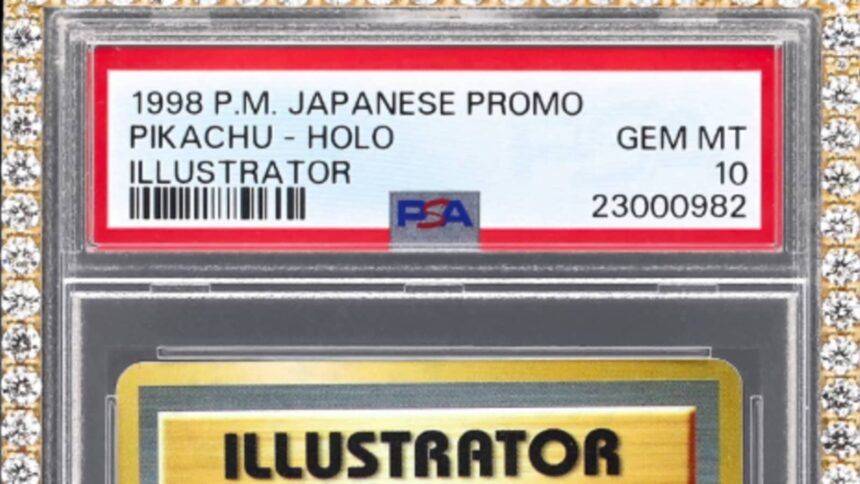
The most visible examples reinforce this imbalance. Record-breaking sales of ultra-rare cards demonstrate how value is driven by a combination of scarcity, condition, and cultural visibility. In these cases, provenance and narrative play as important a role as the asset itself. The key insight is that these headline transactions do not reflect the average experience of collectors. Instead, they represent the upper tail of the market, where demand is concentrated among high-net-worth buyers.
Condition is another decisive factor. The grading system, particularly at the highest levels, creates sharp price differentials between otherwise identical cards. A near-perfect grading score can multiply value, while lower grades significantly reduce it. Liam Anderson, NewsTrackerToday financial markets specialist, would likely describe this as a classic scarcity premium, where limited supply and strict quality thresholds drive disproportionate price increases at the top end.
Beyond elite assets, broader market participation has expanded. Spending on collectible cards has grown significantly in recent years, driven by a combination of pandemic-era liquidity, increased interest in alternative assets, and cultural influence from celebrities and online platforms. This has introduced a new class of participants who view collectibles as both a financial opportunity and a form of cultural expression.
However, this expansion also introduces volatility. Demand in this market is shaped not only by fundamentals, but by trends, media exposure, and shifting consumer sentiment. From the perspective of NewsTrackerToday, this creates a structural divide between perception and reality. While top-tier assets may appreciate, the majority of items do not exhibit the same trajectory.
A critical limitation is the absence of intrinsic cash flow. Unlike equities or income-generating assets, Pokémon cards derive value entirely from resale potential. Ethan Cole, chief economic analyst specializing in macroeconomics and central banks, would likely frame this as a sentiment-driven asset class, where pricing depends heavily on market enthusiasm and cultural relevance rather than underlying financial performance.
Additional risks are emerging as the market matures. As prices rise, issues such as authentication, storage, and security become increasingly important. High-value collectibles require specialized handling, and the market is becoming more exposed to risks associated with fraud, theft, and speculative behavior. These factors further differentiate collectibles from traditional investment vehicles.
Looking ahead, the market is likely to remain bifurcated. Premium, museum-grade assets with strong provenance will continue to attract demand from wealthy collectors, supporting high valuations. At the same time, the broader market may experience greater instability, particularly as speculative participation increases. Isabella Moretti, an analyst specializing in corporate strategy and M&A, would likely interpret this as an early-stage asset class undergoing partial institutionalization without full structural maturity.
For investors, the implications are clear. Success in this market depends on selectivity, expertise, and access to high-quality assets. Factors such as rarity, grading, transaction history, and liquidity are critical. Casual participation based on hype is unlikely to deliver consistent returns. From a broader perspective, Pokémon cards illustrate how cultural assets can evolve into financial instruments under certain conditions. However, they remain fundamentally different from traditional markets. This is why News Tracker Today views them not as a universal investment solution, but as a niche segment where exceptional returns are possible – alongside equally significant risks.