The GLP-1 market is entering a decisive transition phase, and at NewsTrackerToday, we see this moment as less about a new dosage form and more about a structural reset in how obesity treatment scales globally. After years of growth driven almost exclusively by weekly injections, 2026 is shaping up as the year oral GLP-1 drugs begin redefining access, pricing dynamics, and patient behavior.
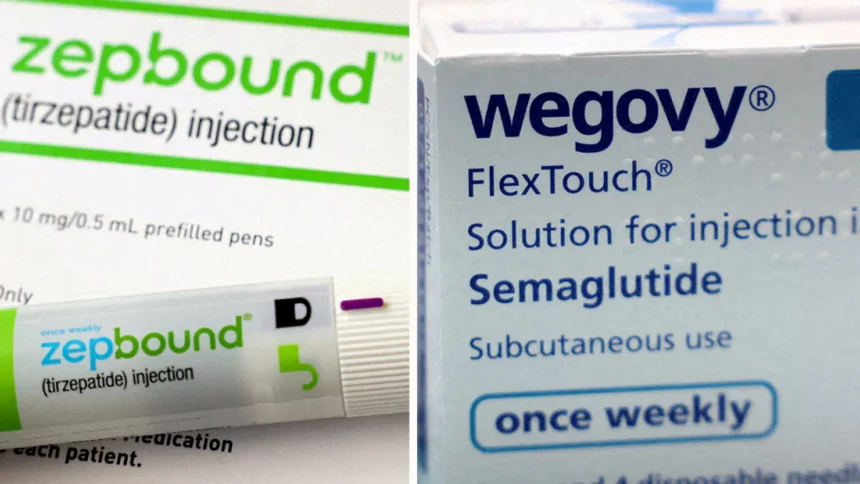
The early beneficiaries of this shift are Novo Nordisk and Eli Lilly. Novo Nordisk has already introduced a daily oral version of Wegovy, while Eli Lilly is awaiting regulatory clearance for its own pill-based GLP-1 therapy in the U.S. Importantly, clinical data do not suggest superior weight-loss outcomes versus injections. Instead, the strategic value lies in accessibility.
From an adoption standpoint, the pill format removes one of the largest psychological barriers to GLP-1 therapy: injections. As NewsTrackerToday notes, this change dramatically expands the addressable market, particularly among patients with mild to moderate obesity, needle aversion, or lower perceived urgency to pursue injectable treatments. This is not substitution – it is market enlargement.
Pricing further accelerates this effect. Oral Wegovy enters the market at a lower out-of-pocket cost than injectable alternatives, narrowing the affordability gap that previously limited adoption. For cash-paying patients, even a $100–150 monthly difference materially alters willingness to initiate treatment. Liam Anderson, financial markets analyst at NewsTrackerToday, points out that GLP-1s are increasingly behaving like consumer subscriptions rather than episodic medical interventions – a shift with profound revenue implications.
However, the insurance landscape remains a constraining force. Lower list prices for consumers do not necessarily translate into lower costs for employers or pharmacy benefit managers. According to Ethan Cole, NewsTrackerToday’s chief macroeconomic analyst, payers remain cautious, viewing oral GLP-1s as potentially high-volume liabilities. In response, some employers are already limiting or discontinuing obesity-drug coverage altogether, underscoring the tension between access and cost containment.
Clinically, injections retain a clear role. Patients requiring substantial weight reduction continue to show stronger outcomes with injectable GLP-1s, particularly at higher doses. Physicians are unlikely to migrate these patients unless pricing disparities widen meaningfully. This is creating a two-tiered market structure – one optimized for scale, the other for efficacy – rather than a zero-sum replacement dynamic.
Competition is also intensifying beyond the current duopoly. Multiple pharmaceutical firms are advancing next-generation oral GLP-1s, including low-molecule compounds and potential weekly pills. At NewsTrackerToday, we view these pipelines as strategically disruptive: the first oral GLP-1 to combine injection-level efficacy with simplified dosing could materially reorder market leadership.
What ultimately distinguishes this phase is not pharmacology, but infrastructure. Pills are easier to distribute, prescribe, store, and integrate into primary care workflows. This allows GLP-1 therapy to move beyond specialty clinics and into routine medical practice, enabling population-level adoption.
The takeaway is not that injections are fading, but that the market itself is widening faster than ever. Oral GLP-1s transform obesity treatment from a high-commitment medical decision into a scalable, consumer-friendly model. For Novo Nordisk and Eli Lilly alike, this evolution supports parallel growth rather than mutual exclusion – and explains why the next wave of competition will be fought on convenience, pricing discipline, and payer alignment rather than headline weight-loss percentages. At News Tracker Today, we see this as the moment GLP-1s stop being a breakthrough therapy and start becoming a healthcare platform.