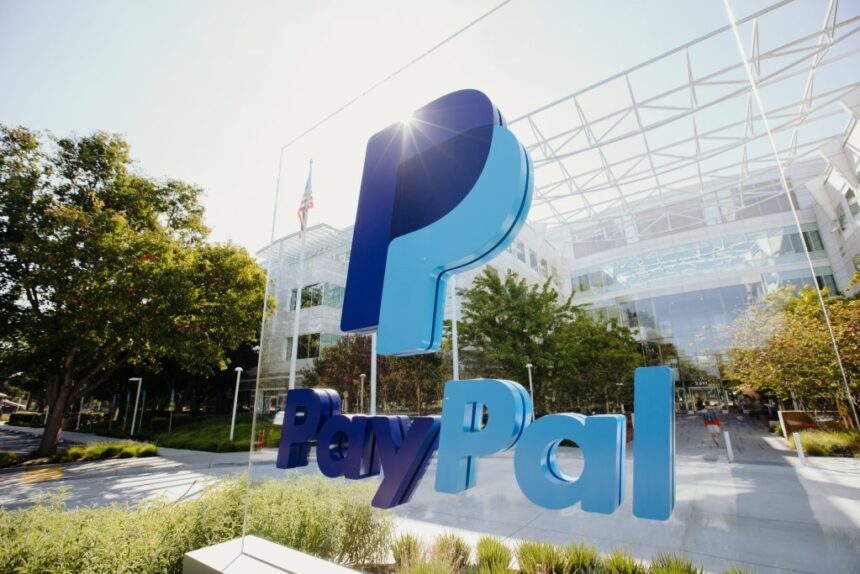
PayPal has taken a decisive step toward becoming a full-fledged financial institution, filing an application to establish PayPal Bank with a focus on lending to small businesses. For NewsTrackerToday, the move signals a strategic shift away from a pure payments model toward deeper balance-sheet involvement, as fintech firms increasingly challenge traditional banks on their own terrain.
The company said the proposed bank would be regulated jointly at the federal level and by Utah’s financial authorities, a structure that has become increasingly common among fintechs seeking bank charters. In NewsTrackerToday’s view, the choice reflects a calculated trade-off: tighter regulatory oversight in exchange for greater operational control, particularly over lending and deposit-taking activities.
PayPal has framed the initiative as a way to improve efficiency and better support small business growth. Liam Anderson, who focuses on financial markets and fintech balance-sheet risk, sees the logic but also the constraints. “Access to deposits fundamentally changes the economics of lending,” Anderson says. “But it also ties PayPal much more closely to credit cycles and regulatory capital rules, which investors will watch closely.”
Beyond credit, PayPal plans to offer interest-bearing savings accounts through the bank. That expansion would allow the company to capture deposits directly, reducing reliance on third-party funding and potentially improving margins over time. NewsTrackerToday notes that deposits represent a strategic anchor for fintech platforms, enabling cross-selling while increasing customer stickiness – but they also raise expectations around stability and risk management.
Competition is intensifying across this space. A growing number of fintech firms are targeting small businesses with faster underwriting and digital-first banking services, often positioning themselves as more responsive than legacy institutions. PayPal’s advantage lies in its existing merchant network and transaction data, which provide visibility into real-time cash flows. In NewsTrackerToday’s assessment, that data edge could support more selective lending, but only if paired with disciplined credit governance.
The market reaction to the announcement was measured, with PayPal shares rising modestly in extended trading. That response reflects cautious optimism rather than a re-rating. Despite recent revenue growth – including a quarterly increase that exceeded expectations – PayPal’s stock has significantly underperformed the broader market this year. NewsTrackerToday reads this divergence as evidence that investors remain unconvinced by incremental improvements and are looking for a clearer long-term growth narrative.
Isabella Moretti, who analyzes corporate strategy and platform expansion, views the banking move as an attempt to reset that narrative. “This is less about chasing new users and more about extracting greater value from existing relationships,” she says. “If executed well, a banking charter could deepen PayPal’s role in small business finance, but execution risk is high.”
Becoming a regulated bank would mark a structural transformation for PayPal. Banking brings stricter capital requirements, compliance costs and exposure to loan performance during economic downturns – constraints that differ sharply from those faced by payment processors. NewsTrackerToday believes the central challenge will be balancing regulatory discipline with the speed and flexibility that originally defined PayPal’s appeal.
The takeaway at News Tracker Today is that PayPal’s banking ambitions represent a bet on depth rather than scale. Success would give the company greater control over lending economics and customer relationships, potentially strengthening its competitive position as credit conditions tighten. Failure, however, would reinforce investor concerns that expanding into banking adds complexity without delivering commensurate returns. For now, approval timelines and early execution will determine whether this strategic pivot reshapes PayPal’s future or simply raises the bar for scrutiny.