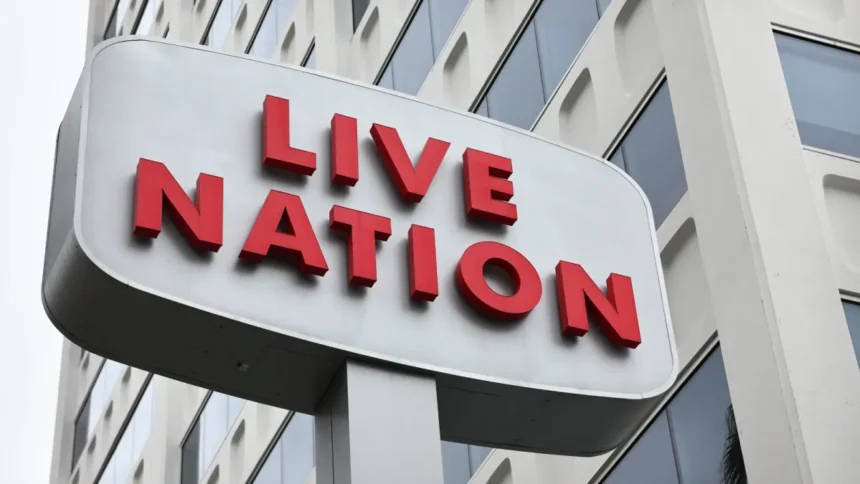
A federal jury has determined that Live Nation Entertainment operated as an illegal monopoly, a landmark decision that could reshape the economics of live entertainment – a development that NewsTrackerToday increasingly interprets as a turning point in the long-running battle over ticketing power and consumer pricing. The ruling stems from a broader legal campaign initiated in 2024, when the U.S. Department of Justice and dozens of state attorneys general accused Live Nation of leveraging its dominance across ticketing, promotion, and venue ownership to suppress competition. At the center of the case lies the company’s 2010 merger with Ticketmaster, a combination that created a vertically integrated entity controlling large segments of the concert ecosystem.
Evidence presented during the trial intensified scrutiny of corporate culture as well as market behavior. Internal Slack messages revealed employees joking about exploiting customers through pricing strategies, including remarks about aggressively increasing parking fees. While the company dismissed these exchanges as informal banter, prosecutors framed them as indicative of a broader mindset enabled by limited competitive pressure.
The implications extend beyond reputational damage. Isabella Moretti, a corporate strategy and M&A specialist, notes that antitrust rulings of this scale often trigger structural remedies – not just fines, but forced divestitures or even full separation of business units. NewsTrackerToday highlights that vertical integration, once viewed as a strategic advantage, now sits at the center of regulatory pushback in multiple industries, from technology platforms to entertainment networks.
Live Nation had already reached a tentative settlement with federal authorities, agreeing to pay a $280 million fine and divest at least 13 venues to allow rival promoters access. However, the jury’s finding introduces the possibility of more aggressive intervention. In parallel, NewsTrackerToday draws attention to the growing willingness of state-level actors to pursue independent enforcement, creating layered legal pressure that companies cannot easily resolve through federal settlements alone.
From a market perspective, the case underscores how pricing practices – including dynamic ticket pricing and additional service fees – have become flashpoints for consumer frustration. Without viable alternatives, concertgoers often absorb rising costs, reinforcing the perception of an imbalanced marketplace. Liam Anderson, a financial markets specialist, argues that monopolistic structures can sustain elevated margins for extended periods, but once regulatory action accelerates, valuation models must quickly adjust to account for fragmentation risk.
The next phase now depends on judicial remedies, with the presiding judge set to determine whether structural changes will be imposed. Potential outcomes range from expanded divestitures to a full separation between Live Nation and Ticketmaster, a move that would fundamentally alter how tickets are distributed and events are managed. This case signals a broader recalibration of antitrust enforcement in sectors where consolidation has gone largely unchallenged for years. As legal momentum builds, the entertainment industry may face a reconfiguration that prioritizes competition and transparency – a shift that News Tracker Today continues to monitor as regulators test the limits of corporate concentration in consumer-facing markets.