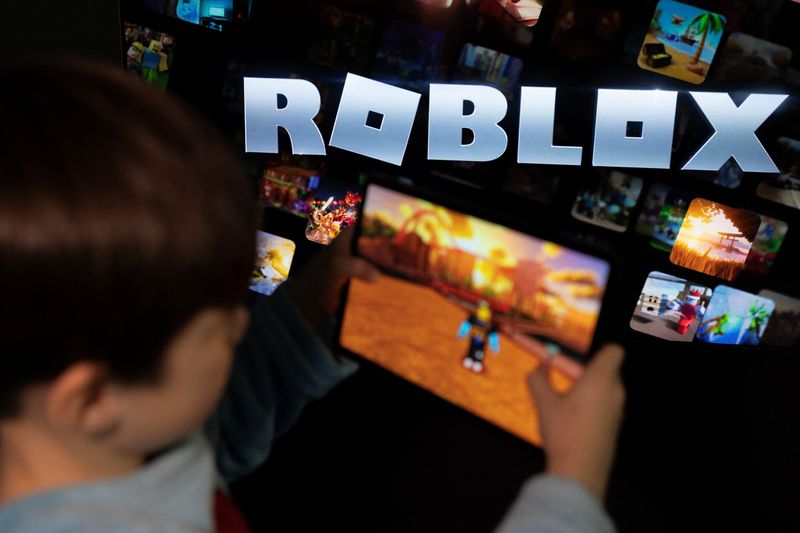
Roblox has introduced a new generative AI system designed to create fully functional in-game assets from natural language prompts, marking a significant step in the company’s effort to reduce friction for creators and accelerate content production across its platform. The beta release, referred to internally as “4D creation,” goes beyond static 3D generation by enabling objects that behave according to game logic and physics. The shift reflects a broader strategic push by Roblox to expand its creator ecosystem at a time when competition for developer attention is intensifying. As highlighted by NewsTrackerToday, the company’s long-term growth depends less on acquiring users and more on sustaining a steady flow of engaging, high-quality experiences built by its community. Lowering the technical barrier to entry is central to that objective.
Unlike earlier AI tools that focused on visual generation alone, the new system allows creators to prompt interactive elements such as vehicles, doors, and moving parts that respond predictably within a game environment. From a production standpoint, this compresses development timelines by allowing a single prompt to replace multiple steps across modeling, scripting, and testing. The practical implication is faster iteration rather than full automation of game design. Sophie Leclerc, a technology sector analyst, notes that Roblox is positioning AI as a productivity multiplier rather than a replacement for creators. In her view, the real value lies in allowing small teams or solo developers to reach functional prototypes quickly, which historically required specialized technical skills. That approach aligns with the platform’s reliance on user-generated content as its primary growth engine.
Roblox has emphasized that the new system is part of a broader investment cycle that includes server capacity expansion, AI research, and safety infrastructure. According to NewsTrackerToday, these parallel investments are critical, as generative tools increase not only content volume but also operational complexity. Without sufficient compute stability and moderation systems, the benefits of faster creation risk being offset by quality and trust concerns.
From a financial perspective, Liam Anderson, a financial markets expert, points out that shortening development cycles can widen the pool of creators capable of monetizing their work. This matters for Roblox’s internal economy, which depends on transaction volume across games, virtual goods, and subscriptions. Anderson cautions, however, that creator growth must translate into sustainable engagement, not just a surge in low-effort content.
The launch also fits into a wider industry trend toward AI systems that model environments rather than isolated assets. Roblox has indicated that its long-term goal is to develop AI capable of understanding in-game rules and dynamics well enough to generate future gameplay scenarios. As NewsTrackerToday observes, this direction brings both opportunity and risk: while it could redefine how games are built, it also raises new challenges around predictability, safety, and control.
Regulatory and public scrutiny remains a background factor. Roblox operates under ongoing pressure related to child safety and platform governance, and generative systems that automate behavior introduce additional variables. The company’s success will depend on whether it can maintain consistent guardrails while expanding creative freedom.
In the near term, rapid imitation across the industry is likely, as prompt-driven asset creation becomes table stakes rather than differentiation. Over time, the competitive edge is expected to hinge on reliability, creator control over AI outputs, and effective discovery systems that surface quality experiences. The assessment from News Tracker Today is that Roblox is betting on AI not as a spectacle, but as infrastructure – a move that could meaningfully reshape its creator economy if execution keeps pace with ambition.