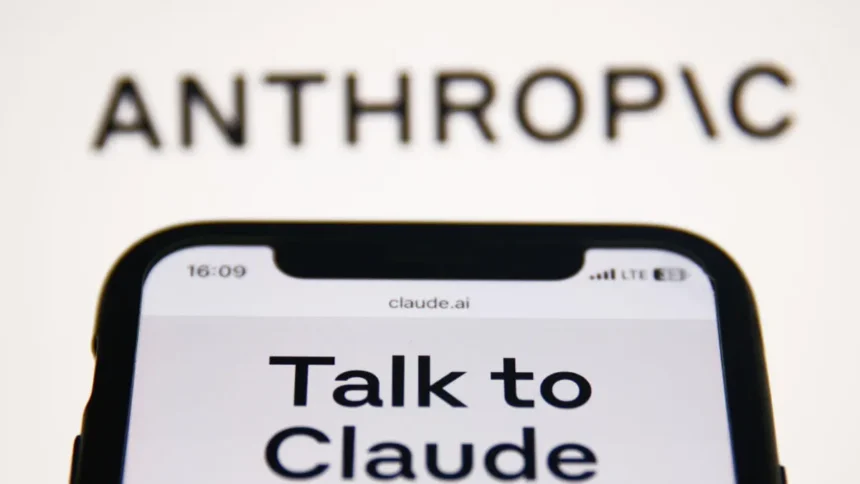
Anthropic has confirmed that its AI chatbot Claude will remain free of advertising, distancing itself from rivals that are beginning to experiment with ads inside conversational interfaces. The company said users will not see sponsored links or promotional content alongside chats, and responses will not be influenced by third-party commercial placements.
The decision comes just weeks after OpenAI disclosed plans to test advertising for certain ChatGPT users in the United States, a move that has intensified debate around how AI assistants should be monetized. According to NewsTrackerToday, Anthropic is deliberately positioning Claude as a high-trust product at a time when conversational AI is becoming more embedded in personal, professional, and sensitive decision-making.
Anthropic argued that the private and often intimate nature of user interactions makes advertising inappropriate in a chatbot environment. The company said its revenue model is based on paid subscriptions and enterprise contracts, with proceeds reinvested into improving Claude rather than optimizing engagement for advertisers. NewsTrackerToday views this as a strategic attempt to differentiate on trust rather than scale.
The contrast highlights a broader split emerging across the AI sector. Some developers are prioritizing mass adoption and alternative revenue streams to offset rising infrastructure costs, while others are betting that users and enterprises will pay a premium for systems perceived as neutral and non-commercial. Sophie Leclerc, a technology sector analyst, notes that conversational AI sits closer to user intent than search or social platforms, making any form of advertising far more sensitive to perception and credibility.
From a financial standpoint, advertising offers an obvious path to monetization. Digital ads remain a core revenue engine for major technology companies, and AI products require significant ongoing investment in compute and infrastructure. However, NewsTrackerToday highlights that introducing ads into AI responses risks creating long-term trust concerns that could outweigh short-term revenue gains, particularly in areas such as health, finance, and education.
Anthropic has leaned into its stance publicly, launching a high-profile marketing campaign centered on the absence of ads in Claude. The messaging frames ad-free AI not as a limitation, but as a feature. Liam Anderson, a financial markets expert, says the market is now watching for proof that subscription-based AI can scale sustainably without compromising margins or growth.
Looking ahead, News Tracker Today expects the divide between ad-supported and ad-free AI assistants to widen. Some platforms are likely to normalize advertising as the cost of free access, while others will focus on positioning AI as a paid utility built around privacy, reliability, and alignment with user interests.
For users, the implication is increasingly clear: different AI assistants may serve different purposes depending on how they are funded. For companies, the strategic choice will hinge on whether long-term trust or rapid monetization proves more valuable as conversational AI becomes a core digital interface.