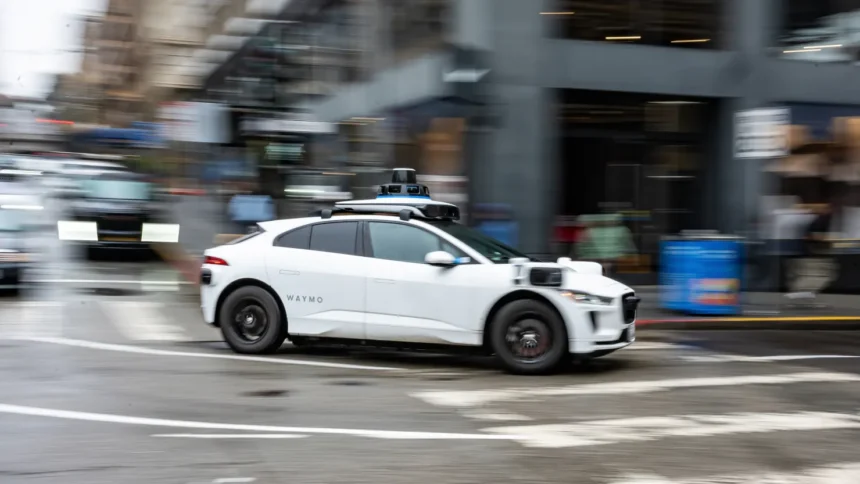
New York has delivered a regulatory setback to the autonomous vehicle industry. Governor Kathy Hochul has withdrawn a proposal that would have allowed limited commercial deployment of robotaxi services across parts of the state, slowing expansion plans for operators such as Waymo. The move follows resistance from labor groups, taxi unions and lawmakers who raised concerns about safety risks and job displacement. Testing activity remains permitted under existing approvals, but full commercial rollout is now paused.
As NewsTrackerToday has repeatedly observed, autonomous mobility is no longer purely a technological race; it has become a regulatory and political negotiation. New York represents one of the largest ride-hailing markets in the United States, and any structural shift affecting thousands of drivers carries electoral consequences. The withdrawn proposal would have enabled controlled pilot programs, particularly outside New York City, provided companies demonstrated community support and adherence to strict safety standards. Political opposition, however, proved decisive.
Daniel Wu, geopolitical and regulatory analyst, argues that high-density urban markets amplify political sensitivity. In regions where transportation employment is organized and economically significant, autonomous deployment becomes a labor policy issue rather than an innovation narrative. That dynamic, in his assessment, may slow implementation in major metropolitan areas even as smaller jurisdictions proceed more quickly.
Waymo currently provides roughly 400,000 paid rides per week in markets including San Francisco, Phoenix, Los Angeles and Austin. Expansion into New York would have represented both symbolic validation and a high-demand revenue opportunity. Delays in commercialization extend the timeline to profitability, particularly given the capital intensity of autonomous fleets, which require investment in vehicles, mapping systems and operational infrastructure. Sophie Leclerc, technology sector analyst at NewsTrackerToday, notes that valuation assumptions for robotaxi operators depend heavily on scaling in dense cities. Fixed costs remain substantial, and utilization rates must rise quickly to support margin expansion. Regulatory friction in Tier-1 cities therefore affects long-term financial modeling more than short-term operational statistics.
Competitive pressure continues to build. Tesla is advancing autonomous driving initiatives, while Zoox, owned by Amazon, continues testing fully autonomous vehicles in the United States. Chinese operators such as Baidu’s Apollo Go and WeRide are expanding internationally at a faster pace, supported by comparatively flexible regulatory environments. News Tracker Today assesses that geographic divergence in regulatory openness could shape global leadership in autonomous mobility.
Recent safety incidents involving autonomous vehicles have intensified scrutiny. Investigations into collisions and operational anomalies have reinforced public caution. Although statistical analyses often suggest autonomous systems can perform at or above average human-driver benchmarks in specific scenarios, isolated high-profile cases exert disproportionate influence on public perception and political decision-making. Regulatory authorities therefore tend to prioritize reputational risk mitigation over acceleration.
The economic incentives behind robotaxi deployment remain compelling. Removing the human driver from ride-hailing operations has the potential to lower long-term operating costs and improve scalability. Autonomous fleets also generate valuable data that can enhance artificial intelligence models and support adjacent services. However, sustainable commercialization depends on stable insurance frameworks, defined liability structures and municipal cooperation. Without regulatory clarity, capital deployment remains cautious.
NewsTrackerToday expects operators to concentrate on jurisdictions offering clearer legislative pathways while maintaining dialogue in complex markets such as New York. Over time, phased deployment models featuring limited operational zones, transparent safety reporting and workforce transition initiatives may provide a compromise solution. For investors, key variables include approval timelines in major cities, incident frequency trends, capital expenditure discipline and political alignment at the state level.
Autonomous mobility continues to represent a structurally transformative technology. Yet the pace of adoption will be determined as much by policy negotiation and social acceptance as by advances in software and hardware. New York’s reversal reinforces a broader conclusion: scaling robotaxis is not solely an engineering challenge but a governance challenge that will define the sector’s next phase.