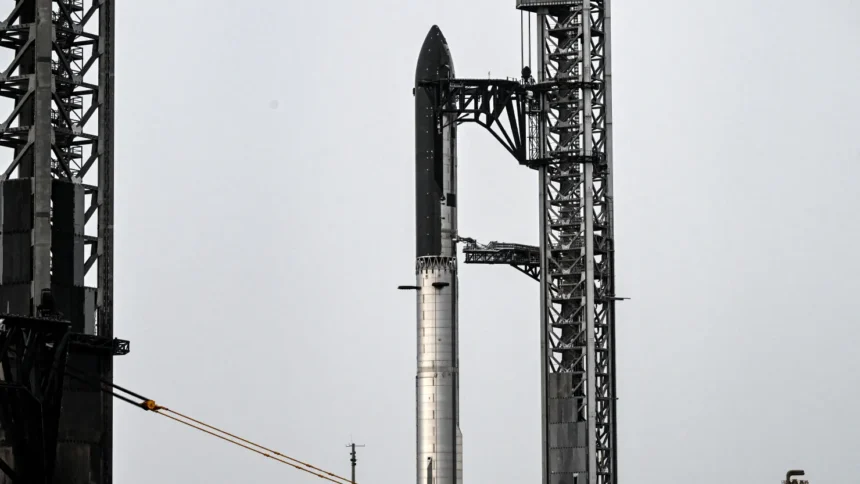
Forty seconds from liftoff, a hydraulic pin refused to retract. That was enough. SpaceX scrubbed the 12th test flight of Starship V3 on the evening of May 21, standing down the most powerful rocket ever built just as investors across the country were watching their screens. Elon Musk posted the explanation on X within minutes. The next window opens at 6:30 p.m. Eastern on May 22. The IPO prospectus, filed the day before, keeps its timeline regardless.
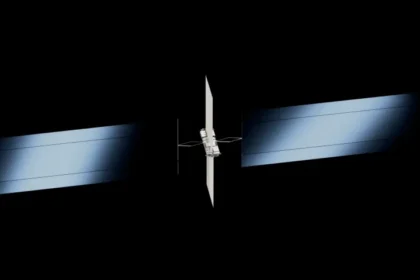
Starship V3 stands 408 feet tall when fully stacked, represents SpaceX’s first Block 3 vehicle, and carries 18 million pounds of thrust. It launches from a newly constructed second pad at the Starbase facility in Boca Chica, Texas. The payload for this suborbital test is 20 mock Starlink satellites and two modified units designed to scan the vehicle’s heat shield from inside the upper atmosphere. No crew. No cargo. Just the vehicle proving itself. What is riding on the outcome – commercially and symbolically – is what NewsTrackerToday broke down ahead of the launch attempt.
Liam Anderson, who covers financial markets, put the investor calculus plainly: “SpaceX doesn’t need Starship to orbit to price its IPO. It needs Starship to not explode on camera.” The prospectus data backs that read. In 2025, SpaceX’s Starlink connectivity unit generated $11.4 billion in revenue and $4.4 billion in operating income, accounting for 61 percent of total company sales. The space segment posted $4.1 billion in revenue and an operating loss of $657 million. Starship is a cost center. But the growth story depends on it entirely.
Sophie Leclerc, who tracks the technology sector, offers a longer frame: “What Starship represents for SpaceX’s valuation isn’t the current launch economics – those are honestly not the point – it’s the option value on reusable heavy lift, which, if it works at scale, restructures the cost basis for satellite deployment, lunar logistics, and eventually interplanetary transport. You’re buying a 30-year infrastructure thesis, not a quarterly earnings beat.” That thesis carried a reported valuation of $1.75 trillion in the IPO filing. A scrub on pad does not move that number. A failure in flight would be a different conversation.
SpaceX spent $3 billion on Starship development in 2025 and another $930 million in the first quarter of 2026 alone. The company expects the vehicle to begin launching commercial satellites in the second half of the year, a timeline that assumes Flight 12 and at least one subsequent test go reasonably well. NASA’s Artemis 4 mission, targeting a lunar surface landing in 2028, relies on a Starship variant for crew delivery. The numbers NewsTrackerToday ran on that dependency are unambiguous: the Artemis contract is not optional for SpaceX’s long-term positioning, and Starship has not yet completed a full orbit.
Bear in mind that Flight 12 is the first Starship launch since October 2025. SpaceX ran five test flights in all of last year. The V3 is meaningfully different from its predecessors – taller, with upgraded Raptor engines and a new launch pad – which means every data point from this flight is novel. The program has absorbed spectacular failures before. Flight 3 destroyed a pad. Flight 6 lost booster catch due to a communications fault. Both times, it continued forward. So where does that leave the investors watching the scrub? Probably right where they started: waiting on tomorrow’s window.
The structural oddity this week revealed is one that News Tracker Today draws attention to without editorializing: the single piece of hardware most prominently cited in SpaceX’s IPO prospectus as essential to the company’s growth sat on a Texas pad, grounded by a stuck hydraulic pin. That is the nature of rocket development. Investors who understand the test-flight process will read the scrub as noise. Those who don’t may need a longer briefing on what this phase of the program actually means.