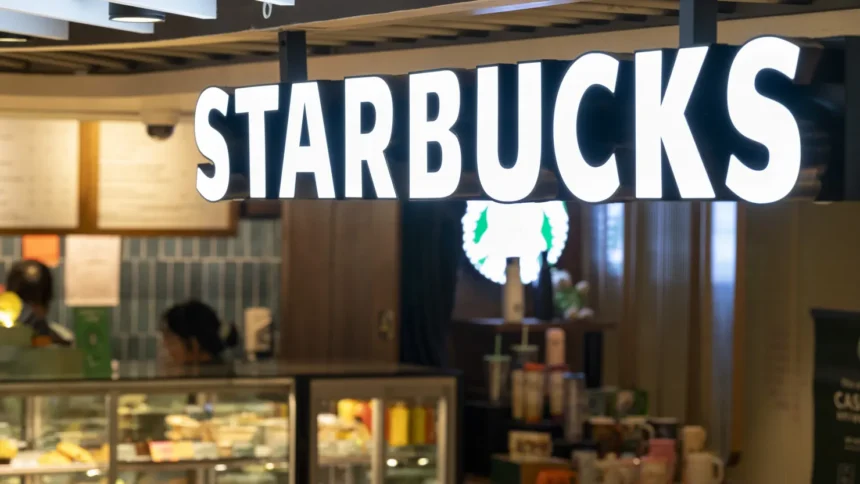
When global companies talk about growth, China still sits at the center of every long-term playbook. But entering and scaling in the country is no longer just about capital and brand power. Starbucks’ decision to hand operational control of its China business to Boyu Capital, selling up to 60 percent of a new joint venture for roughly 4 billion dollars while keeping 40 percent, the brand, and IP rights, marks a strategic shift. We at NewsTrackerToday see this move as emblematic of a maturing globalization era: the brand remains international, but execution becomes local to survive intensifying competition and shifting consumer dynamics.
Starbucks values its China business at more than 13 billion dollars, including future royalty streams. This does not look like retreat; instead, the company is reallocating operational risk while protecting long-term upside and strategic brand control. With around 8000 stores already in China and leadership still floating plans to grow to 20000–30000 locations, the ambition remains intact. As Ethan Cole, chief macro analyst at NewsTrackerToday, notes, “Companies in China no longer win on brand power alone. They win by calibrating strategy to local realities. This is not a reduction in ambition, but an evolution in method.”
The past few years tested Starbucks more than any other international cycle. First, pandemic restrictions hammered foot traffic. Then, a pricing war erupted. Luckin Coffee, offering aggressive pricing and app-driven convenience, has already surpassed Starbucks in number of stores. To defend share, Starbucks leaned on discounts, driving a 9 percent increase in traffic and a 2 percent rise in comparable sales last quarter – but at the expense of average ticket value. Growth through price cuts may boost visits, but it compresses margin and raises questions about long-term positioning.
Turning control over to Boyu signals a pivot toward speed and local precision. At NewsTrackerToday, we interpret this model as the new blueprint for Western brands in China: keep the global identity, decentralize execution, adapt to the world’s most dynamic consumer battleground. As Sophie Leclerc, tech and innovation analyst, puts it, “In China, competitive advantage is no longer measured by store count. It’s measured by how quickly you can operate like a native market player.”
The transaction is expected to close in the second quarter of fiscal 2026 pending regulatory approval. This interim period gives Starbucks space to refine internal processes, strengthen brand quality safeguards, and sharpen its premium identity in a market where value sensitivity is rising fast.
Starbucks partnering with Boyu is not a retreat – it is a calculated reset aimed at unlocking the next phase of growth in a market that rewards adaptability over legacy. As we at News Tracker Today observe, the next two years will be decisive. Investors should monitor margin trends, performance in second-tier and third-tier cities, and the brand’s ability to protect its premium halo without slipping into destructive price competition. If this strategy succeeds, it may become a template for Western corporations chasing scalable, resilient Chinese market exposure: global brand equity paired with localized execution power, instead of the old model of full-control expansion.